


Wholesale prices rose 0.5% in March, much less than expected despite war impact
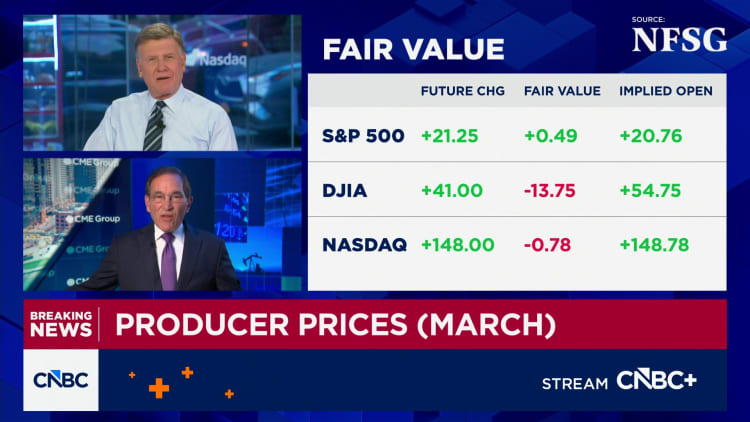

The producer price index, a gauge of pipeline costs for final demand goods and services, increased a seasonally adjusted 0.5% for the month, well below the Dow Jones consensus estimate for 1.1%, according to a Bureau of Labor Statistics report Tuesday.
Excluding food and energy, core PPI was up just 0.1% against the forecast for 0.5%. The services side of inflation — a key focus for Federal Reserve policymakers — was flat on the month.

On an annual basis, the all-items PPI accelerated 4%, the biggest 12-month gain since February 2023. Core PPI posted a 3.8% annual gain. Excluding food, energy and trade services, PPI increased 0.2% monthly and 3.6% annually. Trade services slipped 0.3% for the month, an indicator that businesses are absorbing tariff costs.
The increase on the producer end of prices was less than the 0.9% gain in prices consumers actually paid for the month. Core consumer prices also were soft, rising just 0.2%.
Still, components of the report that feed directly into the Federal Reserve’s preferred inflation gauge, the personal consumption expenditures price index, showed more firmness. Portfolio management fees rose another 1%, while health care-related services also increased.
Putting together the consumer and producer price indexes and how they feed into the PCE inflation reading, Bank of America estimated that March will be around 3.1% annually for headline and 3.5% for core. That compares with respective levels of 2.8% and 3% in February.
The trends “should keep the Fed firmly on hold in the near-term,” wrote BofA economist Stephen Juneau.
As expected, energy was the primary culprit in the PPI gain. The gasoline index surged 15.7%, accounting for about half the gain in the PPI, according to the BLS. Diesel prices alone soared 42% while jet fuel was up 30.7%.
As a result, goods prices increased 1.6%, though that was offset by flat services costs, which Fed officials view as a key gauge being that it excludes tariff and war impacts.
Portfolio management costs, which had pushed producer prices earlier in the year, rose 1% for the month and were up 10.8% annually.
Markets showed little reaction to the report, with stock market futures on course for modest gains at the open. Treasury yields were little changed.
Though some inflation indicators for March pointed to renewed pricing pressures, Fed policymakers likely will look through the readings if the underlying picture looks benign and, equally important, the ceasefire with Iran holds.
Since the announcement of the halt in fighting, energy prices have eased somewhat. U.S. light, sweet crude has come off nearly 15% over the past week though it is up nearly 70% year to date.
Fed officials have expressed some caution about the war’s impact but generally see inflation continuing to ease through the year on its way back to the central bank’s 2% target.
Still, markets expect the Fed to stay on hold through the year, pricing in about a 1 in 4 chance for a cut through December.
Discover more from stock updates now
Subscribe to get the latest posts sent to your email.