


Board Effectiveness Basics: What Modern Boards Do Differently
The traditional image of board meetings as casual gatherings is outdated. Today’s boards function with a global mindset, strategically balancing shareholder interests, consumer priorities, and regulatory requirements. This complex environment demands that boards be highly engaged and proactive. Modern boards are increasingly more involved in decision-making and oversight, adapting to evolving challenges in corporate governance and ensuring effective leadership in a rapidly changing business landscape.
Board effectiveness basics center on how well directors implement oversight and gather information to support decision-making. Success is more than the volume of discussion or the number of reports reviewed.
Boards must lead with clear priorities, disciplined oversight, and the ability to distinguish between what actively informs decisions and what merely fills agendas.
As corporate governance grows more complex, boards are likely to continue adapting how they work. Understanding what board effectiveness looks like in practice is the first step toward sustaining strong governance over time.
Foundational Elements of an Effective Board
An effective board brings together the right mix of skills and experience to oversee the organization’s strategy and risk profile. This does not mean every board member must be an expert in every domain. It means the board, as a collective body, understands key issues, can ask informed questions about those issues, and recognizes when additional expertise is necessary.
Digital Fluency as a Core Competency
Board members must increasingly have digital fluency. They need to understand issues such as cybersecurity risks and data governance. They need to be well-versed in environmental, social, and governance (ESG) integration and able to effectively address modern workforce issues, such as growing AI concerns.
With digital fluency, boards are well-positioned to better tackle challenges common to AI initiatives and respond more effectively to interconnected risks, which can become a clear business differentiator.
Information Flow and Board Materials
A critical part of board effectiveness is how information flows to the board. Effective boards receive materials organized around decisions and risks rather than exhaustive operational detail. Clear, well-structured board documents in a reporting dashboard such as Nasdaq Boardvantage® are designed to support more productive discussion and can help reduce time spent clarifying background information during meetings. When materials are designed for oversight, boards may be able to focus on strategic direction better.
Understanding Roles and Responsibilities
Boards also need clarity around roles and the chain of responsibility. Effective boards understand the distinction between oversight and management, reinforcing that boundary in both formal governance documents and daily interactions.
The Oversight-Management Distinction
In practical terms, this means boards may be responsible for setting direction, approving strategy, overseeing risk, and holding leadership accountable. Management handles execution.

When this distinction is unclear, boards may either become overly passive or overly involved. Passive leadership often means boards lack access to data for informed decisions. Instead, they rely solely on management involvement and refrain from challenging decisions, even on crucial board matters. On the other side of the spectrum, over-involved boards may become gridlocked in nonessential discussions, leaving little time for deep investment in growth and future planning.
Flexible Engagement Models
Ideally, boards operate with a more agile approach. They might engage passively when management’s leadership is sufficient, use mentorship and outright partnership where appropriate, and step into full control when necessary. An effective board understands its role in different scenarios and calibrates to different needs.
Navigating Risks and Challenges
An effective board’s approach to risk is proactive, not reactive. Board responsibilities extend beyond reviewing reports after issues arise. Boards must understand the organization’s risk landscape, monitor leading indicators, and ensure that emerging risks receive appropriate attention.
Three Categories of Risk

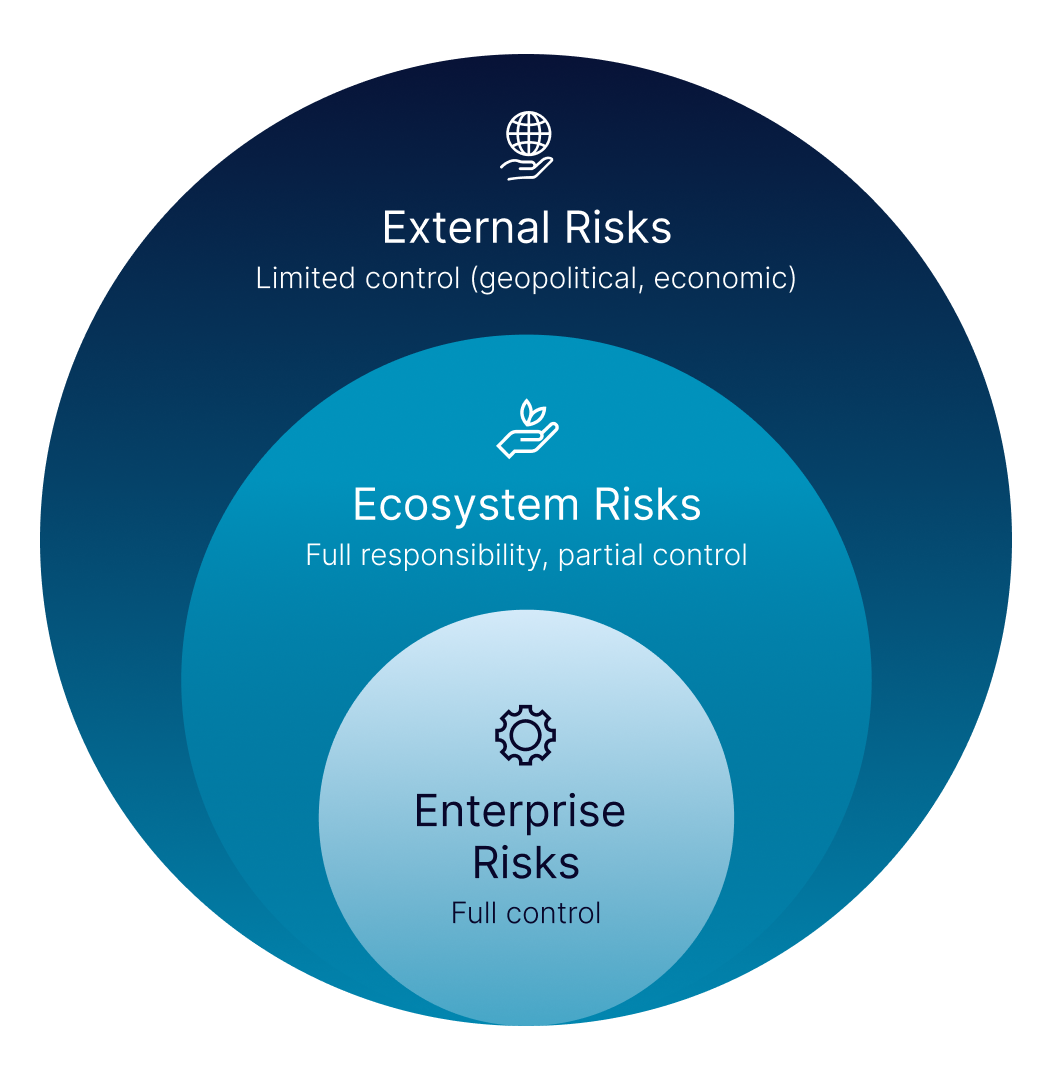
Boards must prepare for three types of risks:
- Enterprise risks: Where boards have full control over contributing factors and strategy
- Ecosystem risks: Where boards maintain full responsibility with only partial control (such as third-party relationships)
- External risks: Such as geopolitical incidents, global disruptions, and economic factors like tariffs
Proactive Risk Management
For example, poorly integrated cloud investments may delay digital transformation-related initiatives, but these factors are typically under the board’s control. Concerning external risks like tariffs, a board should aim to be proactive rather than reactive. Effective boards can proactively identify alternative suppliers, for example, or create standby systems to address sudden changes.
Building a Strong Board Culture
Public boards are often at a difficult juncture with culture. Many boards still focus on compliance activities instead of tackling difficult issues that can make or break a company’s future.
Strategic Board Composition
A carefully composed board that goes beyond geographic diversity or legacy appointments makes board culture a strategic advantage. Smaller, more deliberate board compositions, such as those often found in private-equity-backed companies, may be perceived by some stakeholders as more effective than public company board compositions that focus more on compliance obligations in their appointments.
Fostering Innovation-Focused Culture
Effective boards keep innovation and the company’s future front of mind by:
- Setting expectations for behavior and engagement
- Creating an environment that encourages differing perspectives and views disagreement as part of good governance, not disruption
- Spending less time on presentations and more on discussion, with a clear mind toward value creation
The Role of Diversity in Enhancing Board Performance
Diversity is a practical board asset. Boards that draw on a broader range of perspectives may be better equipped to evaluate complex issues in organizations that operate in dynamic environments. When boards lack diversity, blind spots are more likely to persist, particularly around risk, stakeholder impact, and long-term strategy.
Beyond Demographic Diversity
Demographic diversity gets a lot of airtime, but diversity also includes cognitive and experiential diversity. This includes differences in industry expertise, functional knowledge, and familiarity with emerging risks.
Boards that combine institutional knowledge with fresh perspectives like this are more likely to have a better chance to balance continuity with adaptation.
Activating Diversity
This strategy is called “activating diversity.” Instead of a compliance exercise, it’s a proactive approach that ties diversity to business outcomes. Activating diversity means creating the conditions for different perspectives to shape discussions and inform decisions. Without those conditions, even well composed boards risk reverting to familiar viewpoints and missing early signals of change.
Strategies To Support Diversity
Effective boards treat diversity as a crucial capability to maintain as the organization evolves:
- Align recruitment with future needs: Focus board recruitment and succession planning on the skills and perspectives the organization might need in the years ahead, not only on past experience.
- Refresh board composition regularly: Periodic board refreshes help prevent stagnation so governance capabilities keep pace with strategic and risk related changes.
- Set expectations for participation: Clear norms around engagement and contribution encourage all directors to participate meaningfully in discussions.
- Use structure to surface perspectives: Thoughtful facilitation, structured agendas, and regular board evaluations help integrate diverse viewpoints into decision-making.
Best Practices for Board Management
Strong board management practices help directors make effective use of limited time and attention. Even well composed boards can struggle if meetings and subsequent materials and evaluation processes do not support clear oversight.
Guidelines for Meeting Effectiveness
Meeting effectiveness depends on focus and intent. Boards are most effective when meetings are designed around decisions and oversight priorities more than routine updates. Clear agendas signal what matters most, allocate time intentionally, and help everyone prepare in advance.
Pre-read materials should be the foundation for discussion, enabling directors to focus meeting time on higher impact tasks. Board technology, such as Nasdaq IR Insight®, is designed to help board members can access centralized materials and accurate information. With version control to strengthen board document analysis, this technology can help reduce administrative friction during meetings and provide a clear path forward.
Five Steps To Ensure Effective Meetings
Running an impactful board-level meeting also depends on facilitation:
- Keep agendas decision-focused: Frame topics around questions or decisions that align with value creation, not general updates.
- Prepare materials for oversight: Pre-reads highlight risks and implications, supporting meaningful analysis of board documents.
- Allocate time intentionally: High priority issues receive sufficient discussion, and board members are not rushed at the end of meetings.
- Actively facilitate discussion: Board leadership supports balanced participation and keeps conversations aligned to governance responsibilities.
- Document outcomes: Meetings conclude with defined action items and ownership to support follow through.
Concise, decision-ready materials help directors engage at the appropriate level and maximize meeting time. Board technology can reinforce this discipline by standardizing how materials are developed before meetings. This way, management and boards can align expectations and reduce last-minute revisions.
Evaluating Board Performance Regularly
Board evaluation is an opportunity for continuous improvement. This checklist serves as a starting point to craft a process for evaluating an organization’s board:
Board Evaluation Checklist

- Define what “effective” means for the board. Agree on the board’s oversight priorities, decision responsibilities, and the behaviors expected in meetings.
- Decide the evaluation scope and cadence. Evaluate the full board and key committees annually, and add lighter pulse checks mid-year when priorities or risks shift.
- Choose the method and support confidentiality. Use a structured survey, interviews, or a hybrid approach. Confidential input typically produces more candid feedback. Nasdaq Boardvantage is designed to support secure, confidential collection of director feedback, which can encourage candid participation and more consistent evaluation insights.
- Assess the board’s performance in specific areas. Focus on concrete topics. Centralized access to agendas, board materials, and meeting records within Nasdaq Boardvantage can allow evaluation of meeting effectiveness and information quality using consistent, documented reference points.
- Review results in a dedicated discussion. Set aside time to discuss patterns, not individual critiques, and agree on the most critical gaps to address.
- Translate findings into two to three clear improvements. Prioritize a few changes and define what “better” will look like in practice. Assign owners to these tasks.
- Track follow through and revisit progress. Use meeting minutes or board technology to record critical action items and their outcomes, as well as associated timelines. Then, revisit them at set intervals.
Regular CEO and management effectiveness evaluations help boards assess whether their practices support effective oversight. Digital tools support evaluation processes by enabling confidential feedback, tracking action items, and preserving governance records over time.
Beyond meeting compliance requirements, evaluations provide insight into how well a board functions and where improvements may be needed. Acting on evaluation findings reinforces accountability and supports continuous improvement.
Board Effectiveness as an Ongoing Discipline
Board leadership fundamentals do not happen through a single framework, meeting, or evaluation cycle. They develop through consistent attention to how a board defines its role. An effective board uses information to make strategic decisions and adapt governance practices as conditions change. As organizations face increasing complexity, boards will likely need to refine their approach.
Emerging Trends in Board Governance
Emerging trends in board governance suggest a growing emphasis on digital oversight, as well as true risk integration. The expectation is that boards will actively engage with modern issues instead of leaving everything to management or the CEO. This requires a diverse set of skills combined with governance practices that support effective oversight over time, making them deliberate choices.
Clear roles and responsibilities, regular evaluations, and disciplined meeting practices help boards focus on their oversight mandate. Nasdaq Boardvantage supports centralized information to support board member preparation and maintain a clear line of accountability through automated workflows.
Request a demo to learn how Nasdaq Boardvantage is designed to streamline pre-, during-, and post-meeting workflows that can help enhance board effectiveness.
Frequently Asked Questions About Board Effectiveness
What Are the Essential Qualities of an Effective Board?
Effective boards combine strong ethics, executive communication skills, and digital fluency for modern challenges like AI and cybersecurity. Key qualities include clear oversight management boundaries, continuous learning mindsets, and long-term value focus. Boards with digital expertise may be well positioned to navigate emerging risks and capitalize on technological opportunities.
How Can Boards Measure Their Effectiveness?
Board effectiveness is often measured through annual evaluations covering key areas: composition, information flow, decision-making, and oversight quality. Methods include confidential surveys, 360-degree feedback, external assessments, and performance tracking. Success requires clear baselines, digital feedback tools, and translating findings into two to three specific, measurable improvements.
What Role Does Diversity Play in Board Effectiveness?
Diversity acts as both a governance asset and strategic differentiator. Diverse boards may be better positioned to evaluate complex issues and identify blind spots. Beyond demographics, cognitive and experiential diversity including varied thinking styles and industry expertise drives effectiveness. “Activating diversity” means enabling different perspectives to shape decisions, not simply meeting representation targets.
What Best Practices Can Enhance Board Operations?
Effective board operations require decision focused agendas over routine updates, executive summary materials, and board technology platforms for centralized access. Best practices include specialized committee structures, regular executive sessions, and balanced engagement models. Meeting success depends on intentional time allocation and structured facilitation ensuring balanced participation.
How Should Boards Approach Ongoing Learning and Adaptation?
Boards benefit from systematic learning frameworks with director performance standards, comprehensive onboarding, and ongoing education on emerging risks. Successful adaptation requires regular skill assessments, updated competencies for future needs, and succession planning. Continuous improvement through evaluation cycles, peer benchmarking, and flexible governance practices supports long-term effectiveness.
Discover more from stock updates now
Subscribe to get the latest posts sent to your email.