


Why some rivers refuse to mix
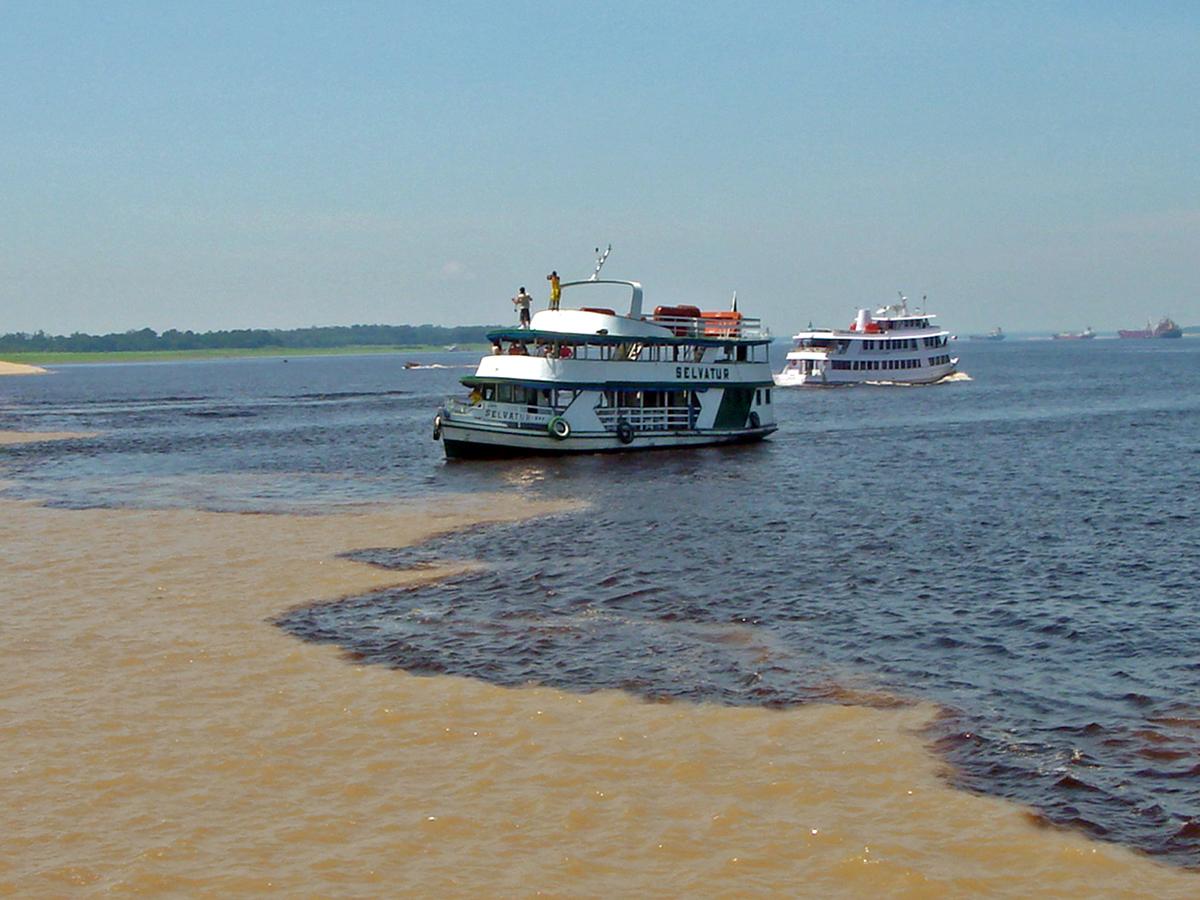
They run side by side, different in colour and texture, divided by a sharp, visible line that seems to defy everything we know about water.
After all, place two droplets together and they merge instantly. So how can two massive, fast-moving rivers touch, and still refuse to blend?
What looks like pure magic is, in fact, fascinating science at work.
Where it happens: Famous real-world examples
In India, one of the most striking examples appears at Devprayag in Uttarakhand. Here, the Alaknanda and the Bhagirathi rivers meet to form the Ganga —yet for a short stretch, they flow side by side without fully mixing. One runs clearer, the other darker, creating a visible seam where two identities briefly remain separate before becoming one.
This phenomenon isn’t unique to India. Halfway across the world, in the Amazon rainforest, the Rio Negro and the Solimões rivers travel together for nearly six kilometres without blending. The contrast is dramatic: the inky-black waters of the Rio Negro alongside the muddy brown Solimões, divided by a line so sharp it looks almost drawn.

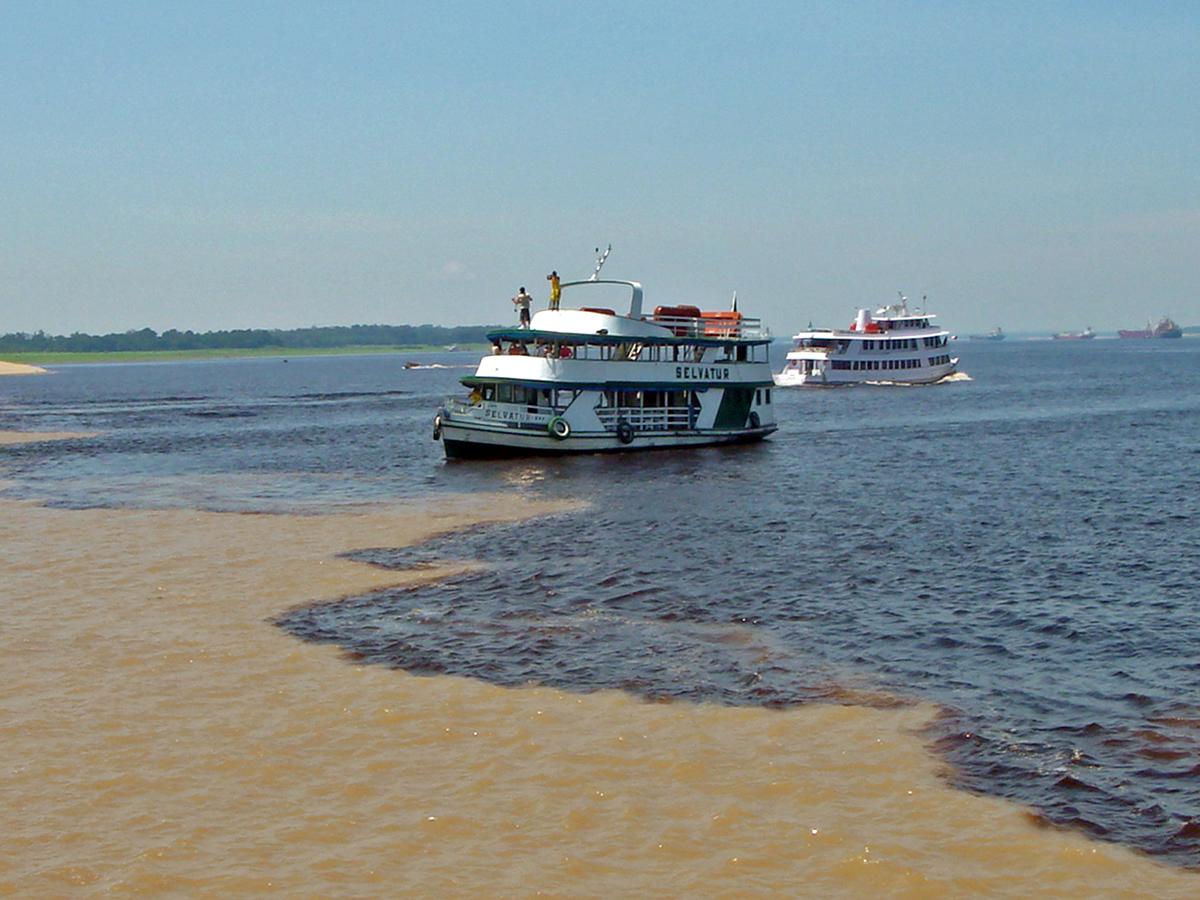
The Rio Negro and the Solimões rivers in Amazon rainforest
| Photo Credit:
Photo: Wikimedia Commons
A similar sight unfolds in Europe, where Switzerland’s Rhone River meets the Arve in Geneva. The glacier-fed Arve, heavy with silt, flows alongside the clearer Rhone, forming a striking two-toned river that has become a favourite for photographers and curious onlookers alike.
From the Himalayas to the Amazon and the Alps, these rivers show that even in constant motion, water can hold its boundaries—at least for a while.
First instinct vs reality
Our first instinct is simple: water should mix instantly. After all, pour a glass of water into another and the boundary disappears in seconds. We grow up learning that liquids flow, spread, and merge without resistance—so when two rivers meet, we expect the same seamless union.
But rivers are not just water in motion. They are complex systems, carrying heat, sediment, speed, and history from the landscapes they pass through. When two such systems collide, nature doesn’t always follow our everyday expectations. Instead of instant blending, the rivers may move alongside each other, maintaining their differences—at least for a while—revealing that in the natural world, mixing is not automatic, but conditional.
The core science: What keeps rivers apart
The line between two rivers is not imaginary, it is shaped by measurable physical differences. When rivers meet, several factors decide whether they blend smoothly or hold their distance.
Temperature differences play a key role. Warmer water is lighter, while colder water is heavier. When rivers with different temperatures collide, they can flow alongside each other instead of mixing immediately, much like warm air rising above cold air.
Density and sediment load add another layer. Rivers carrying heavy sediment—silt, sand, or clay—are denser than clearer rivers. This difference makes mixing slower, allowing each river to maintain its colour and character over long stretches.
Speed and volume of flow matter as well. If one river is faster or carries more water, it can push past the other rather than blend with it. The stronger current creates a moving boundary where the two flows meet but do not easily merge.
Finally, chemical composition influences how waters interact. Variations in dissolved minerals, organic matter, or salinity can subtly alter water behaviour, reinforcing separation.
Together, these differences create temporary yet visible boundaries—natural lines drawn not by magic, but by physics patiently at work.
The invisible physics at work
What we see on the surface is only part of the story. Beneath it, invisible forces decide how and when rivers will finally mix.
When two rivers meet, their waters may flow in relatively smooth, parallel layers, a pattern known as laminar flow. With limited turbulence to stir them together, the boundary between the rivers remains sharp. Only when the flow becomes rough and chaotic does turbulence begin to break that line, pulling the waters into each other.
Another process at play is stratification. Differences in temperature, density, or sediment can cause one river to flow slightly above or below the other, reducing contact and slowing down mixing even further.
This is where mixing timescales come in. Mixing is not instantaneous, it takes time, distance, and energy. In many cases, the rivers do blend completely, but only kilometres downstream, long after the dramatic visual boundary has disappeared from view.
In other words, the rivers are not refusing to mix. They are simply mixing on nature’s schedule, not ours.
Nature’s slow handshake
Given enough distance, time, and turbulence, the boundary between rivers slowly fades. Currents stir, sediments settle, temperatures equalise, and the waters finally become one. What looks like refusal is really patience. The rivers do mix, just on nature’s timeline, not ours.
Why it matters
This slow mixing shapes river ecology, influencing where fish, plants, and microorganisms thrive. Scientists also use these boundaries to track pollution, seeing how contaminants spread downstream. In a warming world, such river behaviour helps researchers study glacial melt and climate change. To scientists, rivers are not just channels of water, but living systems that carry information about the land they flow through.
A broader pattern in nature
These invisible boundaries aren’t limited to rivers. They appear in oceans where currents meet, in the atmosphere where air masses collide, and in ecosystems where habitats overlap. Nature often allows separation and interaction to exist side by side.
Discover more from stock updates now
Subscribe to get the latest posts sent to your email.