What it means for global shipping
Morteza Nikoubazl | Nurphoto | Getty Images
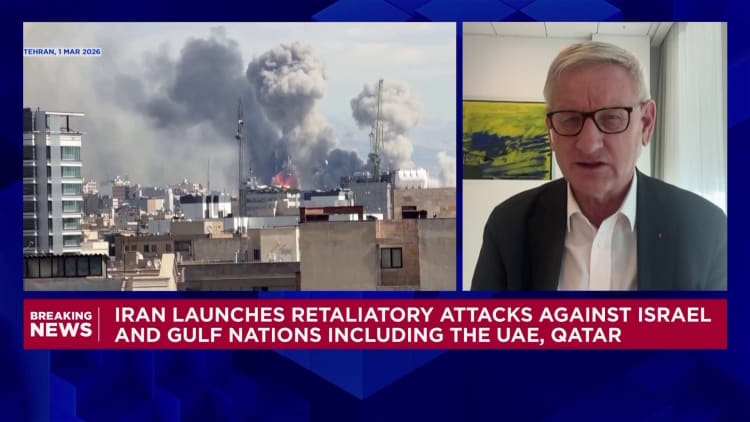
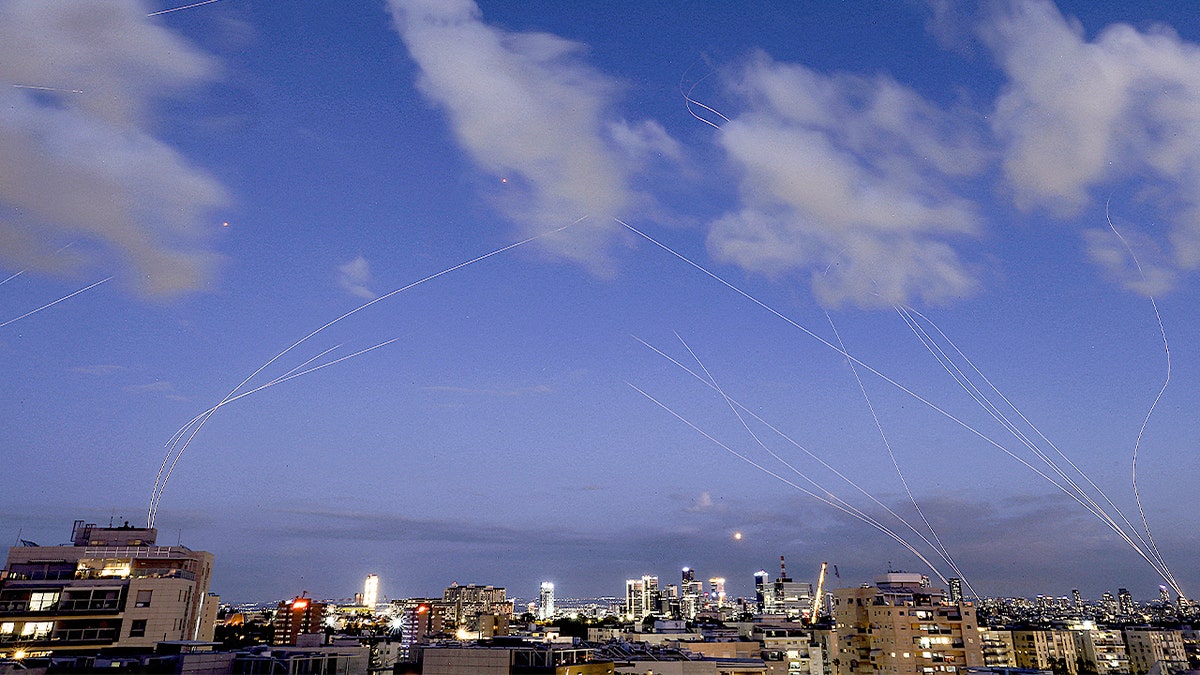
Container shipping giants have suspended operations through the strategically vital Strait of Hormuz and rerouted vessels around the southern tip of Africa, following U.S. and Israel strikes on Iran over the weekend.
Danish shipping company Maersk said in a statement that it would suspend all vessel crossings in the Strait of Hormuz until further notice, warning that services calling ports in the Arabian Gulf may experience delays.

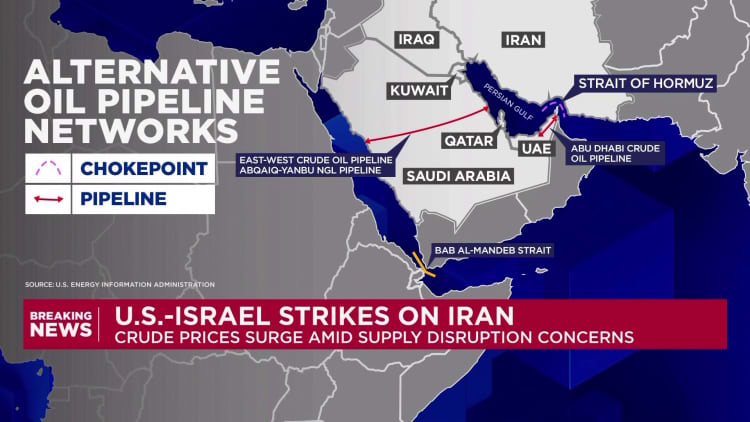
Located in the gulf between Oman and Iran, the Strait of Hormuz is recognized as one of the world’s most important oil choke points. In 2023, oil flows through the waterway averaged 20.9 million barrels per day, according to the U.S. Energy Information Administration, accounting for about 20% of global petroleum liquids consumption.
Maersk, widely regarded as a barometer of global trade, said the situation in the Middle East had also prompted it to pause future trans-Suez sailings through the Bab el-Mandeb Strait until further notice.
This waterway is a narrow maritime pinch point that sits between the Horn of Africa and the Middle East, linking the Red Sea to the Gulf of Aden and the Indian Ocean. The Bab el-Mandeb Strait was estimated to account for 12% of seaborne oil trade and 8% of liquefied natural gas (LNG) trade in the first half of 2023.
Maersk said all sailings on the Middle East-India to Mediterranean and Middle East-India to east coast U.S. services would be rerouted around the Cape of Good Hope.
Peter Sand, chief analyst at Xeneta, said higher container shipping rates should be factored in for the Middle East region at least for as long as the conflict persists, adding there is “no real alternative” to ocean freight.
“The risk of geopolitics has shown its ugly face with higher frequency and more severity over the past years than ever before,” Sand told CNBC’s “Squawk Box Europe” on Monday.
“I think it’s fair also to say there is a little bit of fatigue also in the industry because you draw 10 contingency plans only to tear them all up because there is a new twist and a new angle to it.”
Shipping cranes stand above container ships loaded with shipping containers at the Port of Los Angeles on Feb. 20, 2026 in Los Angeles, California.
Mario Tama | Getty Images
Even if oil containers are only temporarily blocked from the Strait of Hormuz, it can ratchet up global energy prices, raise shipping costs and create significant supply delays.
The Strait of Hormuz is also key for global container trade. Ports in this region such as Jebel Ali and Khor Fakkan are transshipment hubs that serve as intermediary points in global networks.
Alongside Maersk, German container shipping firm Hapag-Lloyd said over the weekend that all vessels transiting through the Strait of Hormuz would be suspended, citing the safety and security of its crews.
France’s CMA CGM said Saturday that it had instructed all of its vessels inside the Gulf and bound for the region to proceed to shelter. Passage through the Suez Canal has also been suspended until further notice, CMA CGM said, with vessels rerouted around Africa via the Cape of Good Hope.
MSC, the world’s largest container shipping company, said Monday that it had ordered all vessels operating in the Gulf region to proceed to designated safe areas, adding that it would closely monitor further developments.
‘Extremely cautious’
Amrita Sen, founder and director of market intelligence at Energy Aspects, said on Monday that the key question is what happens to the Strait of Hormuz.
She estimated that approximately 15 million barrels of oil and approximately 80 million tons of LNG traversed the waterway last year.
“We don’t think that’s very likely,” Sen told CNBC’s “Europe Early Edition” when asked whether Iran would seek to shut off the strait completely.

“The U.S. and Israel would just take that out, very, very quickly. The U.S. has way more superior military power to just neutralise any of Iran’s abilities to do that,” Sen said.
“While we are not saying the strait is going to get closed, what the U.S. will not be able to do is control these one-off attacks on tankers and that is enough to make the market extremely cautious about sending vessels in. And that’s what creates the disruptions,” she added.
Discover more from stock updates now
Subscribe to get the latest posts sent to your email.