West Asia war: how finding oil changed the Persian Gulf’s ecology
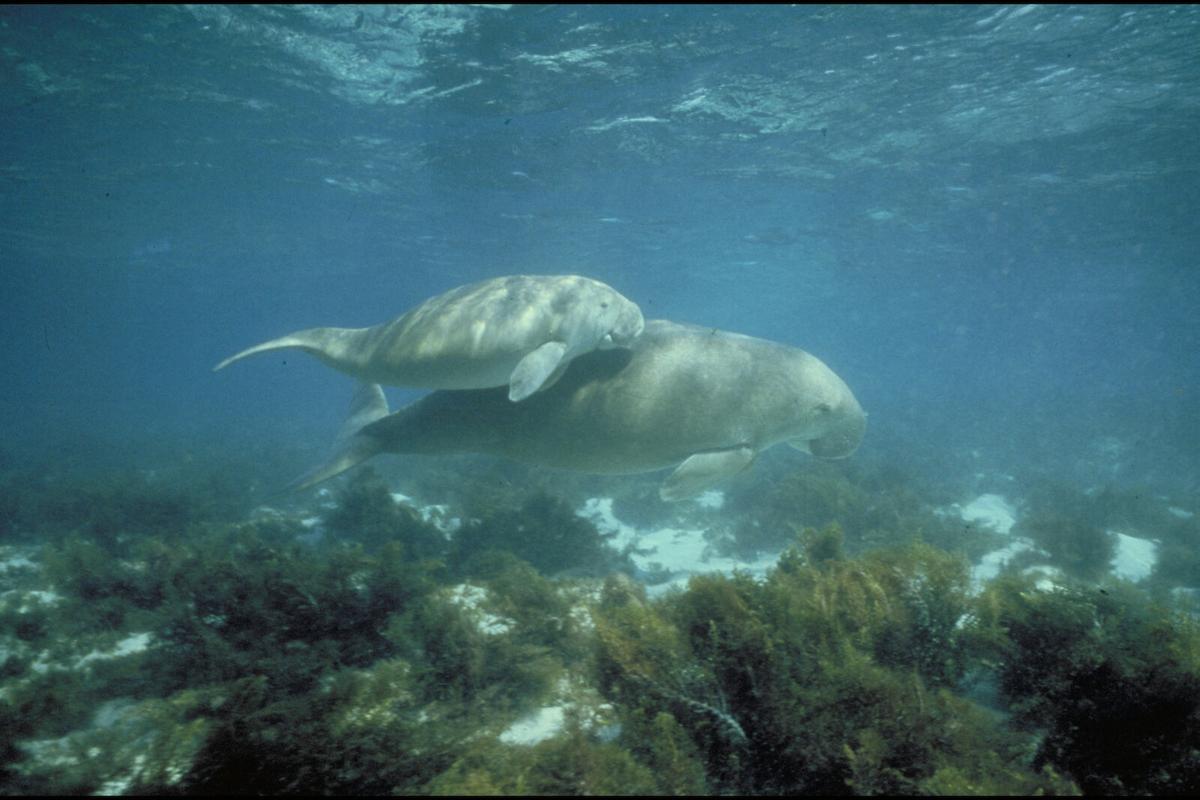
It wasn’t always this way. Just six decades ago, these waters were busy not with warships but fishing boats, and the glittering megacities that now line the coast were then little more than fishing villages.
The Gulf coastline is remarkably young. Formed 3,000 to 6,000 years ago as the sea flooded the Arabian basin through the Strait of Hormuz, it is today a shallow, semi-enclosed sea spanning about 226,000 sq. km, with an average depth of just 30 m.
Its shallowness and limited water exchange with the open waters of the Arabian sea drive its extreme conditions. The summer temperatures regularly exceed 35 °C while the high rate of evaporation keeps the water salty to the tune of 44-70 parts per thousand — almost twice as salty as open sea water.
Yet life persists.
Life on the edge
At the boundary of land and sea lies the intertidal zone — shaped by cycles of exposure and submergence to heat and hypersalinity.
These are dynamic systems where organic matter breaks down and is recycled, helping microorganisms survive in the adjacent waters. Beyond them, lagoons host specialised microbes and commercially important species like shrimp. Mangroves are fish nurseries, migratory bird refuges, and carbon sinks.

The mudflats also sustain shrimp as well as coastal food webs while the offshore seagrass meadows are among the Gulf’s most productive ecosystems, proving to be places where fish and pearl oysters spawn.
These meadows are also important feeding grounds for sea turtles. Five of the world’s seven sea turtle species occur here, including the critically endangered Hawksbill sea turtle, and nest along parts of the coast despite the wars.
The Gulf’s waters also support the world’s second-largest population of dugongs outside Australia, with an estimated 5,000 to 6,000 individuals. Dugongs are marine mammals that depend almost entirely on seagrass to survive.
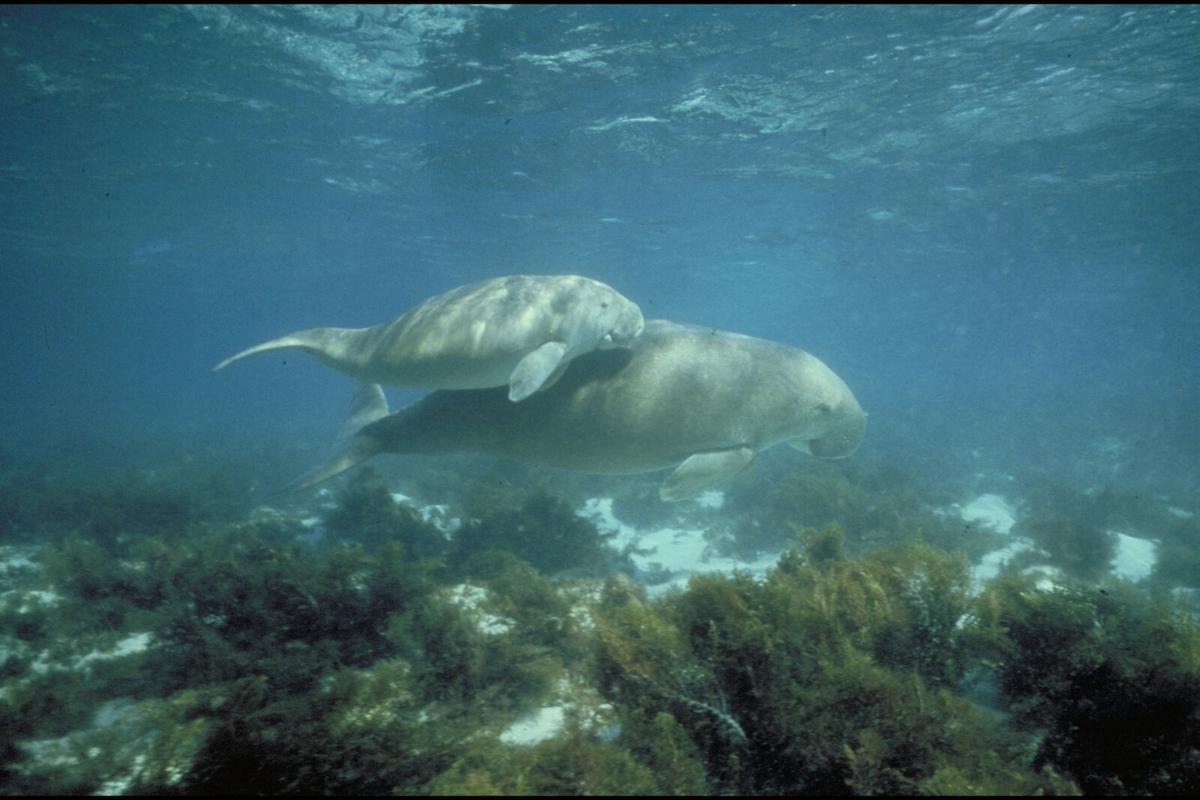
A dugong mother and her calf in shallow water over a bed of seagrass. Representative image.
| Photo Credit:
Public domain
Scattered across these waters are coral reefs covering an area the size of Goa. They support several fish and invertebrate communities. Importantly, they can survive extreme conditions, making them a natural laboratory for scientists to understand how coral ecosystems might respond to climate change.
Together, the Gulf is a finely balanced ecological network adapted to extremes.
At its peak, in the 18th to the early 20th centuries, the Gulf’s oyster beds supported a thriving economy that supplied nearly 80% of the world’s Basra pearls, named after a port in Iraq. This system collapsed when Japanese cultured pearls entered the market in the 1920s.
Then people found oil. By the 1970s, oil had made West Asia one of the world’s fastest-growing regions. Today, the Gulf region alone produces nearly a third of the world’s oil, with around 800 offshore platforms and more than 25,000 tankers moving in and out every year. Nearly a fifth of the world’s oil passes through these waters.
This wealth has driven rapid urbanisation. The number of people has tripled in four decades, with more than 85% of people and economic activity concentrated within 100 km of the coast.
Coastlines remade
Large-scale land reclamation, dredging, and engineering have transformed the shorelines. In Dubai alone, more than 60% of the natural coastline has been changed. Projects such as Palm Jumeirah have altered currents and sediment flows, eroding sand in some areas and causing sand to accumulate in others, leaving beaches to be maintained constantly.
Nearly two-thirds of the salt flats have disappeared, mangroves have shrunk, and natural beaches have been replaced with seawalls that eliminate nesting grounds for birds and turtles. Seagrass beds and mudflats have been buried under land reclamation projects, removing important nursery habitats for marine life.
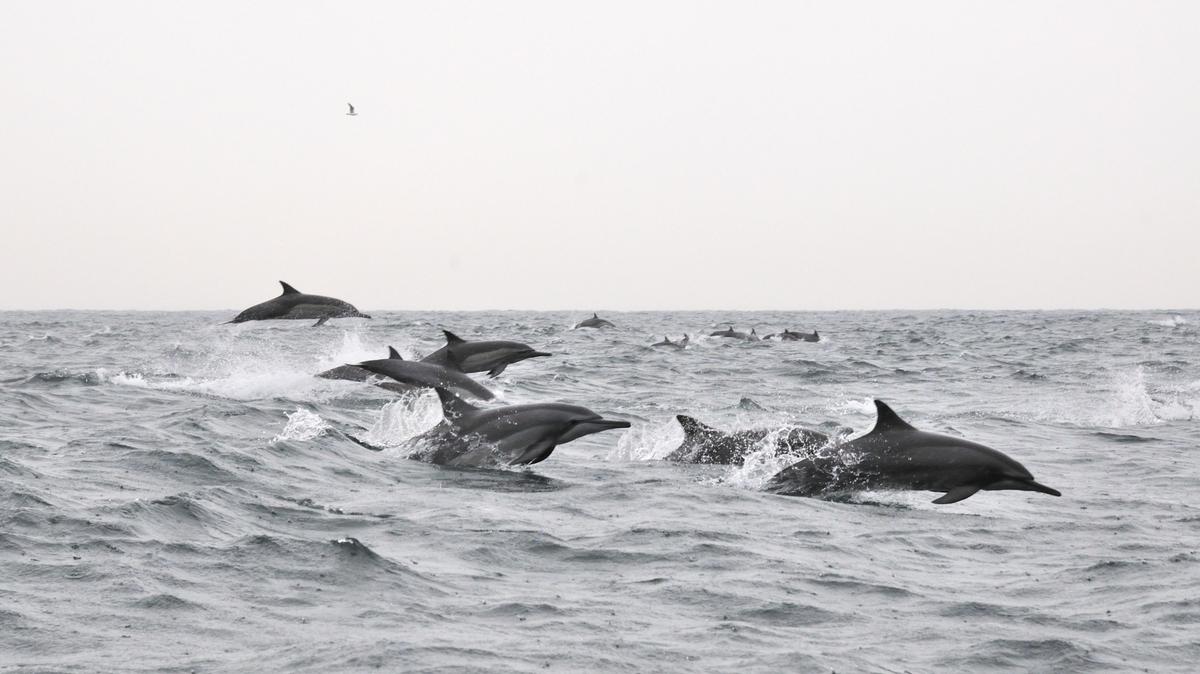
Dolphins in the Gulf of Oman.
| Photo Credit:
Philipp Weigell (CC BY)
The consequences have also extended offshore. Coral reefs have been buried or smothered by sediments while dredging and construction have disrupted natural flows. These physical changes have been compounded by industrial pressures such as desalination and pollution.
The Gulf hosts about half of the world’s desalination plants, with over 200 facilities producing around 11 million cubic metres of freshwater every day. They produce hot, saline brine, often laced with chemicals and heavy metals, that is discharged into the sea, where it accumulates in the semi-enclosed basin, further raising temperatures and salinity.
Intake systems also remove plankton and larvae, disrupting the base of the food web.
War and water
Algal blooms fed by sewage deplete oxygen and trigger mass fish deaths, such as those recorded off Kuwait’s shores in 1999 and 2011. Chronic nutrient loading also disrupts coral physiology, increases bleaching, and suppresses the growth of seagrass.
Industrial pollutants further accumulate in marine life. The pearl oyster (Pinctada radiata), once central to Gulf economies, has borne the brunt of pollution and sedimentation, which have left behind degraded oyster beds.
Leaks, spills, and tanker traffic continue to damage ecosystems. The 1991 Gulf War spill devastated coastlines, mangroves, bird populations, and fisheries while oil fires spread pollutants far afield. The U.N. Compensation Commission awarded Kuwait $52.4 billion for a clean-up; decades later, the effort is still underway.
These threats persist even today. The oil infrastructure continues to be a target of drones and missiles, and rising temperatures trigger repeated coral bleaching, pushing already stressed ecosystems to the brink.
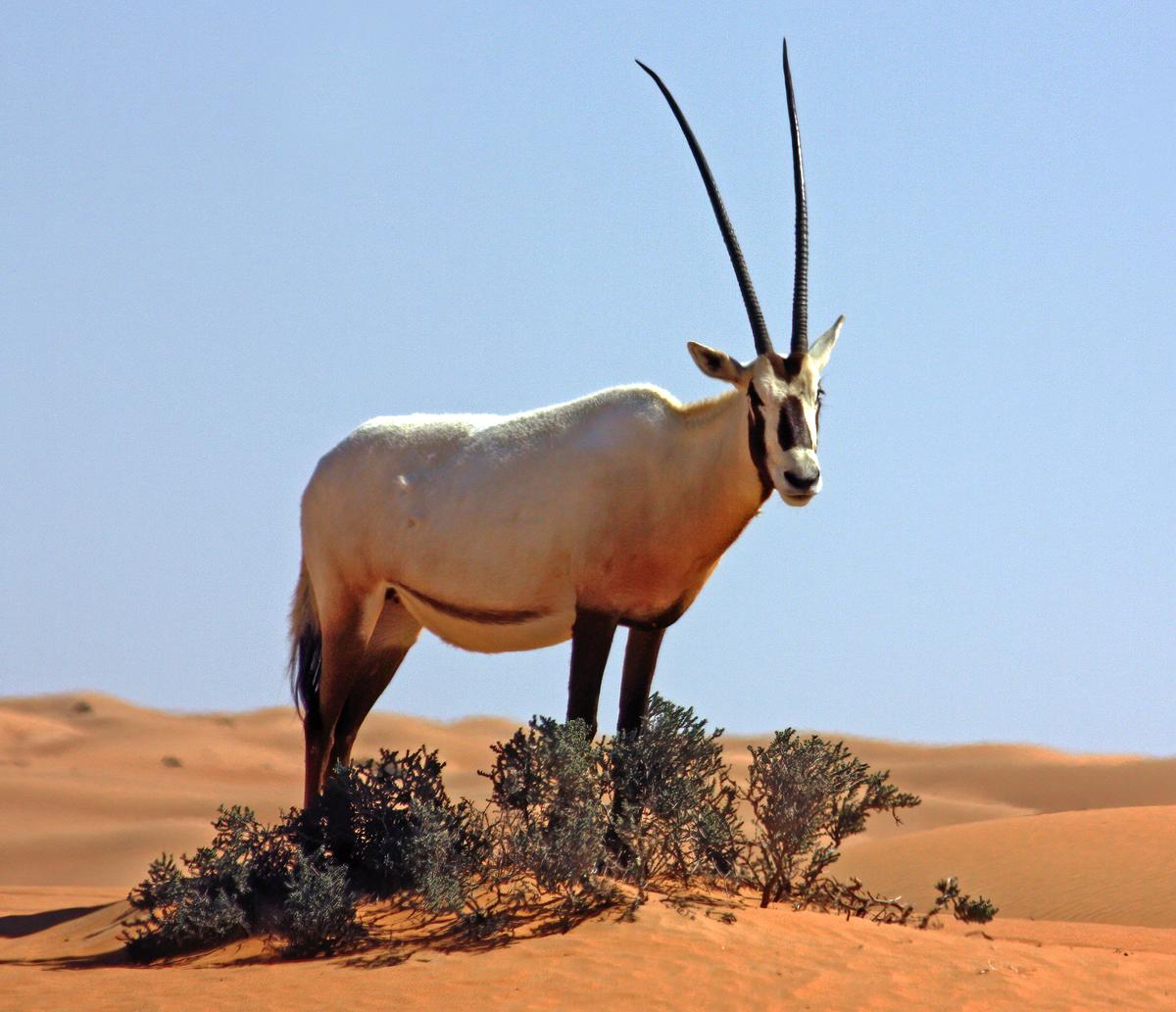
An Arabian oryx in Dubai, 2014.
| Photo Credit:
Charles J. Sharp (CC BY-SA)
The consequences extend far beyond the sea. Across West Asia, the Arabian oryx, populations of the Asiatic cheetah, and the Arabian leopard have fallen sharply thanks to hunting and conflict. The Arabian oryx vanished from the wild by 1972. Then, the Phoenix Zoo in the U.S., Fauna & Flora International in the U.K., and the World Wide Fund for Nature reintroduced it in Oman in 1982, with populations later established across Saudi Arabia, Israel, the U.A.E., and Jordan. Meanwhile, the Asiatic cheetah survives in Iran in critically low numbers.
Repeated wars have also derailed conservation efforts. The Iranian Revolution in 1979 followed by the Iran-Iraq War in 1980 brought wildlife protection to a near halt, leaving protected areas to decay and wildlife populations to crash.
A narrowing window
Today, the Gulf is among the worst affected marine regions on the planet. But signs of awareness do exist. The UAE, Saudi Arabia, and Qatar have imposed limits on shrimp trawling. The UAE and Saudi Arabia are also leading mangrove restoration efforts and, together with Kuwait, have established marine protected areas to conserve what remains of these ecosystems.
As marine biologist and New York University (Abu Dhabi) professor John Burt noted in his work on Gulf ecosystems, the region’s highly centralised governance — for all its deficiencies — could also facilitate rapid environmental action. What is required is for ecological concerns to be prioritised at the highest levels.
Time is also limited. Ecosystems such as coastal swamps, saltpans, oyster habitats, and the nesting sites of endangered sea turtles are already approaching points of no return.
Ipsita Herlekar is an independent science writer.
Discover more from stock updates now
Subscribe to get the latest posts sent to your email.