Want to save fuel while cooking? Here is how you can use a pressure cooker effectively

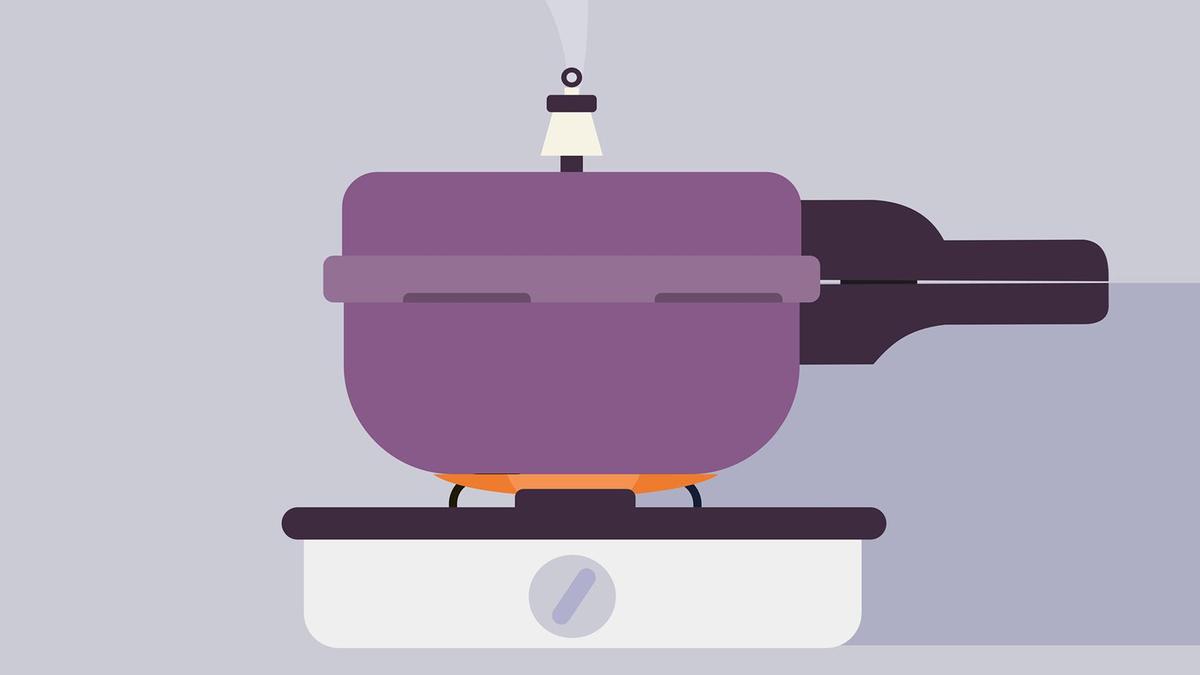
Learning how to use a pressure cooker efficiently is now, more timely than ever
| Photo Credit: Getty Images/iStockphoto
There is just one catch: you need to learn how to use it well.
A pressure cooker can save you over 50% on fuel — but only if you use it right. Here’s how:

Always pre-soak
Pre-soaking rice, dal, and rajma significantly reduces cooking time. Remember, cooking only begins once water reaches the core of the ingredient; skipping this step means you’re simply burning extra fuel. By the same logic, always thaw frozen ingredients before cooking, and avoid large chunks. A whole potato, for instance, takes far more fuel to cook than one that’s been chopped.

Use as little water as possible
Water absorbs heat. The more you add, the more fuel you waste. Vegetables, meats, and seafood already have high water content and need very little added water in a pressure cooker. Only rice and dal require a larger quantity of water to cook properly.
Lower the heat once full pressure is reached
High heat is only needed to build pressure. Once your cooker reaches full pressure, turn the heat down — the food will continue cooking just as well, with far less fuel
Don’t leave too much empty space
A pressure cooker works most efficiently when it’s reasonably full. If you are cooking a small quantity, use a smaller cooker. Alternatively, use separators to utilise the space and cook multiple ingredients — rice, dal, and vegetables — simultaneously.
Match the flame to the cooker
If the flame creeps up the sides of the vessel, it’s too large. A well-matched flame heats only the base of the cooker, ensuring no fuel is wasted.
Recipes to try
Mixed vegetable pulav
Soak 1 cup basmati rice for 30minutes. Drain the water.
Add to a pressure cooker with 1 tsp salt, 1/2 cup mixed vegetables, 2 slit chillies, and 1.5 cups of water. Cook on medium heat for 2 whistles (around 10 minutes).
Switch off. Let pressure settle.
Open. Fluff up. Mix in 1 tbsp ghee and coriander leaves.
Aviyal
For the paste: blend 1/2 cup coconut and 2 green chillies to a paste. Add 1 cup of yoghurt. Blend again to a smooth paste.
In a pressure cooker, add 1 cup water, 4 cups mixed vegetables cut into fingers, 1/2 tsp salt and 1/4 tsp turmeric powder.
Cook on medium heat for 2 whistles (around 10 minutes). Switch off and let pressure settle.
Mix in aviyal paste, 2 tsp coconut oil, and curry leaves.
B. Ramakrishnan is the creator of One Pot One Shot or OPOS, a cooking technique built around the pressure cooker. He is the author of 5 Minute magic and The Story Of India Through Food. His latest book, The Complete OPOS Cookbook has been published by Harper Collins.

Published – March 14, 2026 03:50 pm IST
Discover more from stock updates now
Subscribe to get the latest posts sent to your email.