Visits from China down 60% in January 2026
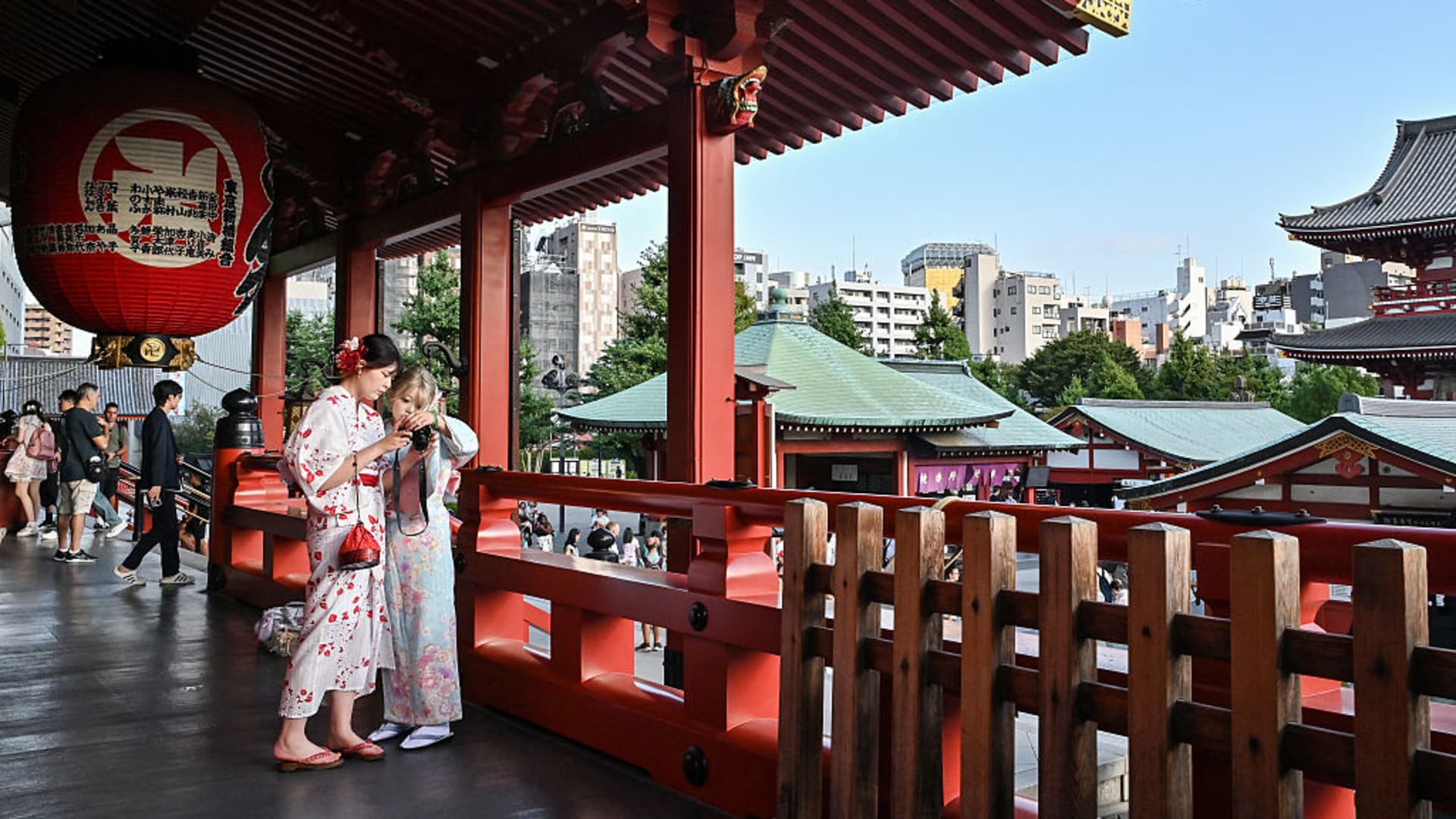
Richard A. Brooks | Afp | Getty Images
“We have seen less mainland Chinese tourists in Tokyo,” the 33-year-old Malaysian told CNBC after returning from Japan in early 2026.
Hotel prices in tourist areas appear to have stabilized and no longer spike during holidays observed by mainland China, unlike previous years.
Nordin’s experience is representative of Japan’s wider tourism landscape, which saw Chinese tourists stay away from Asia’s third largest economy amid a diplomatic spat that started last November over comments made by Japanese Prime Minister Sanae Takaichi.

Data from the Japan National Tourism Organisation (JNTO) revealed that the number of arrivals from mainland China plunged over 60% year on year in January, but overall tourist numbers were just down 4.9% year on year.
In December, the number of Chinese tourists plunged 43.3%, but the overall number of tourist arrivals from all countries climbed 3.7%.
Before November, mainland Chinese tourists were one of the largest groups heading to Japan.
Tourists from elsewhere
Where are these other tourists coming from? JNTO numbers suggest that more tourists are coming from South Korea and Taiwan — in January alone, South Korean tourist arrivals rose 21.6%, surpassing mainland China as the largest source of overseas visitors.
There were almost twice as many visitors from Taiwan than from China in January, with arrivals from Taiwan up 17%.
TOKYO, JAPAN – FEBRUARY 05: Tourists and shoppers walk through the Tsukiji shopping area on February 5, 2026 in Tokyo, Japan.
Tomohiro Ohsumi | Getty Images News | Getty Images
Japan’s appeal to people visiting from nearby countries lies in strong short‑haul flight links, the weak yen, and its reputation as a destination that is close, culturally familiar, and safe, said Zilmiyah Kamble, senior lecturer in hospitality and tourism management at James Cook University (JCU).
When asked about the decline in tourist from mainland China, Kamble said in an email to CNBC that the decline “is significant but not catastrophic.”
Kamble said that while Chinese tourists represent one of Japan’s most valuable inbound markets, being high spenders in retail, hospitality, and luxury goods, Japan has historically had a diversified tourism portfolio, which provides a level of resilience.
Different cities for different folks
But unlike Chinese tourists, who have commonly been perceived to visit tourist heavy spots like Kyoto, Osaka and Tokyo, the influx of tourists from other countries seem to be bringing travelers to other regions in Japan.
Prefectures like Shizuoka — which houses the iconic Mount Fuji, and Nara — famous for its temples and deer park, have been harder hit due to the lack of Chinese tourists, according to analysts from Oxford Economics in a Feb. 27 report.
However, places like Fukushima are popular with people from Taiwan, while golf courses and hot springs in Ehime prefecture appeal to South Korean tourists, according to Oxford Economics.
Singapore university student Cheryl Ng, who visited Hiroshima in February, told CNBC the city had a large number of Western tourists. “Like, two‑thirds of the museum were Westerners,” she said, referring to the Hiroshima Peace Memorial Museum.
Oxford Economics echoed that view, noting Americans, Australians, and Europeans are attracted to Hiroshima’s historical sites.
Hiroshima was hit by the first ever atomic bomb on Aug. 6, 1945 as U.S. forces closed in on Imperial Japan during the waning days of World War II.
Oxford Economics noted that “given persistent yen weakness, we think the overall tourist numbers are likely to stay robust, although an increase from the current level is unlikely given the shortage of accommodation.”
David Mann, chief economist for Asia-Pacific at Mastercard, agreed: “The broader picture is still positive,” he said in an email to CNBC.
Mann noted that overall inbound arrivals to Japan are running about 34% above pre‑pandemic levels, with tourism revenue growing even faster than visitor numbers thanks to higher per‑visitor spending driven by the weak yen.
The return of Chinese tourists?
The question then is, will Chinese tourists return to Japan?
Oxford Economics analysts said tourist numbers from China are “unlikely to recover anytime soon” in the near term, saying that Japanese businesses are looking to capture demand from elsewhere.
Department stores are expanding their promotional activities in ASEAN economies, and retailers are increasing their stock of products popular with Europeans, Americans, and Southeast Asians, instead of targeting Chinese tourists, the analysts said.
Mastercard’s Mann said that it was hard to put a precise timeline on the return of Chinese tourists, but any recovery is likely to be gradual.
His sentiment was echoed by JCU’s Kamble, who noted that travel decisions are shaped not only by politics but also by consumer confidence, social media narratives, and broader economic conditions.
Other factors such as airline connectivity, disposable income, and diplomatic stability will also play a role, she said.
“Restoring confidence requires time, particularly in a highly connected digital information environment,” she said.
Discover more from stock updates now
Subscribe to get the latest posts sent to your email.