


US Department of Education issues new guidance on prayer and religious expression in public schools
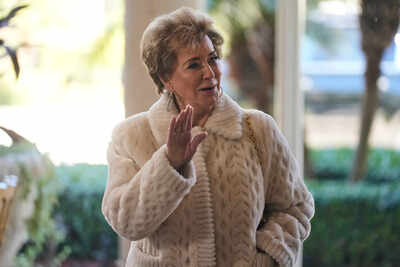
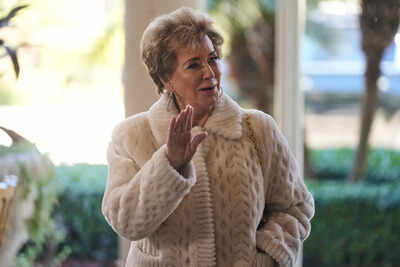
The US Department of Education on Tuesday issued updated guidance on constitutionally protected prayer and religious expression in public elementary and secondary schools, outlining how schools should balance individual religious rights with the constitutional bar on government endorsement of religion.The guidance, released through a department press release, is required under the Elementary and Secondary Education Act of 1965 and is updated periodically to reflect current law. It states that parents and students have a constitutional right to participate in public schooling in ways that align with their sincerely held religious beliefs, as long as those expressions do not infringe on the rights of others or turn the school itself into a religious actor.According to the press release, schools must allow religious expression when it is voluntary and personal, while ensuring that the institution does not sponsor religious activity or privilege one belief over another. The document also says schools may not favor secular viewpoints over religious ones.“The Trump Administration is proud to stand with students, parents, and faculty who wish to exercise their First Amendment rights in schools across our great nation,” Secretary of Education Linda McMahon said in a statement quoted in the Department of Education press release. “Our Constitution safeguards the free exercise of religion as one of the guiding principles of our republic, and we will vigorously protect that right in America’s public schools.”The new guidance replaces the Department of Education’s 2023 guidance on prayer and religious expression issued under the Biden administration. The earlier document is no longer in effect.
What the guidance says

The department’s guidance lays out several principles intended to clarify how prayer and religious expression should be handled in public schools.Students, teachers, and other school officials may pray or express their religious beliefs as individuals, provided they are not acting on behalf of the school. Public schools may not sponsor prayer or pressure students to participate in religious activities. For example, a principal may not lead prayer at a mandatory school assembly.Schools may regulate religious expression in the same way they regulate other forms of speech if it materially disrupts classwork or interferes with the rights of others. The document also states that religious speech must be treated on equal terms with secular speech. Essays or assignments that include religious content should be graded using the same academic standards applied to comparable secular work. Similarly, religious student organizations must be treated the same as secular student groups when it comes to recognition and access to school resources.
Legal background
The guidance draws on recent Supreme Court decisions on religious expression in schools, including Kennedy v. Bremerton School District and Mahmoud v. Taylor, which addressed the scope of individual religious expression under the First Amendment.The department said the guidance reflects three constitutional protections: freedom of speech, free exercise of religion, and the obligation of public schools to avoid establishing or endorsing religion. It also cites parents’ rights under the Fourteenth Amendment to direct the education and upbringing of their children.The press release places the guidance within a broader set of actions by the Trump administration. In February 2025, President Donald Trump signed an executive order establishing the White House Faith Office. In May 2025, he signed a separate executive order creating the Religious Liberty Commission. The Department of Education said the president previewed the updated guidance during a September 2025 speech at a commission hearing on religious liberty in public education.The department said the purpose of the guidance is informational, aimed at clarifying the current state of the law for schools, parents, and students. How it is applied will depend largely on how school districts interpret and implement its provisions in daily practice.
Discover more from stock updates now
Subscribe to get the latest posts sent to your email.