US Department of Education finalises new accountability rules for colleges under Trump’s tax law
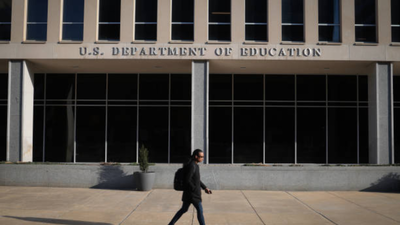
The U.S. Department of Education has completed the final round of regulatory discussions to implement major higher education reforms introduced under President Donald Trump’s Working Families Tax Cuts Act. The department announced that consensus has been reached on the third and final regulatory package, marking a key step in reshaping how colleges and universities are held accountable for student outcomes. The announcement was made following the conclusion of the Accountability in Higher Education and Access Through Demand-driven Workforce Pell (AHEAD) negotiated rulemaking committee meetings. According to the U.S. Department of Education, the new framework aims to ensure that postsecondary institutions are responsible for the financial outcomes of students, especially those relying on federal aid.
New accountability framework for all colleges
The AHEAD committee focused on creating a single accountability system that applies to all higher education institutions, regardless of whether they are public, private, nonprofit, or for-profit. For the first time in several decades, all postsecondary programs will be evaluated using the same standards tied to student earnings after graduation. The U.S. Department of Education said this approach ends what it described as selective enforcement practices of earlier administrations, where oversight varied based on an institution’s tax status rather than student outcomes.The department highlighted growing concerns that many students are worse off financially after completing college. High tuition costs and low post-college earnings have led to rising loan defaults, while institutions have largely avoided responsibility. The federal student loan portfolio currently stands at close to $1.7 trillion, placing a significant burden on taxpayers when borrowers fail to repay their loans.

‘Do Not Harm’ standard and earnings thresholds
Under the consensus-based proposal, the Act’s “Do Not Harm” standard has been aligned with existing Financial Value Transparency and Gainful Employment rules. This alignment introduces earnings-based thresholds that will be used to judge whether academic programs provide sufficient financial value to students.If a program fails to meet the required earnings benchmarks for two out of three consecutive years, the institution offering that program will lose access to the federal Direct Loan programme for those students. In addition, Pell Grant eligibility will also be affected. If at least half of an institution’s Title IV students or half of its Title IV funding is tied to failing programmes, those programmes will no longer qualify for Pell Grants.The Department said this rule applies equally to all academic levels, including certificate courses, undergraduate degrees, and graduate programmes.
Changes to Gainful Employment rules
As part of the new framework, negotiators agreed to remove the Gainful Employment debt-to-earnings measure. According to the Department of Education, this measure was duplicative and identified the same underperforming programmes as the new earnings metric. Removing it is expected to reduce administrative burden for both colleges and the department, while still maintaining strong oversight.Under Secretary of Education Nicholas Kent said the new rules bring long-needed stability after years of shifting regulations. He stated that institutions now have a framework they can plan around, while students and taxpayers can expect better protection against poor-value programmes.
Broad support from stakeholders
The Department noted that the final agreement received support from a wide range of stakeholders, including representatives of students, colleges, state agencies, businesses, legal aid groups, and taxpayer advocates. Negotiators also welcomed the department’s focus on treating all institutions equally and creating rules that are likely to remain in place across future administrations.
Background to the rulemaking process
The negotiated rulemaking process is required under Section 492 of the Higher Education Act. It involves public consultation and discussions with stakeholders before new regulations governing federal student aid programmes are proposed.President Trump signed the Working Families Tax Cuts Act into law in July. The legislation introduced major changes to simplify federal student loan repayment, establish the first Workforce Pell Grant programme, and strengthen accountability standards for higher education. On July 24, the U.S. Department of Education announced the formation of the AHEAD committee to draft the necessary regulations.The Department is expected to publish a Notice of Proposed Rulemaking in the coming months, after which public comments will be invited before the rules are finalised.
Discover more from stock updates now
Subscribe to get the latest posts sent to your email.