UP eases RTE admissions, drops mandatory Aadhaar requirement for children
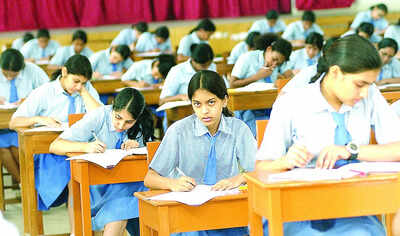
To make school admissions easier for underprivileged children, the Uttar Pradesh government has relaxed Aadhaar requirements under the Right of Children to Free and Compulsory Education (RTE) Act, 2009.Under the revised rules, children seeking admission under RTE will no longer be required to submit their own Aadhaar cards or those of both parents. Instead, the Aadhaar card of any one parent will be sufficient to complete the online application process.
Focus on ease of access
The decision is aimed at removing hurdles faced by families from disadvantaged backgrounds who often struggle with Aadhaar generation for young children.Issuing a fresh set of directives, the additional chief secretary for basic and secondary education, Partha Sarthi Sen Sharma, said the government’s objective is to make the admission process smoother and more accessible, according to TNN report.

Financial aid linked to Aadhaar-seeded accounts
The order makes it clear that financial assistance under RTE will be transferred only to Aadhaar-linked bank accounts of parents. Details of the Aadhaar-seeded account must be provided at the time of applying for admission. Officials said this step is intended to ensure the timely and direct transfer of benefits without delays or leakages.
25% quota to be strictly enforced
The order, issued to all district magistrates, who also serve as presidents of the District Education Project Committees (DEPCs), reiterates the legal mandate under Section 12(1)(c) of the RTE Act.District-wise annual admission targets will be fixed up to 25% of the total capacity of the lowest entry class, Class I or pre-primary, across all unaided private schools in each district.
Age criteria clarified
The government has also clearly defined age limits for admissions at different levels. Children aged three years or above but below four years will be admitted to nursery. Those aged between four and five years will be admitted to LKG. Children aged five to six years will be enrolled in UKG. Those aged six to seven years will be admitted to Class I.
Verification and lottery-based allotment
All document verification will be carried out at the level of the Block Education Officer and the Basic Shiksha Adhikari.Once applications are approved by the district magistrate or chief development officer, school allotment will be done through an online lottery system on a notified date. The lottery will be conducted in two stages.First off, applications will be randomly mixed up online, and lottery numbers will be given to them. Next, parents’ preferences plus the lottery number in ascending order will be used to assign schools in batches of 100 applications. The district magistrate’s approval will be needed for the final list.
Aim to remove barriers
Officials said the revised framework is designed to remove administrative barriers and ensure that eligible children are not denied their right to education due to documentation issues.The government maintains that the changes will help ensure fair access, faster processing, and better implementation of RTE admissions across Uttar Pradesh.
Discover more from stock updates now
Subscribe to get the latest posts sent to your email.