Trump is pulling the U.S. out of the UNFCCC. What does it mean?
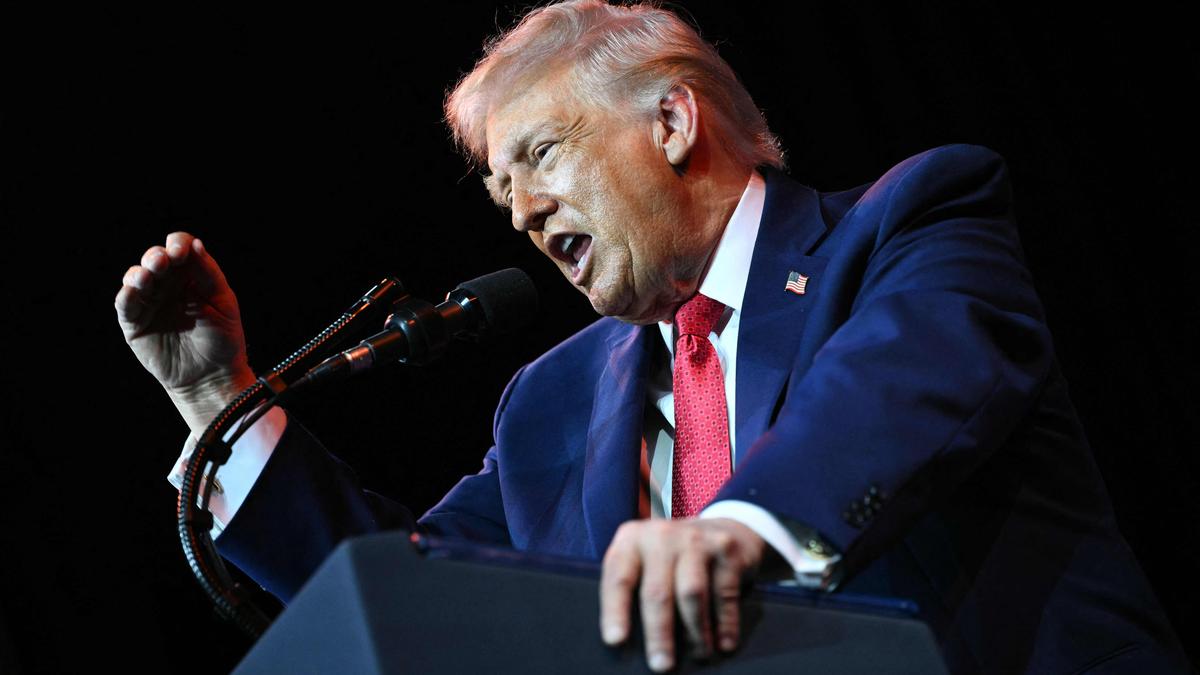
The UN FCCC is the global treaty under which the UN conducts the annual Conference of Parties (COP) climate talks and under which the Paris Agreement exists. Virtually all countries that are UN members are also party to the UN FCCC, meaning Trump’s withdrawal will make the US the first country to pull out of it.
Stepping back
On February 4, 2025, he had issued an executive order requiring the government “to determine which organisations, conventions, and treaties [to which the US is party] are contrary” to its interests. His decision to exit the FCCC and the IPCC are based on this review.
Other similar entities he’s exiting include the International Solar Alliance, the International Union for the Conversation of Nature (IUCN), the Intergovernmental Science-Policy Platform on Biodiversity and Ecosystem Services (IPBES), the Intergovernmental Forum on Mining, Minerals, Metals, and Sustainable Development (which works closely with the UN), UN Population Fund, UN Energy, and the UN Collaborative Programme on Reducing Emissions from Deforestation and Forest Degradation in Developing Countries.
While pulling out of the Paris Agreement already signalled Trump’s intentions and set the world on a difficult path to negotiate climate funding and emissions control without the world’s wealthiest country and one of its top emitters at the table, exiting the UN FCCC will remove the US from the international climate governance architecture altogether.
The U.S. as an emitter
The U.S. ranks at the top of the lists of the countries with the highest current annual emissions and per-capital emissions as well as countries with the most historical responsibility. According to the Global Carbon Project and other sources, US territorial CO2 emissions in 2024 were about 4.9 billion tonnes, roughly 12.7% of the global CO2 emissions that year. On per-capita emissions as well, for 2024 in the US they were about 14.6 tonnes per person, much higher than the global average.
It’s also the largest cumulative emitter for CO2 from fossil fuels and industry in most mainstream carbon accounting. According to the same data, the country’s share of global cumulative CO2 is around 24%.

The U.S. Environmental Protection Agency has also estimated that the country’s greenhouse gas emissions in 2022 amounted to 6.3 billion metric tonnes of CO2-equivalent and that US land use and forests offset about 13% as a net sink.
These emissions come mainly from burning fossil fuels for transport, electricity, and heating; in recent years transportation has emerged as the largest source of direct emissions.
Pulling out of the FCCC
The numbers don’t bode well for a country whose president has been calling climate change a “hoax”.
To be sure, pulling out of the UN FCCC won’t be ‘just another’ exit after the Paris Agreement. In doing so the US will be excluded from the core framework that organises almost all multilateral climate diplomacy. For instance, the US won’t have to participate in the FCCC reporting system, which records countries’ greenhouse gas emissions and progress towards their commitments, and thus allows nations to monitor their collective efforts and hold each other accountable.
Legally the FCCC itself provides a way for countries to withdraw should they see fit. After three years of being a Party, a Party may withdraw by written notice, and the withdrawal will take effect a year after the Depositary receives the notice. The FCCC also says that withdrawing from it is treated as withdrawing from any protocol to which the Party belongs.
In practical terms, this means the US will cease to be a Party inside the system that runs the annual COP negotiations and the processes by which the rules are drafted for transparency, carbon markets, financial architecture, etc. The country will also lose its ability to negotiate from inside the room at COPs even if it can still attend some meetings as an observer. However it won’t have the legal standing to bargain as a Party.
Further, the Paris Agreement sits under the UN FCCC. And the Agreement’s text is clear that any Party that withdraws from the UNFCCC “shall be considered” to have withdrawn from the Paris Agreement as well.
Climate finance
The exit could also reshape the politics of climate finance. The UN FCCC has established a financial mechanism with operating entities including the Global Environment Facility and the Green Climate Fund, and the COP oversees the arrangements of that mechanism. If the US isn’t a Party, it will lose its leverage inside the COP over how that financial architecture evolves while also making it politically easier for a US administration to justify withholding contributions as part of a broader retreat.
For economically developing countries like India, this could render financing less predictable.
Conversely, the exit will also raise the “cost of doing climate business” for US companies. Many private sector enterprises, investors, insurers, and subnational governments currently plan around the expectation that global climate rules will become tighter over time, so the US’s decision to exit the UN FCCC could signal more policy volatility, in turn increasing risk premiums and leaving US exporters more exposed to foreign climate-linked trade measures, since now the US will be less able to shape the underlying norms.
Moreover for many partner countries climate cooperation has become tied up with broader negotiations on energy security, critical minerals, industrial policy, and development finance. The potential implication here is that countries may now become more unwilling to cut side deals with Washington in adjacent domains because they’ll have to account for the durability of the US’s commitments.
Out of the IPCC
The IPCC assesses scientific research on climate change, compiling reports that synthesise the current understanding of climate science, the consequences, and potential strategies policymakers everywhere can implement. Pulling out of the IPCC could thus weaken the US’s role in owning the shared scientific references climate negotiations rely on.
This doesn’t automatically mean “American scientists will no longer be involved in climate reports” but it likely will reduce US involvement. The IPCC reports’ authors are put together by a process in which governments and observer organisations nominate experts and the IPCC Bureau creates teams. If the US stops nominating, an important pipeline for US-based expertise — which is considerable — becomes narrower.
This said, the IPCC explicitly encourages experts who are nominated but not selected to contribute as expert reviewers. This role is open and large in scope and US researchers could still participate if their government steps back.
US scientists can also still be nominated via non-government routes, e.g. by observer organisations, nationality no bar. However, in practice, government membership affects scientists’ power to coordinate.
Global repercussions
The global repercussions are likely to be most pronounced on bargaining power and finance, and therefore on climate action momentum.
The climate talks run on reciprocity. When a very wealthy country with high emissions decides to quit, it weakens the expectation that other major players will also play by the same shared rules. That in turn can harden poor countries’ positions; these countries already believe their rich counterparts promise more than they deliver. It can also give cover to other reluctant governments to delay or dilute action.
The timing is also unfortunate because the extant conversation on climate finance has shifted from the older $100 billion goal towards much larger needs and newer targets. According to the OECD, economically developed countries mobilised $115.9 billion in climate finance in 2022, the first time it exceeded $100 billion. However adaptation finance remains far below the need: the UN Adaptation Gap Report 2025 estimated it to be $310-365 billion per year by 2035 while international public adaptation finance flows were about $26 billion in 2023 (down from $28 billion in 2022).
At the COP29 summit in Azerbaijan in 2024, governments agreed to a new collective quantified goal of at least $300 billion per year by 2035 plus a wider mobilisation agenda. The US exiting the world’s core climate action bodies makes it harder to make credible deals to reach these numbers because other countries will ask why they should pay more when a major historical emitter is stepping away.
The UNFCCC and IPCC are together excellent coordinators as well. The IPCC synthesises evidence and creates common benchmarks and the UNFCCC turns those benchmarks into rules for reporting emission cuts and to progressive increases in national ambitions. Axiomatically, the US’s exit from this system could risk more climate action shifting into ‘smaller’ instruments, like trade measures, bilateral deals, and so on, rather than universal rules, resulting in uneven standards and more conflict over carbon border measures and access to technologies.
Ultimately, for poorer countries, the near-term risk is slower global mitigation as well as a reduced ability to secure predictable support for adaptation and for loss ‘and damage’ — at the very time when the quantified needs being discussed are expanding and the consequences of climate change are intensifying.
mukunth.v@thehindu.co.in
Discover more from stock updates now
Subscribe to get the latest posts sent to your email.