This shouldn’t be real: Paralysed patients play video games just by thinking after Neuralink transplant |
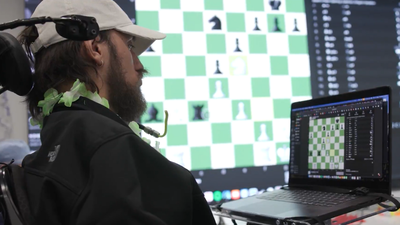
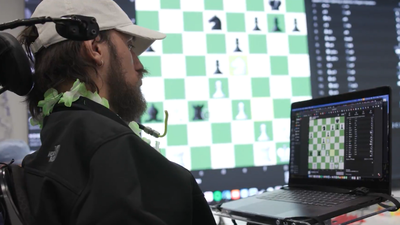
For people living with severe paralysis, video games were once among the many everyday experiences thought to be permanently out of reach. That assumption is now being quietly overturned. In recent demonstrations, paralysed patients implanted with a brain–computer interface from Neuralink have played video games using nothing but their thoughts. No controllers. No hand movements. Just neural signals translated directly into digital commands. Two years after the first human implant in 2024, the programme has expanded to 21 participants enrolled in trials worldwide, turning early experiments into a functioning system. These participants, often described as Neuralnauts, are helping drive brain–computer interface technology forward, restoring interaction, agency and independence to people whose bodies cannot respond.
Who the Neuralink patients are
Neuralink’s early human trials focus on people with severe paralysis, most commonly caused by spinal cord injuries, as well as some patients with ALS or paralysis following strokes. These individuals typically retain full cognitive ability but have lost the physical pathways that allow the brain to communicate with the body. That combination makes them ideal candidates for brain–computer interfaces, where the brain’s intent can still be detected even when muscles no longer respond.

How the Neuralink implant works
The Neuralink system relies on a small, wireless implant placed in regions of the brain responsible for movement intention. Ultra-thin electrode threads record neural activity associated with planned actions, such as moving a hand or clicking a mouse. These signals are decoded in real time and translated into commands that control a cursor, keyboard, or game interface. The implant communicates wirelessly with a computer, allowing patients to interact with digital environments without any physical input.Early demonstrations showed participants moving cursors and typing short messages. Since then, capabilities have expanded. Patients can now browse the web, send messages, and play fast-paced video games, including racing titles that require precise, continuous input. Neuralink reports that some participants achieve typing speeds of around 40 words per minute, comparable to able-bodied smartphone users. In gaming demos, neural signals replace joysticks entirely, with thought alone steering vehicles or triggering actions.
Real lives behind the demos
One of the most publicly known participants is Noland Arbaugh, who was paralysed after a spinal injury and became the first person to receive a Neuralink implant in 2024. He has spoken openly about returning to activities he believed were gone for good, including studying, gaming, and independently navigating digital spaces. Other participants use the technology to create art, communicate more freely, or simply watch and record family moments through hands-free control.
Safety, progress and remaining limits
According to Neuralink, more than 20 participants are now implanted globally, with no serious device-related adverse events reported so far. Still, the technology remains experimental. Battery life, long-term durability, and signal stability over many years are ongoing areas of study. The implants do not restore physical movement, only digital interaction, and access is currently limited to tightly controlled clinical trials.
Why this matters beyond gaming
While video games make for striking demonstrations, researchers see them as a proving ground rather than the end goal. The same neural decoding used for gaming can be applied to assistive robotics, communication tools, and potentially powered wheelchairs or robotic arms. For paralysed patients, this represents not entertainment alone, but a pathway back to independence in daily life.Neuralink, founded by Elon Musk, is one of several groups racing to develop practical brain–computer interfaces. Alongside excitement, the technology raises questions about privacy, data ownership, access, and long-term neurological impact. For now, however, the focus remains medical, restoring lost capabilities rather than enhancing healthy brains.Paralysed patients playing video games with their thoughts may sound like science fiction, but it is now a documented clinical reality. The true significance lies not in the spectacle, but in what it signals: a future where loss of physical movement no longer means loss of connection, creativity, or control. For the patients involved, that future has already begun.
Discover more from stock updates now
Subscribe to get the latest posts sent to your email.