Tangaliya weaving finds new life in Gujarat — with a boost from Brad Pitt
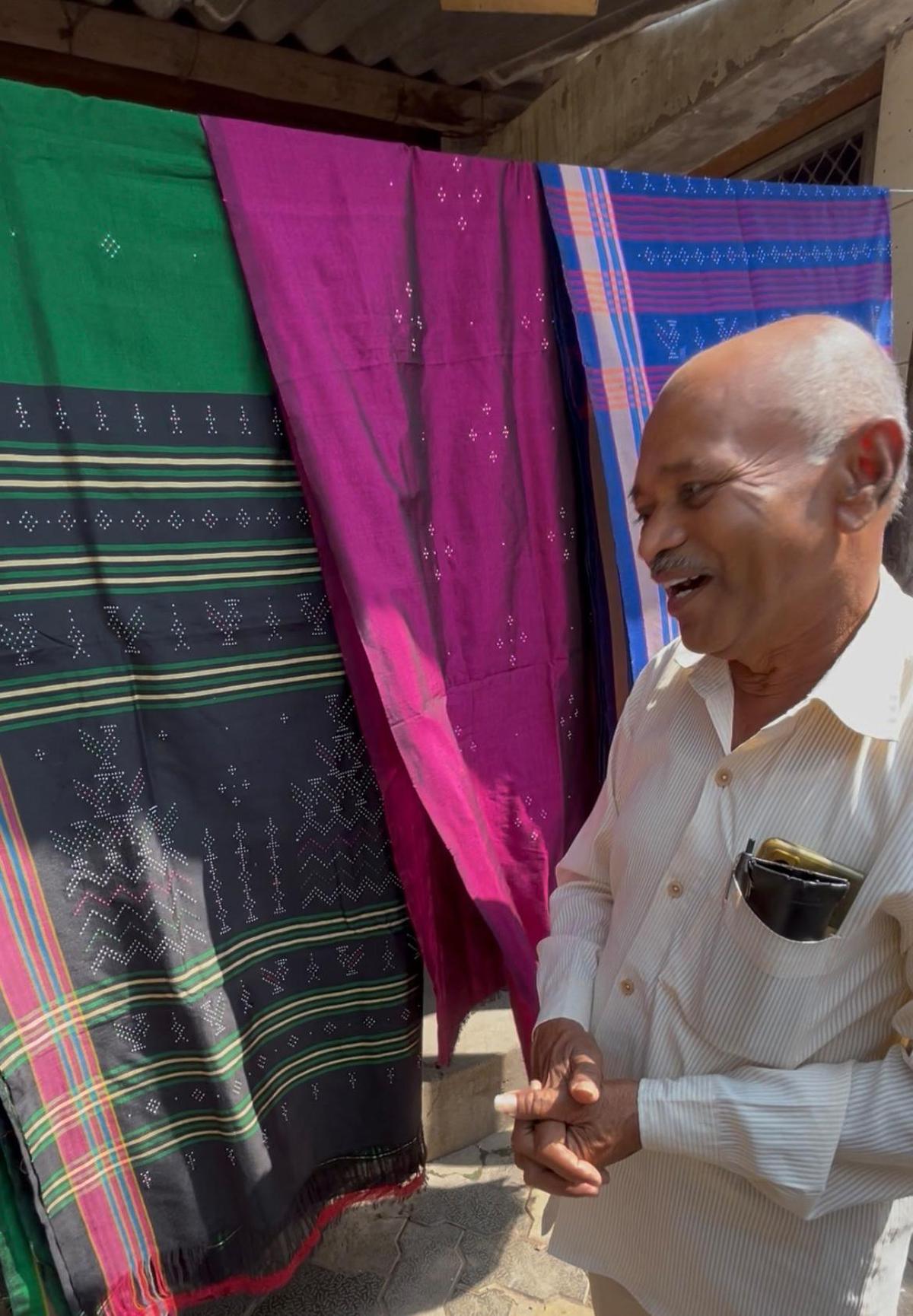
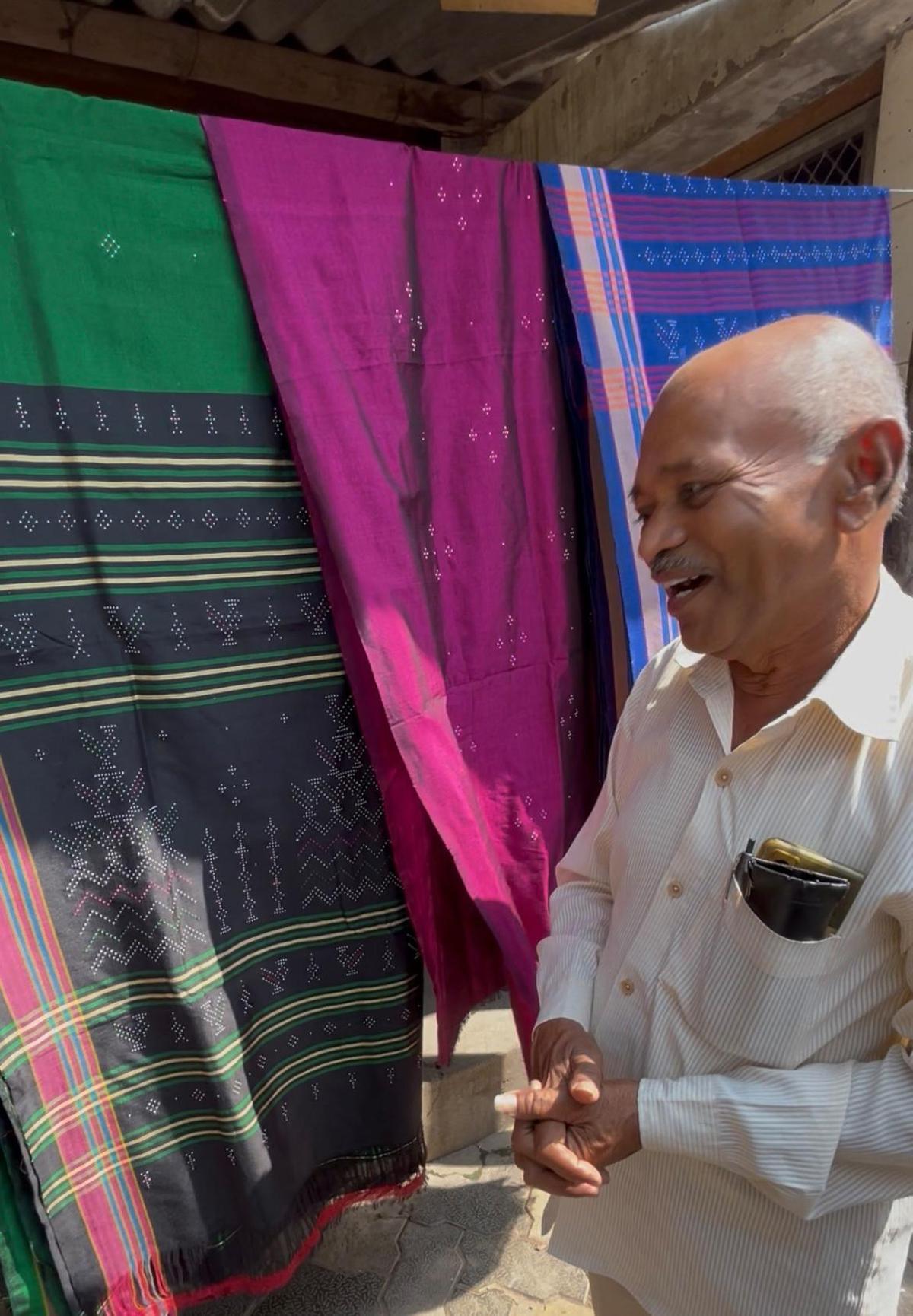
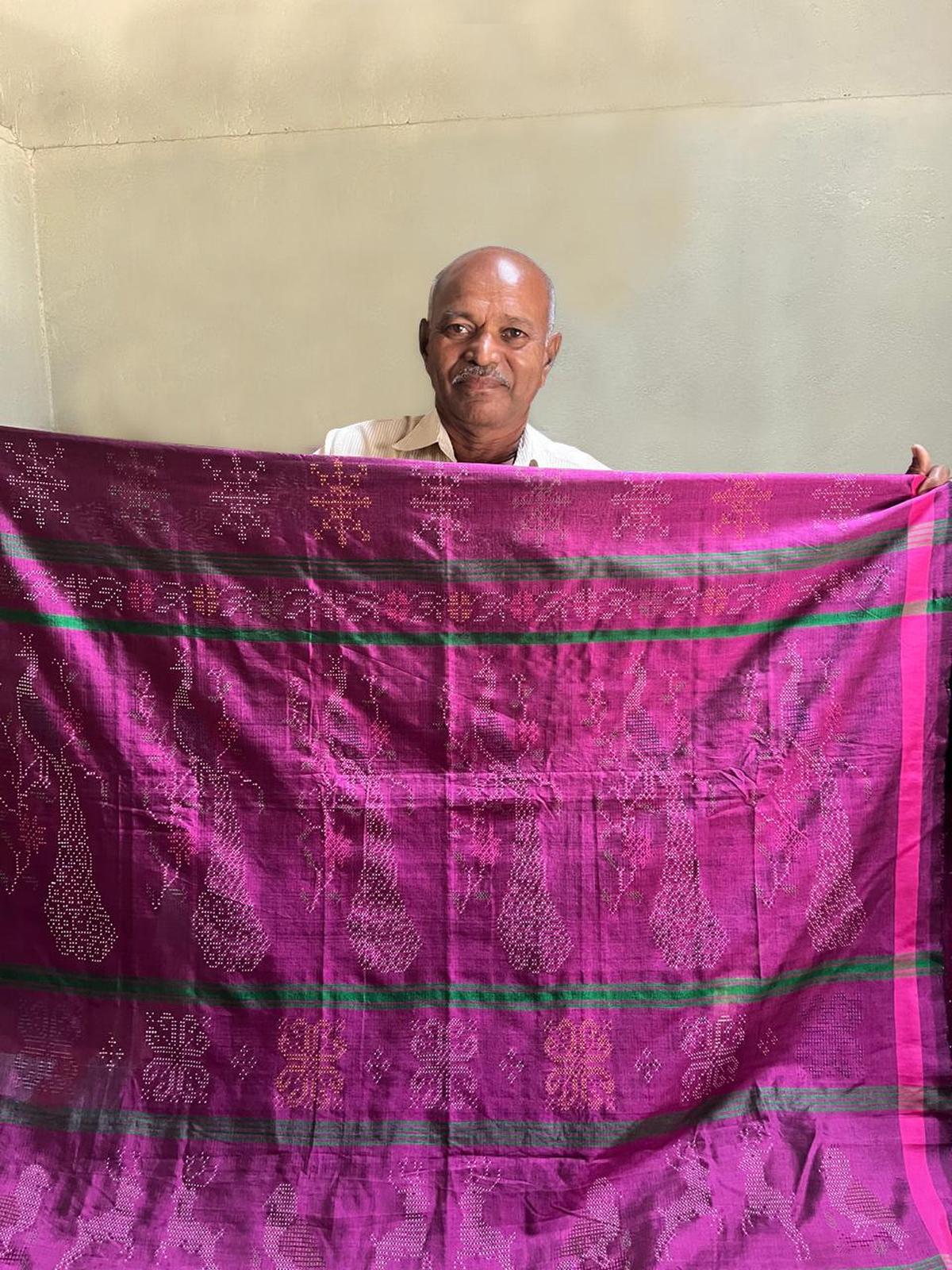
Jahabhai with his latest collection of saris
| Photo Credit:
Special Arrangement
Jahabhai Laxmanbhai Rathod is certain he will not lose his job to a machine.
“My work is handmade and it will continue to be done that way,” says Jahabhai, who has been creating tangaliya weaves for 48 years. Made on looms, the craft is known for its trademark dots or danas which form patterns that range from peacock and navagraha to the more modern deer and flowers. Earlier, it was typically done on cotton and wool, with handmade yarn made from sheep’s wool. Now mill-made yarn is used. And the fabric extends to silk, khadi, eri silk and kala cotton.
“I was 15 when I started working with tangaliya. My father, his father and ancestors have been doing this for more than 700 years. My 32-year-old son Baldev has now joined in,” says the 63-year-old.
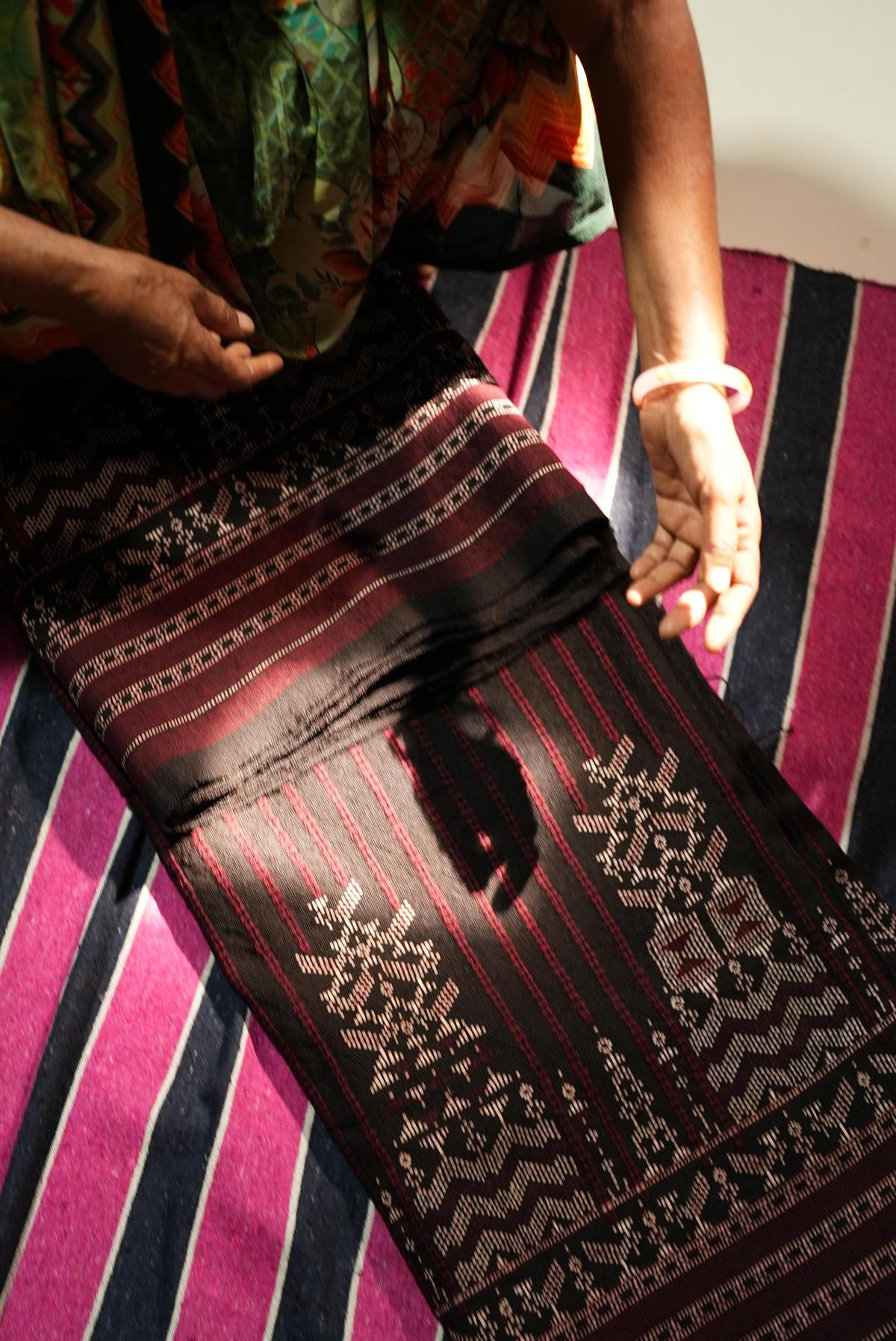
I am in Surendranagar district in Gujarat, known for its tangaliya weaves, with the Jaypore team, to learn more about the craft, which is primarily practised by the Dangasiya community. We visit the village of Vastadi first. Narrow alleys dotted with cows lead us to Jahabhai’s house.

An artisanal lifestyle brand, Jaypore works with Jahabhai and his weavers for tangaliya woven kurtas and pants that are retailed out of its stores and website. For the forthcoming season the brand is exploring tangaliya saris, as part of its ongoing effort to expand the craft into new product categories. Manu Gupta, vice president and brand head, Jaypore, says the brand placed its first order with this weaving community in 2025, commissioning 100-plus pieces. He adds that it is important to them that the narrative around tangaliya also highlights the people, traditions, and cultural legacy that sustain it.
Over an elaborate meal of bajra rotis, aloosubzi, kadhi, rice with green gram and buttermilk — Jahabhai shows us his recent work. He pulls out a pile of neatly folded tangaliya saris in cotton silk from a steel almirah. The shades are stunning: electric blue with hot pink stripes; a dual shade bottle green that sways between peacock blue and green, mustard and red…
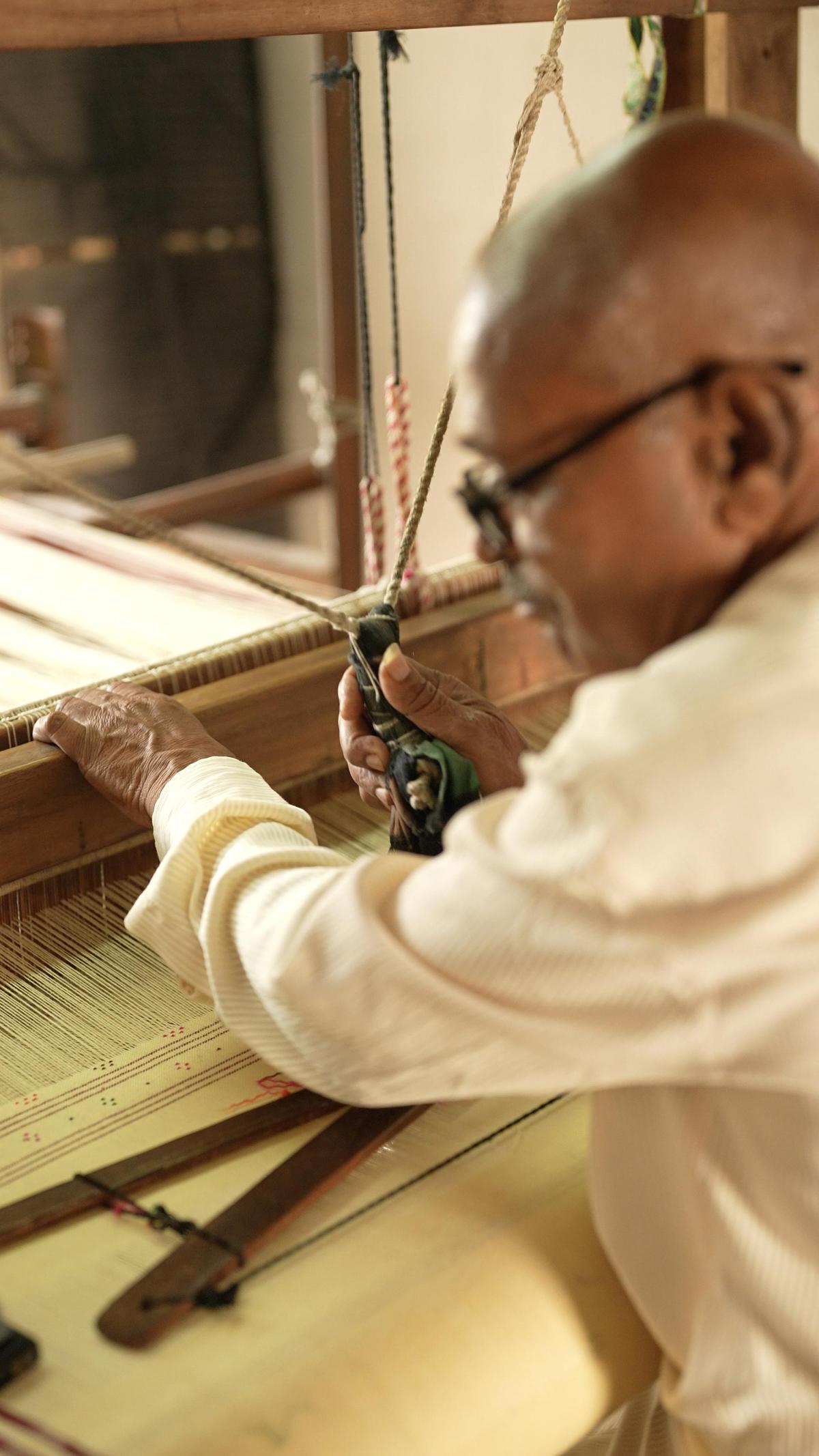
Jahabhai at work
| Photo Credit:
Special Arrangement
He also makes running fabric, stoles and unstitched kurta suits. “It takes six months to make a sari; roughly five days to make a 1.5 metre fabric with motifs,” says Jahabhai as he gestures for us to follow him to his workshop — a single room equipped with a weaving loom. The loom requires simultaneous hand and feet movement to run, which seems complicated, but when he begins, the speed and precision make it look almost effortless.
Nevertheless, it is a painstaking process, especially when I try my hand at it. The loom has several threads attached. The weft is silk, and the warp, cotton. I am instructed to segregate three threads, then take a colour yarn and roll it around the threads till it cocoons them. This sounds easy but when I am done, I notice my work lacks symmetry, and the shape, size and finish are chaotic.
This village has five families that weave tangaliya fabric — a steep drop from earlier numbers of 38-40, with children of weavers moving out and taking up jobs like driving autos, working in shops or becoming watchmen. The other neighbouring villages also have a few tangaliya weavers, around 60 families in total.
“After revival efforts, in 2007 by Rajesh Gupta and Vandita Seth from Gandhinagar NIFT, things are better,” says Jahabhai, adding, “They did a few projects with us. They suggested that we incorporate different fabrics and also taught us to expand beyond saris and create cushion covers, stoles and dress materials and work on colour combinations. They helped us get a GI tag in 2008,” smiles Jahabhai. After this recognition, he feels, there has been more awareness among people about these weaves. Till then, the weavers were weaving only garments for the women of the Dangasiya and Bharwad community.
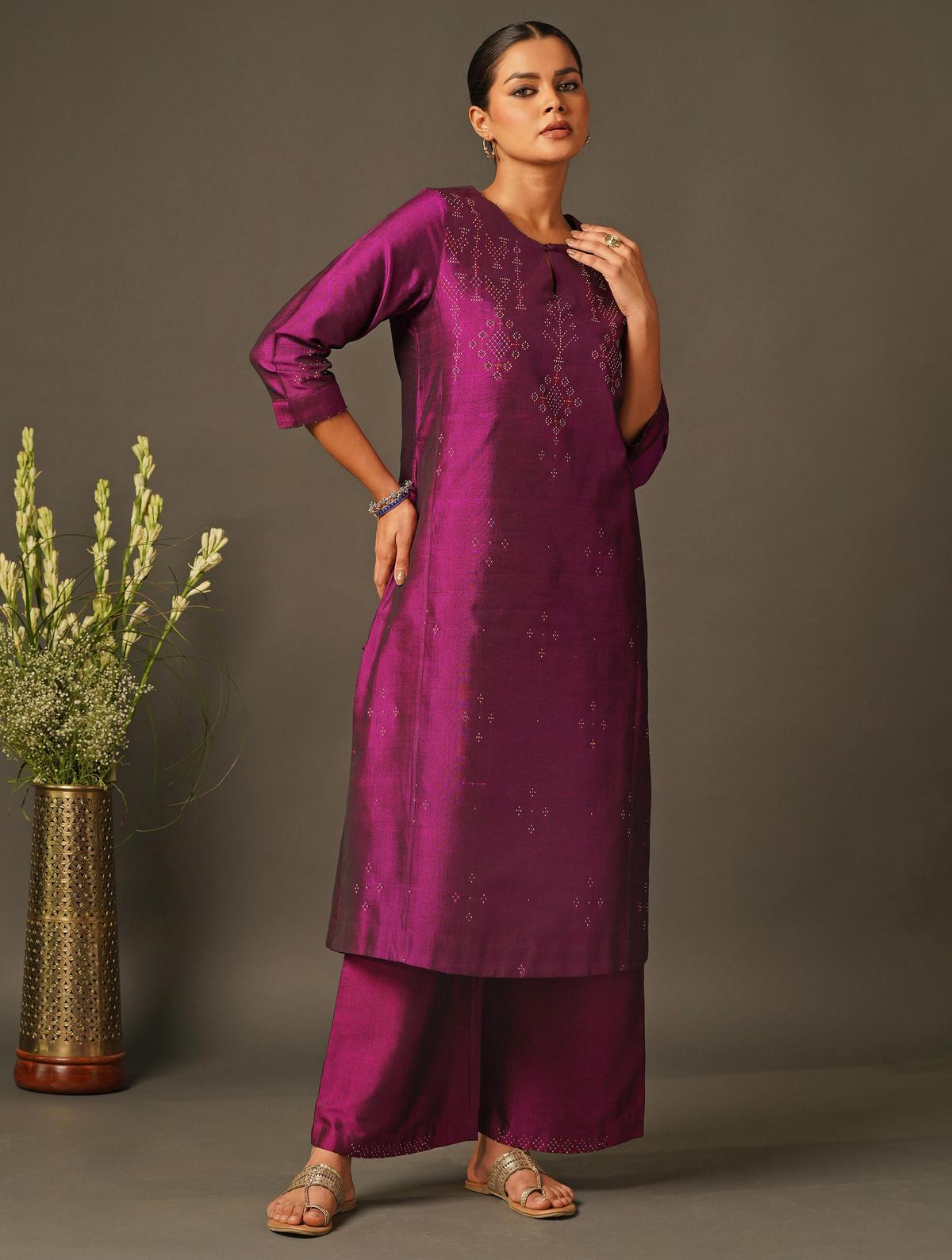
A model in a tangaliya woven kurta and pants
| Photo Credit:
Special Arrangement
Now, when one weaver gets an order from a business house, he ropes in other weavers from his village and surrounding ones and they together to fulfill the project. Jahabhai works with a team of 30 weavers (on contract) spread across the villages of Godavari, Vadla, Wadhwan, Dedadra, and Vastadi. Lately, they have been making approximately 140 saris, 2,000 stoles and 1,500 dress materials in a year.
Our next stop is the village of Godavari — 25 kilometres from Vastadi — where 53-year-old Ishwarbhai, weaves at great speed while chatting with us. He moves rhythmically, as if keeping up with a phantom music conductor. Ishwarbhai is working on a piece with intricate thread work that has taken him 13 months. “Five and a half metres, with elaborate work, take 15 days,” he explains. The more the motifs, the more a sari costs — anywhere from ₹7,500 to a lakh and more. We ask him if he is aware that celebrities are wearing his weaves. “I saw a video on YouTube where an actor from the South was wearing my creation. But I don’t know his name,” he grins. He is just happy to be weaving.
Does his work get challenging? “Sometimes the thread breaks or becomes weak, other than that I have no difficulties,” he smiles and adds, “I work right next to my house, I have a roof on top and a fan that keeps me comfortable. I like doing what I do. What more could I want?”
Fortunately for the craft, tangaliya is finally on the radar of designers and design houses. “We have seen encouraging interest from customers,” says Manu. It gained wider attention after Brad Pitt wore a blue tangaliya shirt in F1 by label 11.11 that was crafted by Baldevbhai Mohanbhai Rathore. Though Jahabhai and the weavers are blissfully unaware of who Brad Pitt is, they continue to do what they do with love and respect for their craft.
The writer was in Gujarat on invitation of Jaypore
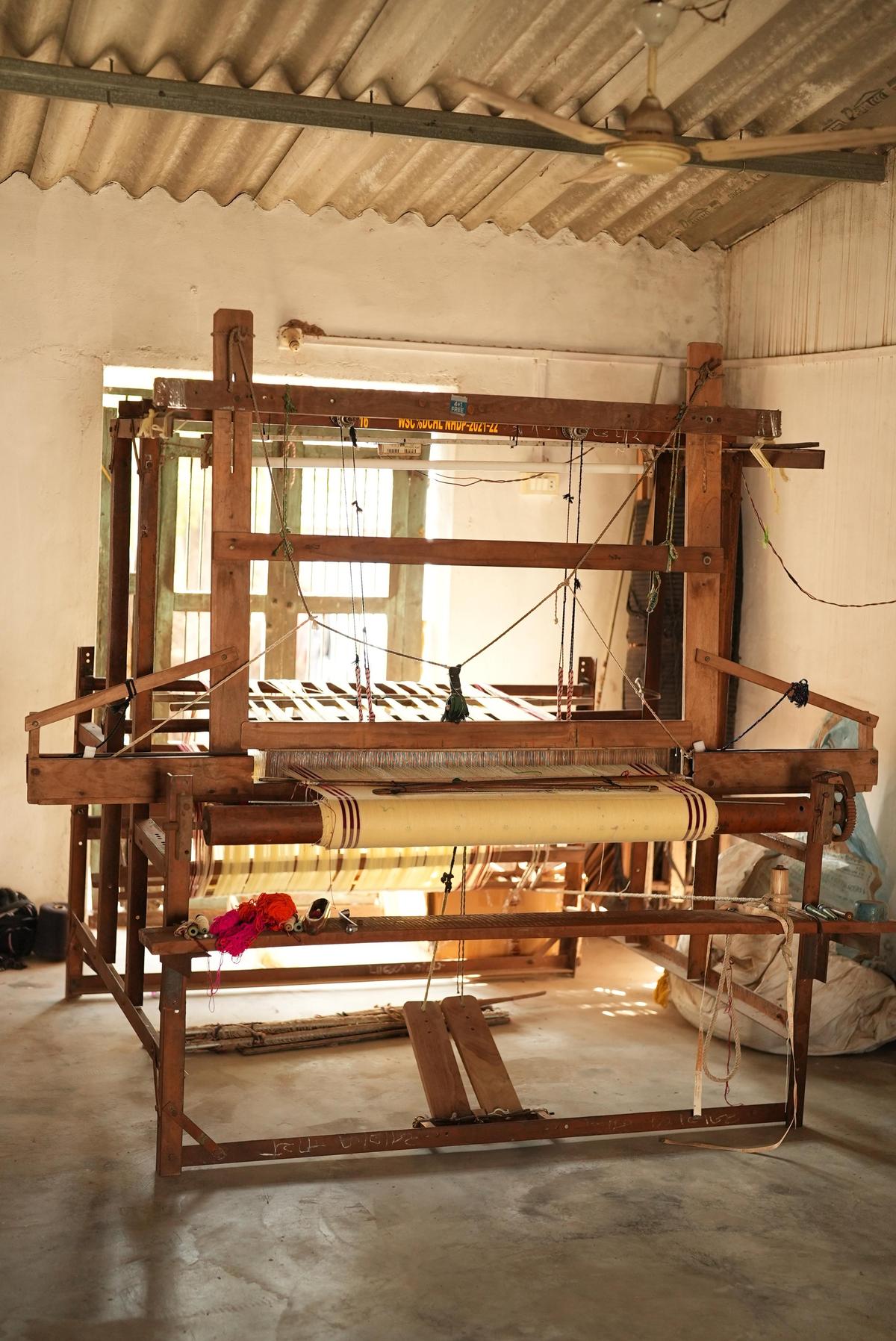
A loom in the village of Vastadi
| Photo Credit:
Special Arrangement
Published – March 25, 2026 05:16 pm IST
Discover more from stock updates now
Subscribe to get the latest posts sent to your email.