


Sunita Williams retires after 27 years: A look into the career that led to 600+ days in space
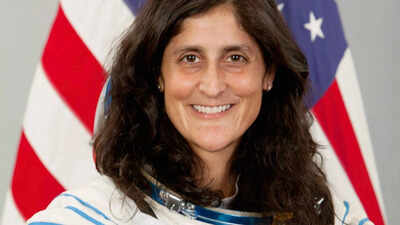
Sunita Williams has retired from the National Aeronautics and Space Administration (NASA) after a 27 year career that placed her among the most experienced astronauts in the agency’s history. Her retirement took effect at the end of December 2025, closing a career that included three long-duration missions aboard the International Space Station (ISS) and more than 600 days spent in orbit.Williams’ career mirrors a steady progression through education, military aviation, test flying and spaceflight. Each stage added skills that later carved her role aboard the space station, where she served as flight engineer, commander and spacewalker.
Schooling and early training
Williams was born in Euclid, Ohio, to Dr Deepak Pandya and Bonnie Pandya, and grew up in the United States. She completed her schooling at Needham High School in Massachusetts in 1983. From there, she entered the United States Naval Academy, graduating in 1987 with a Bachelor of Science degree in Physical Science.Her education mixed academic study with military structure. This balance continued when she later earned a Master of Science degree in Engineering Management from the Florida Institute of Technology in 1995.

Naval aviation and test piloting
Williams was commissioned as an Ensign in the USs Navy in 1987. After initial assignments, she trained as a naval aviator and was designated as one in 1989. Her early flying roles involved helicopter operations, including deployments to the Mediterranean, Red Sea and Persian Gulf during operations linked to Desert Shield and humanitarian missions.In 1992, she served as Officer-in-Charge of a helicopter detachment deployed for Hurricane Andrew relief operations. Her selection for the US Naval Test Pilot School marked a shift towards evaluation and systems testing. After graduating in 1993, Williams worked as a project officer and chase pilot, flying multiple aircraft types. She later returned to the test pilot school as an instructor and safety officer. By this stage, she had logged thousands of flight hours across more than 30 aircraft.
Entry into the astronaut corps
Williams was selected as a NASA astronaut in 1998. Astronaut training expanded her technical background to include space station systems, robotics, survival training and international coordination. She also worked with the Russian space agency in Moscow, reflecting the collaborative structure of the International Space Station programme.Before her first spaceflight, Williams contributed to robotics operations, including work on the station’s robotic arm and dexterous manipulators. She also participated in underwater mission simulations, living for nine days in the Aquarius habitat as part of the NEEMO programme.
Long-duration space missions
Williams first flew to space in December 2006 aboard Space Shuttle Discovery. As part of Expeditions 14 and 15, she served as a flight engineer and completed four spacewalks. At the time, this set a record for female astronauts.Her second mission came in 2012 during Expeditions 32 and 33. She spent over four months aboard the space station, conducted research and served as station commander. The mission included spacewalks focused on power systems and repairs, reinforcing her role in station maintenance.Her final mission began in June 2024 aboard Boeing’s Starliner on its first crewed test flight. What was planned as a short mission extended to more than nine months due to technical issues. Williams and fellow astronaut Butch Wilmore returned to Earth in March 2025 aboard a SpaceX Dragon spacecraft as part of the Crew-9 mission.Across her three flights, Williams logged 608 days in space. She completed nine spacewalks totalling 62 hours and 6 minutes, the highest cumulative spacewalking time by a woman astronaut.
Closing a long career
Over nearly three decades, Williams moved through roles shaped by education, aviation and operational responsibility. Her career is an outcome of layered training, military experience and continuous technical learning.With her retirement, Williams leaves behind a record defined not by a single mission, but by sustained service across changing phases of space exploration. Her work aboard the ISS now stands as part of the foundation for future missions to the Moon and beyond.
Discover more from stock updates now
Subscribe to get the latest posts sent to your email.