‘Smog’ in the boardroom: India Inc. confronts the cost of air pollution

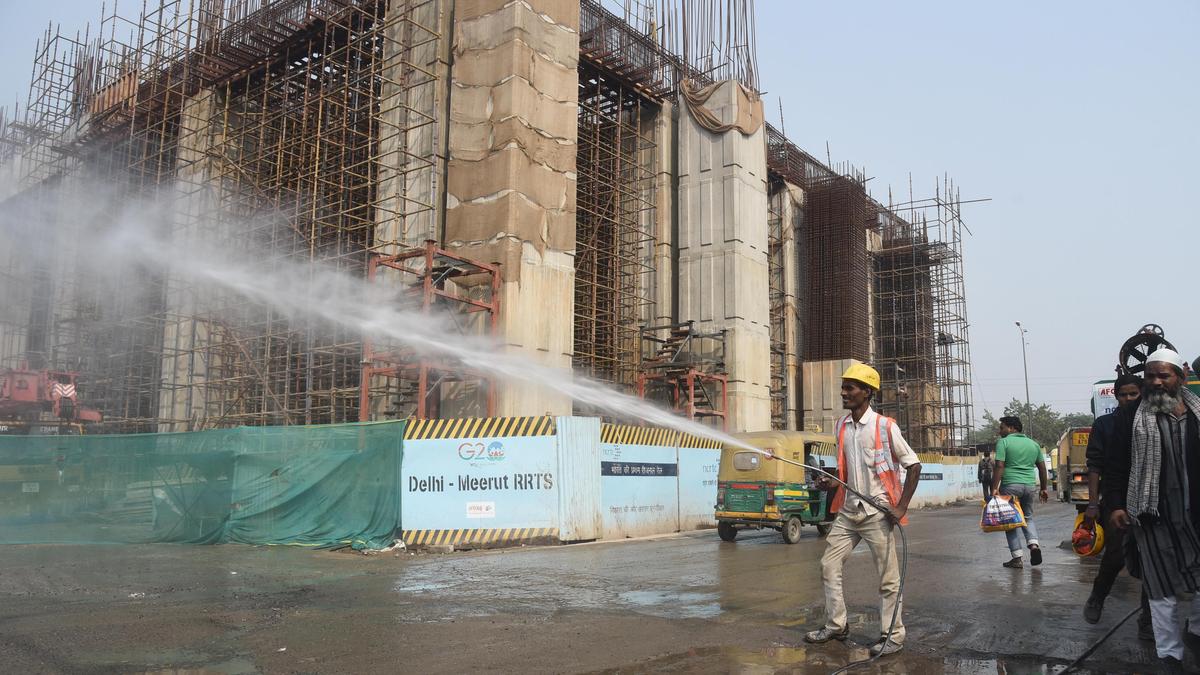
Construction bans in Delhi-NCR due to air pollution have lead to project delays and rising costs. File.
| Photo Credit: R.V. Moorthy
In 2025, the phrase “air pollution” was mentioned 988 times in earnings calls of companies in the BSE AllCap index, according to a Bloomberg analysis. The spike reflects a sharp rise in management commentary on smog-related disruptions, regulatory curbs and shifting consumer behavior. What was once treated as a seasonal civic concern is now being framed as a recurring business risk.
From weather update to financial headwind
For consumer-facing companies, pollution is directly affecting sales. Retailers have cited weak store footfall during severe smog episodes, as customers avoid stepping out. In the December quarter, Shoppers Stop reported a 69% decline in net profit, partly attributing it to elevated pollution levels in northern India.

Quick commerce operators are also flagging operational slowdowns. Eternal Ltd., the holding company of Blinkit, told analysts that construction restrictions during high-pollution periods delayed their store expansion plans.
Companies such as DLF and Omaxe have highlighted the impact of construction bans triggered under Delhi-NCR’s pollution control framework, leading to project delays and rising costs. Some developers estimate losing one to one-and-a-half months of construction time annually due to pollution-related curbs.
Cement and infrastructure firms have similarly warned that smog-related shutdowns are affecting dispatches and project timelines.
The broader economic implications are significant. Projections from the Organisation for Economic Co-operation and Development (OECD) estimate that global healthcare costs related to air pollution will rise from $21 billion in 2015 to $176 billion by 2060.
Regulatory and ESG pressure
“Companies do report air pollution as a material ESG risk, but it depends on the industry, geography, regulatory exposure and results of their materiality assessment,” said Prarthana Borah, Fellow at the Council on Energy, Environment and Water (CEEW).
Under India’s Business Responsibility and Sustainability Reporting (BRSR) framework, air pollution disclosures are required if identified as a material risk. The Taskforce on Nature-related Financial Disclosures (TNFD) similarly expects disclosures when air pollution materially impacts nature and creates financial risk.
“Even when companies disclose on air pollution, there is a tendency to aggregate multiple pollutants together and avoid disclosing on worst-performing facilities,” Ms. Borah said. “Supply chains are often omitted. In the absence of a standardised methodology, companies rely on intensity metrics without absolute values and avoid forward-looking cost exposure.”
Transparency tends to be stronger where disclosures are mandatory, enforcement is robust and investors actively assess risk. In the case of air pollution, reporting is often voluntary, bundled under broader environmental risk categories and subject to limited external assurance.
According to NSE Sustainability Ratings and Analytics, IT companies such as Tata Consultancy Services (TCS) and Infosys score highly due to strong governance frameworks and clear social disclosures. Most banks score between 70 and 80, reflecting well-developed policies.
Pollution-intensive industries tend to fare worse. Reliance Industries, for instance, has a sustainability score of 61, largely weighed down by environmental concerns.
A structural shift
India’s air quality crisis is no longer viewed as a temporary, seasonal disruption. With recurring smog episodes, regulatory interventions and measurable earnings impacts, companies are increasingly recognising it as a structural operating risk.

The surge in earnings-call mentions signals a broader shift: air pollution is moving from the margins of sustainability reports to the mainstream of financial analysis and investors are paying close attention.
Published – March 05, 2026 11:08 am IST
Discover more from stock updates now
Subscribe to get the latest posts sent to your email.