


Pentagon’s Ivy League exit leaves universities bracing for more military programme changes
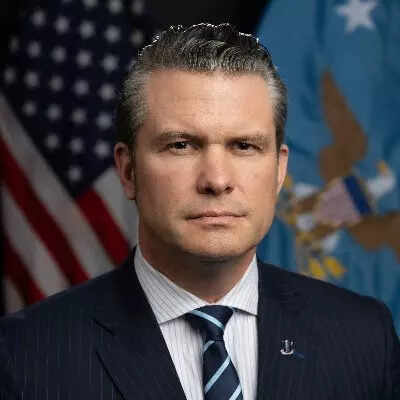
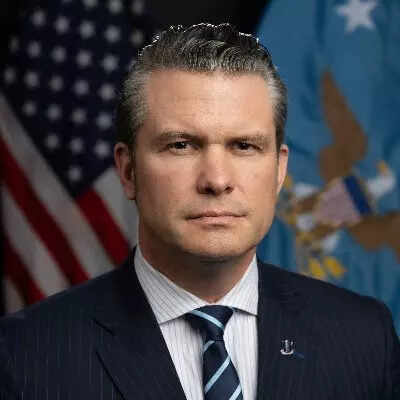
The Trump administration’s campaign to remove what it calls “wokeness” from the United States military is beginning to mould a long standing relationship between the armed forces and American universities.The Pentagon has started cutting ties with several prestigious institutions that have historically trained military leaders. At the same time, it is encouraging new connections with Christian colleges and some public universities.The shift shows a broader attempt to change how senior military officers receive advanced education.
Pentagon removes elite universities from fellowship programme
US Defense Secretary Pete Hegseth last week ordered more than a dozen universities to be removed from the Senior Service College Fellowship programme.The fellowship allows selected mid career military officers to pursue advanced studies at universities, think tanks and federal agencies. The programme has traditionally been viewed as a pathway to senior leadership roles in the armed forces.The Pentagon memo states that fewer than 80 officers currently participate in the programme across the universities being removed.Among the institutions affected are Harvard University, Georgetown University, Carnegie Mellon University and the Massachusetts Institute of Technology.Many senior officers in the United States military have previously studied through the programme. According to military biographies, retired Army general James McConville completed a fellowship at Harvard. Lieutenant General William H. Graham Jr. studied at the Massachusetts Institute of Technology.
A targeted change rather than a broad cut

While Hegseth has criticised universities he considers anti American, the policy changes have so far been limited in scope.The Pentagon has not changed a much larger programme known as Tuition Assistance, which helps active duty and reserve service members pay for college education. The programme supports roughly 200,000 service members each year and allows them to study at a wide range of United States colleges.The benefit covers up to 4,500 dollars annually in tuition costs.An analysis by the Associated Press found that the programme distributes funds across hundreds of campuses. Many of the largest beneficiaries are not elite universities but online and for profit institutions.According to the analysis, about 350 service members used Tuition Assistance in 2024 to study at universities including Harvard, Johns Hopkins University and George Washington University.By comparison, more than 50,000 students used the benefit at the American Public University System, which has a reported graduation rate of 22%.The analysis also found that more than one third of service members using Tuition Assistance attended for profit colleges, while public universities enrolled the largest share overall.
Concerns about government influence in education choices
Some higher education advocates say the Pentagon’s decision to remove universities from the fellowship programme signals a new level of federal involvement in where military personnel study.Lindsey Tepe of the American Council on Education told AP that the move could set a difficult precedent.“This is clearly the start of a broader effort to reshape military education, and I do think that this is a bad precedent to set,” Tepe said.Observers are also watching whether the policy could expand to other programmes connected to higher education, including the Reserve Officers’ Training Corps, or education funding for fields such as law, medicine and engineering.The Pentagon memo announcing the changes did not mention any plans affecting those programmes.
Debate over loss of academic expertise
Critics of the decision argue that removing elite research universities from the fellowship programme could reduce access to specialised academic expertise.William Hubbard of the nonprofit Veterans Education Success told AP that many of the affected campuses host leading research in fields such as artificial intelligence and cybersecurity.“I’m not sure our enemies would be too upset about this,” Hubbard said. “If I were waking up in Beijing and heard this news, I would be pleased.”
Harvard faces additional restrictions
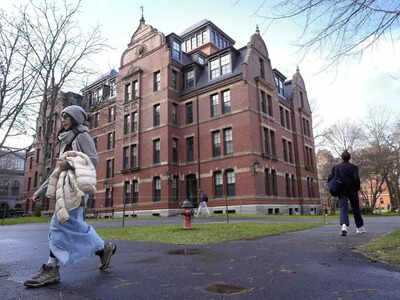
The Pentagon has imposed additional limits on Harvard. The university will no longer host graduate level professional military education programmes, fellowships or certificates for active duty personnel.In response, Harvard’s Harvard Kennedy School said it will allow admitted service members to defer their enrolment for up to four years.The school also said it has arranged expedited admission consideration at other universities, including the University of Chicago and Tufts University.Hegseth himself previously studied at Harvard, earning a master’s degree before publicly returning the diploma during a 2022 television segment.
New partnerships with conservative institutions
In the memo announcing the changes, Hegseth proposed alternative institutions where military officers could pursue fellowship studies.The list includes Liberty University, which enrols thousands of military students through Tuition Assistance programmes.Liberty said in a statement that it has not yet coordinated with the Pentagon about any new partnership but supports military personnel.The list also includes Hillsdale College. Hillsdale president Larry Arnn said the institution would welcome officers seeking education focused on the nation’s founding principles.Several large public universities were also mentioned as potential partners, including the University of Michigan and the University of North Carolina.
A shift in the military education pipeline
For decades, partnerships between the United States military and major research universities helped create a pipeline through which officers gained exposure to advanced research and policy training.The current policy change does not eliminate that relationship entirely, but it signals a different direction for how military leaders may be educated in the future.Whether the shift remains limited to fellowship programmes or expands into other areas of military education will likely determine how deeply it reshapes the connection between the Pentagon and American higher education.
Discover more from stock updates now
Subscribe to get the latest posts sent to your email.