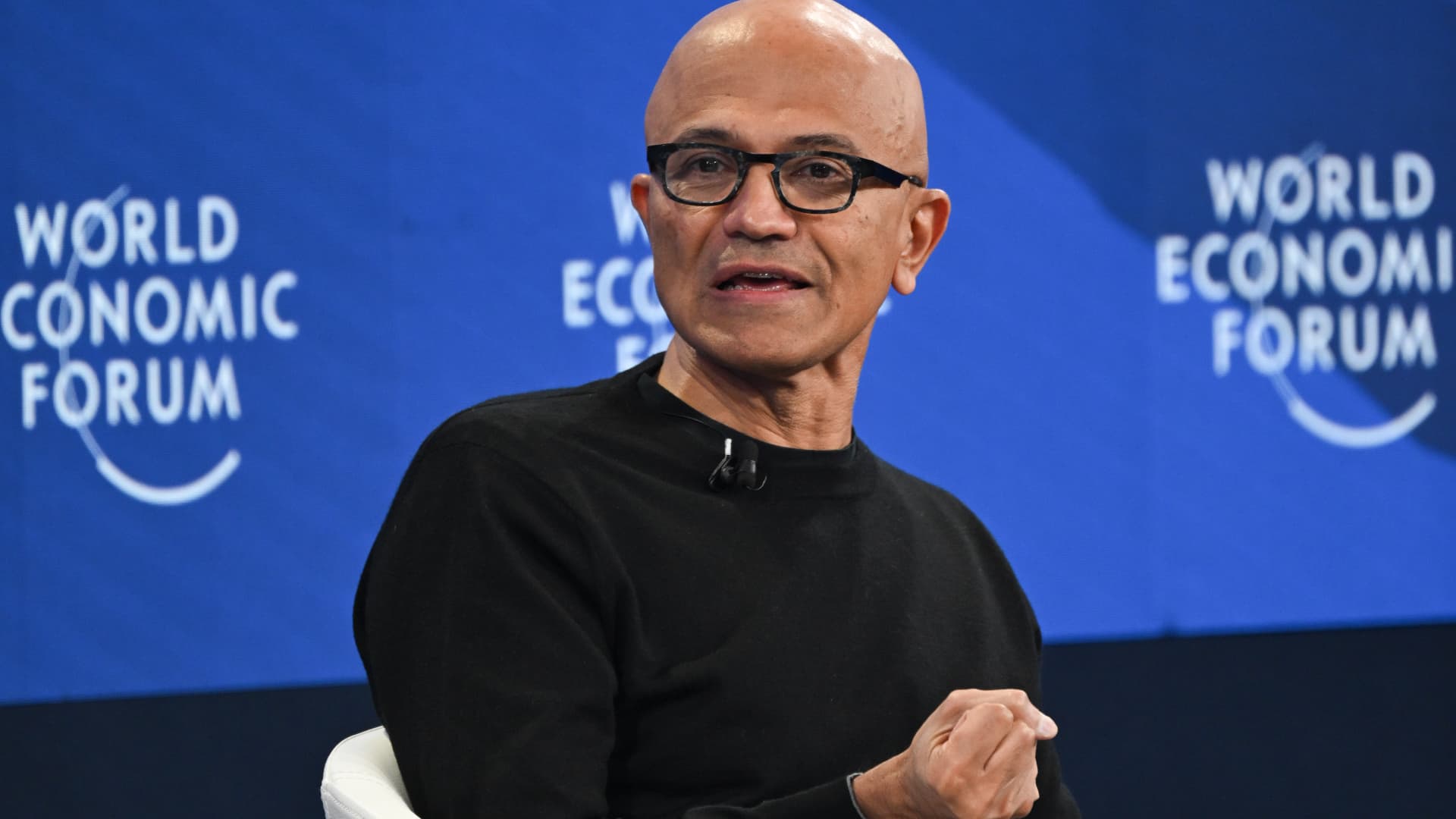



OpenAI risk factors Microsoft reliance, Elon Musk and xAI lawsuits

Anna Moneymaker | Getty Images
OpenAI included sections titled “Risks Related to the Transaction” and “Risks Related to our Business” in a financial document, viewed by CNBC, that the company shared with prospective investors tied to its recent record financing round.
Last month, OpenAI announced $110 billion in funding from strategic partners including Amazon, Nvidia, and SoftBank. The company is working with banking partners to tack on an additional $10 billion worth of commitments from a broader pool of investors, according to sources familiar with the deal. That part of the round is on track to close by the end March, said the people, who asked not to be named because the details are confidential.
The risks highlighted by OpenAI offer a taste of what’s to come in its upcoming IPO filing, as the company gears up to make its public market debut as soon as this year. Aside from its relationship with Microsoft, OpenAI cited risks such as its significant capital expenditures, reliance on compute resources, ongoing litigation with Elon Musk’s xAI, and its unusual structure as a public benefit corporation, whose parent is the OpenAI Foundation.

OpenAI was founded as a nonprofit research lab in 2015, but has experienced exploding commercial growth since launching ChatGPT to the public in late 2022. ChatGPT now boasts 900 million weekly active users, and the company generated $13.1 billion in 2025 revenue. It was valued last month at $730 billion by investors.
Microsoft CEO Satya Nadella, right, greets OpenAI CEO Sam Altman during the OpenAI DevDay event in San Francisco on Nov. 6, 2023.
Justin Sullivan | Getty Images News | Getty Images
Microsoft has been a backer since 2019, years before ChatGPT was released, and obtained an early commitment from OpenAI to move some of its services exclusively to Microsoft’s Azure cloud. In total, Microsoft has invested $13 billion in OpenAI and, at the time of the AI company’s restructuring in October, disclosed that its 27% diluted stake in the for-profit part of the organization was valued at $135 billion.
OpenAI said in the document circulated to investors that its operating results will depend on its ability to successfully develop relationships with additional partners aside from Microsoft.
“If Microsoft modifies or terminates its commercial partnership with us, or if we are unable to successfully diversify our business partners, our business, prospects, operating results and financial condition could be adversely affected,” the company wrote.
An OpenAI spokesperson said in a statement that, “This is a standard legal risk factor disclosure, unrelated to any potential IPO prospectus.”
“Similar language has been in place for years,” the spokesperson said. “Microsoft is and will remain a critical long term partner.”
Though OpenAI and Microsoft have a tight bond, they’re increasingly competing for users in the burgeoning generative AI market.
In 2024, Microsoft added OpenAI to the list of competitors in its annual report, a roster that for years has included Amazon, Apple, Google and Meta. And last year, OpenAI turned to other cloud providers, such as CoreWeave, Google and Oracle, to meet heavy demand.
Geopolitical, legal risks
While Microsoft warranted its own headline in the risk disclosures, it’s not the only company that OpenAI named.
OpenAI noted that it requires enormous amounts of computational resources to train and run its AI models, and that a global chip shortage could be damaging.
Specifically, OpenAI said that if chip supplier Taiwan Semiconductor Manufacturing Company is affected by a regional conflict, a nod to the growing tensions between China and Taiwan, OpenAI could face “severe disruptions” to its supply chain.
OpenAI also said it expects to continue making significant capital expenditures and commitments for “compute, data center services and related infrastructure projects,” alongside partners Microsoft, Nvidia, Advanced Micro Devices and Broadcom.
As of December, OpenAI said it had roughly $665 billion in estimated compute spend commitments through 2030, according to the document, adding that “our compute requirements are dynamic and may expand significantly.”

Then there’s the long and expanding list of legal cases.
OpenAI cautioned investors that ongoing litigation could be problematic due to copyright, patent and other intellectual property issues, along with employment and contract disputes, privacy concerns and other matters.
The company detailed three different lawsuits filed by OpenAI co-founder Musk or his company, xAI, which is now part of SpaceX after a merger last month. Musk left OpenAI in 2018, after trying to convince executives to merge it with Tesla. The two sides have been involved in legal battles since 2024, with the first case expected to go to trial next month.
OpenAI also said that at least 14 lawsuits have been filed against the company in California state and federal courts by ChatGPT users or their family members, who blame the company’s products for “mental illness leading to suicide, death or other injury.”
The first wrongful death lawsuit was filed in California last year by Matt and Maria Raine, parents of 16-year-old Adam Raine, who died by suicide after ChatGPT reportedly encouraged him to take his own life.
“We are reviewing these cases, in light of our existing industry-leading safeguards and additional efforts, as well as the complex nature of the causes of mental illness,” OpenAI said in the document.
One name is notably absent from OpenAI’s risk factors section: Sam Altman.
The CEO and co-founder has long been the public face of the company and has been mired in his share of controversy. In late 2023, Altman was suddenly ousted by the board, which said it has lost confidence in the leader, but then reinstated him days later due to employee and investor pressure.
OpenAI acknowledged in the document that the “success of our company and the operation of our business rely on Key Personnel.” Neither Altman nor any of his colleagues are identified.
If you are having suicidal thoughts or are in distress, contact the Suicide & Crisis Lifeline at 988 for support and assistance from a trained counselor.
WATCH: OpenAI renews focus on enterprise in all-hands meeting amid IPO push

Discover more from stock updates now
Subscribe to get the latest posts sent to your email.