


NASA shares new details about dark matter: The hidden framework of the universe |
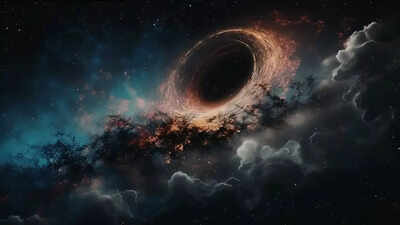
The idea of dark matter has existed for decades, mostly as a necessary explanation rather than something clearly seen. New observations from the James Webb Space Telescope are adding texture to that idea, without resolving it completely. Scientists working with Webb data have produced a detailed map showing where dark matter appears to sit in relation to galaxies and stars. The map focuses on a small but deeply studied patch of sky, already familiar from earlier surveys. What changes here is not the theory but the clarity. The patterns look sharper, more crowded, and harder to dismiss. Researchers say the new view strengthens the case that dark matter has quietly influenced how the universe took shape, long before planets or life were possible. It remains invisible, but its presence feels more fixed.
NASA plans even larger dark matter surveys after Webb breakthrough
The map was created using long observations of a region known as COSMOS, in the constellation Sextans. Webb spent hundreds of hours collecting light from distant galaxies, many of them faint and distorted. Those distortions matter. They occur because mass bends space itself, slightly shifting the path of light as it travels.By measuring those shifts, scientists can estimate where large amounts of unseen mass must lie. What emerges is a web-like pattern. Dense knots sit where galaxy clusters gather. Thinner strands stretch between them. The shapes echo what astronomers have long suspected, though rarely seen with this level of definition.

Dark matter aligns closely with ordinary matter
One striking feature of the map is how closely dark matter appears to track normal matter. Where galaxies cluster, dark matter clusters too. Where galaxies thin out, so does the unseen mass.Researchers say this alignment is unlikely to be accidental. Gravity is the link. Over billions of years, dark matter seems to have drawn gas and dust towards it, creating the conditions needed for galaxies to form. The map does not show dark matter directly, but the overlap is persistent enough to feel deliberate. This relationship has been hinted at before. Webb makes it harder to ignore.
Older surveys laid the groundwork
The COSMOS region has been studied since the mid-2000s, including with the Hubble Space Telescope. Those earlier maps were useful but limited. They contained fewer galaxies and less precise distance measurements.Webb changes that balance. It detects far more objects, including galaxies hidden behind dust. Its infrared instruments allow scientists to estimate distances with greater confidence, which matters when building a three-dimensional picture of mass. The result is not a new idea but a clearer one. Some features seen by Hubble now look more complex. Others appear newly resolved rather than entirely new.
Why early structure still matters today
The map also feeds into a broader question about how the universe evolved. In the early universe, matter was spread thinly. Scientists think dark matter began clumping first, slowly creating gravitational wells. Ordinary matter followed later, falling into those regions.That sequence matters. Early galaxy formation allowed stars to form sooner, producing heavier elements over time. Without that process, planets like Earth would not have the materials they rely on. The influence is indirect and distant but not abstract. It reaches forward into the conditions that made complex worlds possible.
Future telescopes will widen the picture
Webb will not be the final word. NASA’s upcoming Roman Space Telescope is expected to map dark matter over much larger areas of sky, though with less fine detail. Together, the two approaches may offer a balance between scale and resolution.Even then, some limits will remain. Dark matter does not emit light, and its nature is still unknown. The maps show where it seems to be, not what it is. For now, the picture is sharper, not complete. The scaffolding of the universe looks more defined, but it still sits quietly behind everything else, shaping the view without stepping into it.
Discover more from stock updates now
Subscribe to get the latest posts sent to your email.