Life pays universe a ‘heat tax’ to run precise chemical reactions

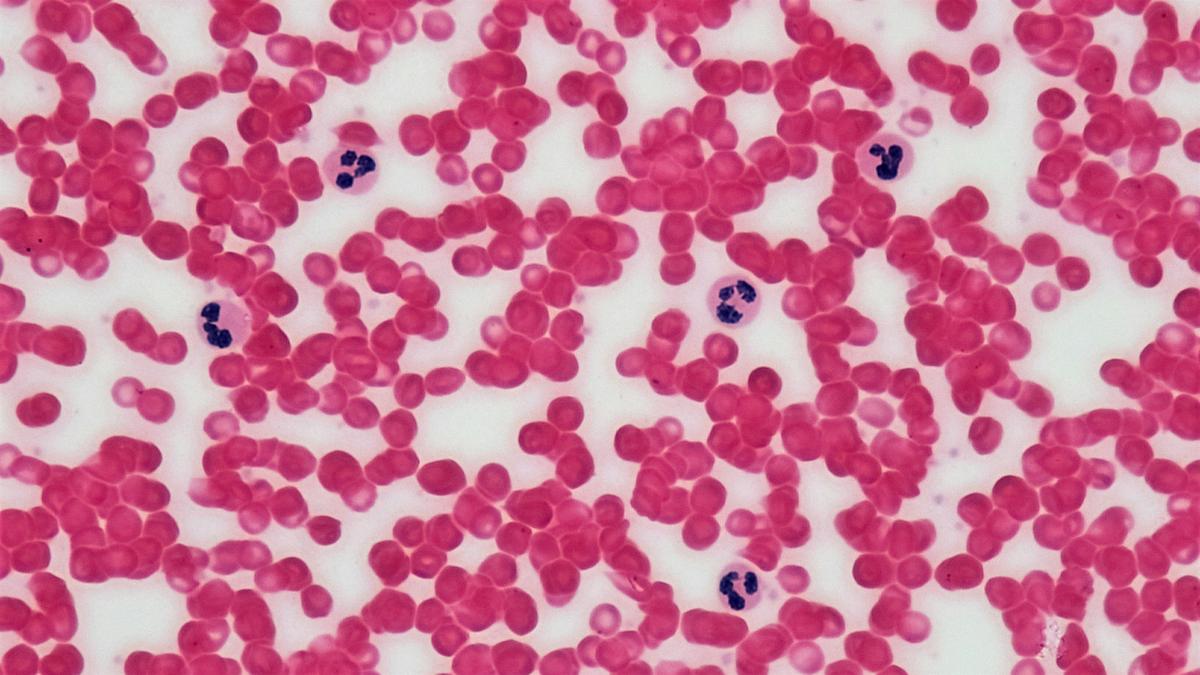
If there’s a soup of cells and you make them settle down and work together in orderly fashion, you reduce the system’s entropy.
| Photo Credit: Bioscience Image Library by Fayette Reynolds
The universe is strict about conserving energy. If there’s a soup of cells and you make them settle down and work together in orderly fashion, you reduce the system’s entropy. In return you need to pay a ‘tax’ to the universe, to account for the drop in entropy. Scientists have interpreted the heat dumped by living things to be this tax.
There’s a problem, however: it’s two orders of magnitude higher than it needs to be to account for the entropy. What could the rest of the heat be about?

A new study by University of Freiburg, STFC Daresbury Laboratory, and University of Edinburgh researchers has argued that life produces so much heat because of how cells optimise their chemistry.
Cells have thousands of chemical reactions happening all the time. To work well, these reaction networks need to be precise and robust without trading off speed. When cells build proteins, they need to avoid making mistakes like putting the wrong amino acid in the chain. When cells build structures like their ‘skeleton’, they need to make parts of very particular sizes. And when they respond to stress, like sudden heat, they need to react quickly.
The researchers have proposed that cells achieve all these different goals using the same chemical setup, so to speak, i.e. they create chemical cycles that are driven far from equilibrium — like pushing a merry-go-round really hard instead of letting it just slow down once molecules have had their turns on it.

Say there’s a reversible chemical reaction: A ⇌ B. At equilibrium, the reaction will reach a balance where A converts to B at exactly the same rate at which B converts to A, so everything will settle into stable proportions and just sit there. Then, say you force the system away from this natural balance by constantly pumping in more and more A. Now the reaction will be driven in one direction and the system will no longer be at rest. This state is said to be far from equilibrium.
In the paper, the researchers focused on a reaction called ATP hydrolysis: ATP ⇌ ADP + phosphate. At equilibrium this reaction settles into certain proportions of ATP versus ADP. However, cells actively maintain the ratio at about 10 billion times what equilibrium would be, which is extremely far from equilibrium. They do this by constantly making fresh ATP, using up the ATP in cellular reactions, and preventing the reverse reaction from happening much.
When reactions are far from equilibrium, they can do useful work and can be controlled precisely. But when they’re at equilibrium they’re practically dead: you can’t control anything because there’s no net energy flow.
Maintaining this imbalance and running all the reaction cycles will necessarily generate an enormous amount of heat. It’s effectively a tax cells pay to remain versatile.
The paper’s calculations showed that these driven chemical cycles account for a large fraction of the heat that organisms dump. And evolution has apparently decided that this is worth it.
mukunth.v@thehindu.co.in
Published – January 27, 2026 06:00 am IST
Discover more from stock updates now
Subscribe to get the latest posts sent to your email.