


Iran Conflict Threatens Lucrative Luxury Stock — Time to Panic, or Time to Buy?
Key Points
- How drastically the Iran conflict impacts automakers depends on the specific situation.
- Ferrari will be more impacted due to its high-margin business in the ultra-luxury Middle East market.
-
Recent developments, including the Iran conflict, have sunk Ferrari’s valuation — giving investors a rare opportunity.
- 10 stocks we like better than Ferrari ›
Despite a fragile ceasefire currently, there’s still potential trouble brewing from the conflict in Iran. Mainstream automakers such as Ford Motor Company (NYSE: F) and General Motors (NYSE: GM) don’t do big business in the Middle East and remain relatively unimpacted by the current Iran conflict.
It’s a different scenario for high-flying luxury stocks such as Ferrari (NYSE: RACE), which took a hit in the markets after the Iran conflict began. Dubai (in the United Arab Emirates) has been a massive driver of growth in recent years, and the rising Middle East tensions come at a crucial time in the luxury industry and for Ferrari investors. Here’s how much it should concern you.
Will AI create the world’s first trillionaire? Our team just released a report on the one little-known company, called an “Indispensable Monopoly” providing the critical technology Nvidia and Intel both need. Continue »
Not so luxurious situation
High-end and super-luxury automakers face growing uncertainty across the globe with demand in China and Europe slower, tariffs eroding profits in the U.S., and now the conflict in Iran disrupting a highly coveted luxury region. In fact, according to Bernstein, the Middle East was the fastest-growing luxury market last year. Former Aston Martin CEO Andy Palmer told Automotive News, “For a manufacturer of premium and luxury cars in particular, it’s an utter disaster.”
Sales in the ultra-luxury Middle East market are very high margin, and brands such as Ferrari, Lamborghini, Jaguar, Land Rover, and Porsche are watching closely to adapt to drastic and sudden changes in demand and distribution capabilities, leaving some to wonder if production cuts could be necessary if the conflict drags on for a few more weeks.
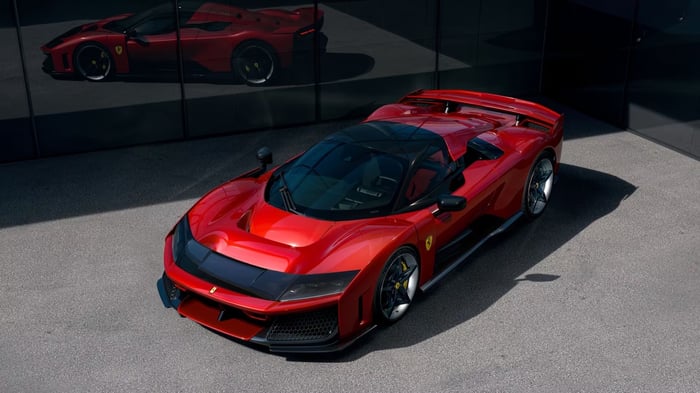

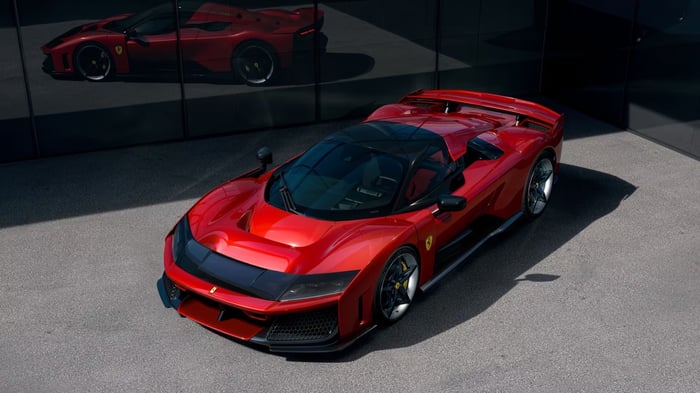
Image source: Ferrari.
The good and bad news
For Ferrari investors in particular, there’s a little more insight. While many luxury automakers don’t disclose regional profit margins and some no longer publish global sales figures, Ferrari reported that the Middle East generated 4.6% of total sales in 2025. That’s more important than the figure would seem, considering it’s a larger market for Ferrari than China, and the Middle East accounted for a lesser 3.5% of Ferrari’s total sales only a year earlier.
Despite being a fraction of total sales for Ferrari, supply chain constraints, rising air freight costs, and declining regional demand do present direct and immediate profitability risks. That said, Ferrari does have some flexibility with its long, stable-yet-flexible purchase order book and can redirect vehicles to other regions in many cases.
There is also a risk of further disruption as higher oil prices could weigh on luxury sales, and especially aspirational luxury customers who remain more sensitive to inflation and economic turmoil. Meanwhile, spending by wealthier consumers is more dependent on the stock markets, which could be more negatively impacted by higher oil prices spurring a downward trend in global markets. Between the recent Iran conflict and Ferrari’s 2030 guidance disappointing analysts — remember that Ferrari has a tendency to lowball guidance — it’s giving investors a rare opportunity to purchase the stock at a lower valuation.

RACE PE Ratio data by YCharts
What it all means
Ultimately, while the war in Iran is hitting ultra-luxury companies such as Ferrari, and is certainly disrupting highly coveted high-margin sales, investors should view this as a speedbump for now.
Ferrari has durable competitive advantages that span the globe, a brand image that took decades to curate and strengthen, and margins that handily beat the competition. The Iran conflict is a definite negative for Ferrari business, but investors should also see this as an opportunity to scoop up shares of a long-term winner at a time of uncertainty.
Should you buy stock in Ferrari right now?
Before you buy stock in Ferrari, consider this:
The Motley Fool Stock Advisor analyst team just identified what they believe are the 10 best stocks for investors to buy now… and Ferrari wasn’t one of them. The 10 stocks that made the cut could produce monster returns in the coming years.
Consider when Netflix made this list on December 17, 2004… if you invested $1,000 at the time of our recommendation, you’d have $550,348!* Or when Nvidia made this list on April 15, 2005… if you invested $1,000 at the time of our recommendation, you’d have $1,127,467!*
Now, it’s worth noting Stock Advisor’s total average return is 959% — a market-crushing outperformance compared to 191% for the S&P 500. Don’t miss the latest top 10 list, available with Stock Advisor, and join an investing community built by individual investors for individual investors.
*Stock Advisor returns as of April 10, 2026.
Daniel Miller has positions in Ford Motor Company and General Motors. The Motley Fool has positions in and recommends Ferrari. The Motley Fool recommends General Motors. The Motley Fool has a disclosure policy.
The views and opinions expressed herein are the views and opinions of the author and do not necessarily reflect those of Nasdaq, Inc.
Discover more from stock updates now
Subscribe to get the latest posts sent to your email.