How the U.S.-Israel conflict with Iran is exposing India’s LPG dependence

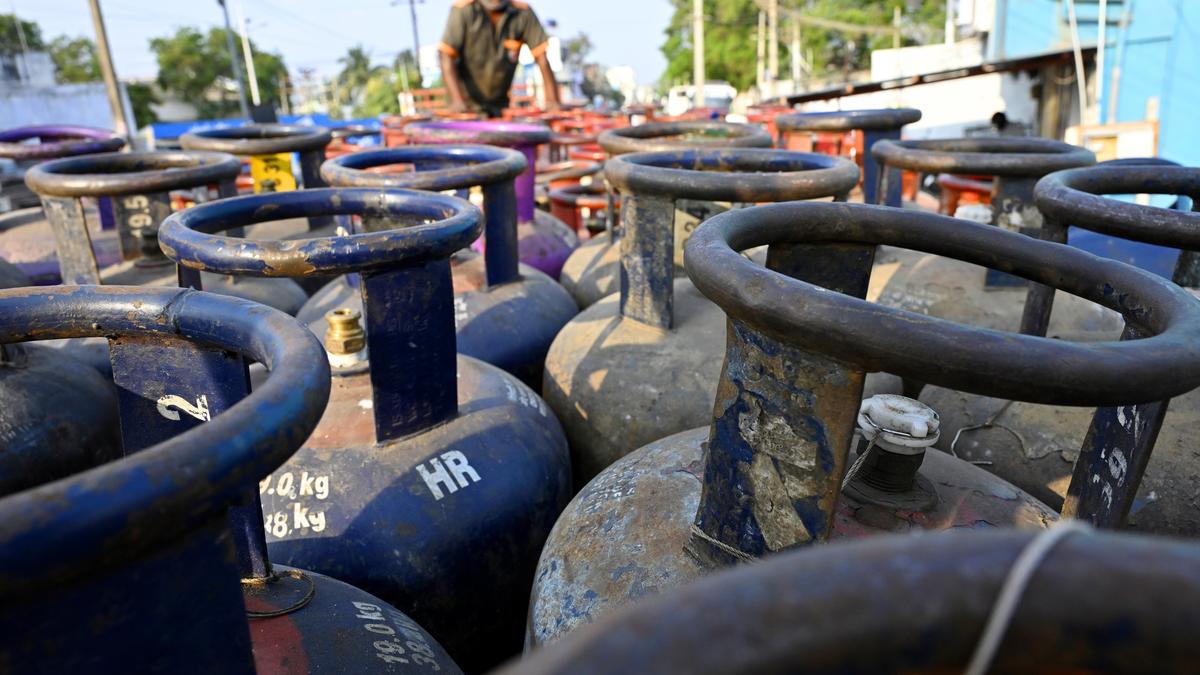
The ongoing conflict involving Israel, United States and Iran has begun affecting domestic supply chains, with disruptions in commercial LPG supply. Image for representation
| Photo Credit: M. Periasamy
Just last year, the Centre paid India’s three public sector oil marketing companies (OMCs) — Indian Oil Corporation, Bharat Petroleum Corporation, and Hindustan Petroleum Corporation — ₹30,000 crore to subsidise their losses for selling cooking gas at a time of soaring prices globally.
The centre had then stated that its purpose was to shield consumers from rising global LPG prices by absorbing the cost through the OMCs. However, the grant was announced before the war broke out, and with the conflict escalating, India now faces the possibility of disruptions to LPG supplies and higher global prices.


In just a week after the conflict began, on March 7, domestic LPG prices were raised by ₹60 per cylinder. Brent crude briefly rose to nearly $120 a barrel, crossing $100 per barrel for the first time since Russia’s invasion of Ukraine in 2022.
On March 9, the Ministry of Petroleum and Natural Gas issued an order directing all domestic oil refining companies, including petrochemical complexes, to maximise the production of LPG and make the entire output available exclusively to IOCL, HPCL and BPCL. Refiners have been barred from diverting any output for other petrochemical production. OMCs have been directed to supply LPG solely to domestic consumers.
This comes just a month after the Union budget cut the LPG subsidy allocation by 27%, from ₹15,121 crore to ₹11,085 crore. The Ministry of Petroleum and Natural Gas received ₹30,443 crore for 2026-27.
India produces only about 40% of its LPG requirement. The rest is imported, overwhelmingly from the same region now at war.
India’s LPG use has been on the rise as more people switch to cleaner cooking fuel. Between 2015 and July 2025, the number of active domestic LPG consumers rose from 1,486 lakh to 3,305 lakh, an increase of over 120% in a decade, according to data from the Petroleum Planning and Analysis Cell (PPAC), Ministry of Petroleum and Natural Gas. The government has claimed that LPG coverage has increased to nearly 100% of households, up from 62% in 2016 when the Pradhan Mantri Ujjwala Yojana was launched.
The International Energy Agency, in its Indian Oil Market Outlook to 2030, noted that clean cooking programmes had led to LPG imports surging nearly three-fold in the past decade. The quantity of India’s LPG imports increased from over 20.67 million metric tonnes in 2024-25 to over 86.58 MMT in 2025-26, more than 23% increase in one year.
India’s LPG imports are heavily concentrated in a few countries, most of them in West Asia. In 2025, Qatar accounted for about 34% of India’s LPG imports, making it the country’s largest supplier. The United Arab Emirates (UAE) supplied nearly 26%, followed by Kuwait (8.3%).
This dependence on West Asia has been long-standing. In 2020, nearly 37% of all Indian LPG imports came from Qatar, 16% from UAE and 11% from Saudi Arabia. The Strait of Hormuz, located between Iran and Oman, is one of the world’s most critical energy shipping routes. A large share of global oil and gas shipments, including many India-bound LPG cargoes, pass through this narrow waterway. With the Strait of Hormuz closed since March 1, LPG imports have been hit.
In 2024-25, India’s liquefied natural gas (LNG) imports have also been increasing, reaching 27 million metric tonnes, the highest on record and double the 13.5 MMT imported in 2011-12. Half of India’s LNG also comes from Qatar. LNG powers fertiliser plants, electricity generation, and the gas pipelines that fuel vehicles and commercial kitchens across Indian cities. Like LPG, it is largely sourced from the same West Asian suppliers now caught in the conflict.
Published – March 11, 2026 07:00 am IST
Discover more from stock updates now
Subscribe to get the latest posts sent to your email.