how much athletes get for winning medals
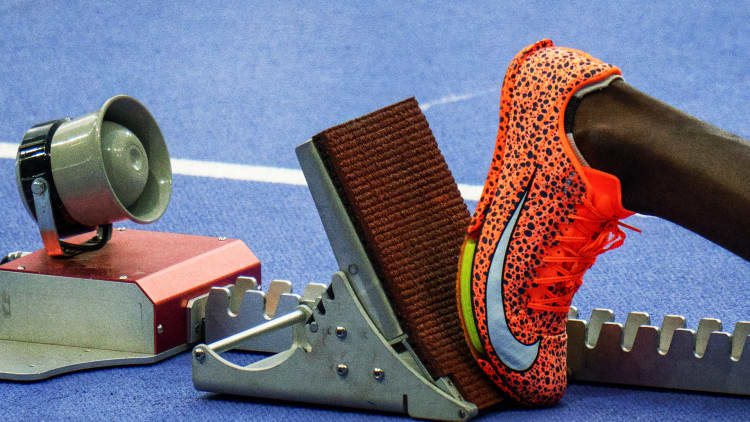
Marko Djurica | Reuters
Nearly 2,900 athletes from more than 90 national Olympic committees are competing at the Winter Games across 116 medal events across eight sports.

While the International Olympic Committee does not award prize money, many governments and national Olympic bodies offer cash bonuses.
Here is how some countries stack up, based on information compiled by CNBC from national Olympic committees, sports associations and local reports.
Singapore tops the payout rankings for the 2026 Winter Games.
The Southeast Asian nation offers about $792,000 for an individual gold medal, $395,000 for silver and $197,000 for bronze, making it the most generous gold-medal payout among the countries reviewed.
Singapore has only competed in one previous Winter Games, the 2018 edition, where short-track speedskater Cheyenne Goh finished 28th in the women’s 1,500 meters.
The country is again represented by a single athlete in Italy: alpine skier Faiz Basha, who failed to finish the first run of the giant slalom at the Stelvio Ski Centre in Bormio, ending his campaign in a field of 81 athletes.
Hong Kong, which has sent alpine skiers and short-track speedskaters to compete in Italy, offers roughly $768,000 for gold, $384,000 for silver and $192,000 for bronze. The city has yet to win a medal at the Winter Olympics.
In Europe, Poland stands out not only for the scale but also for the variety of its rewards. Individual gold medalists can receive about $211,000. The package also includes a Toyota Corolla passenger car, a fully finished two-room apartment, a painting, a holiday voucher and jewelry.
Paintings and jewelry are also part of the entitlements offered to silver and bronze medalists, along with monetary rewards of about $169,000 and $124,000, respectively.
Italy, the host nation, offers about $214,000 for gold, $107,000 for silver and $71,000 for bronze.
South Korea awards about $208,000 for gold, roughly $139,000 for silver and $70,000 for bronze.
In some cases, rewards extend beyond standard medal bonuses. South Korean state media reported that snowboarder Choi Ga-on received 300 million won from her sports association after winning gold, while private companies also presented additional gifts, including a luxury watch from Swiss brand Omega.
The United States Olympic & Paralympic Committee awards $37,500 for gold, $22,500 for silver and $15,000 for bronze.

Glory only, for some
That said, not every winter sports powerhouse pays direct prize money.
Norway, which boasts the most medals in Winter Games history, does not award cash bonuses for podium finishes. Instead, athletes who continue competing may qualify for financial support from the Norwegian Olympic and Paralympic Committee. The stipend is worth roughly 160,000 Norwegian kroner per year ($16,831) and includes access to professional training and medical services.
In some countries, there is no publicly disclosed medal bonus scheme. The United Kingdom does not award cash bonuses for Olympic medals, meaning Team Great Britain athletes will not receive additional payments for podium finishes in 2026. Instead, financial support is provided through UK Sport, which uses National Lottery funding to back training, coaching and athlete development.
China also does not publish a standardized national payout structure for Winter Games medals, with rewards often determined at the provincial or sponsor level.
An Olympic medal represents years of sacrifice and training. In a high-stakes competition decided in seconds, a podium finish can also bring a life-changing payout.

Discover more from stock updates now
Subscribe to get the latest posts sent to your email.