How Delhi’s Mayyur Girotra turned Dunki camel bags into couture
The Delhi-based self-taught designer, who exults in lush Indian maximalism, takes the same gleeful approach to his home, clothes and parties. His designs are a boisterous melee of indigenous weaves, heritage textile techniques and unapologetically bold motifs. Which is why there is a wave of interest in his recently launched MG homes, where he translates his design aesthetic into interiors. And in his line, The Collectables, that features about 45 museum-worthy finds restored and reworked into jackets, saris and waistcoats.
In the garden, strung with fresh jasmine garlands, a mehfil is in progress. As the strains of the powerful Sufi qawwali — ‘Mera piya ghar aaya’ — fill the house, Mayyur walks us through rooms so riotous with art they might feel like a gallery — if they weren’t also alive with his quirky sense of humour.
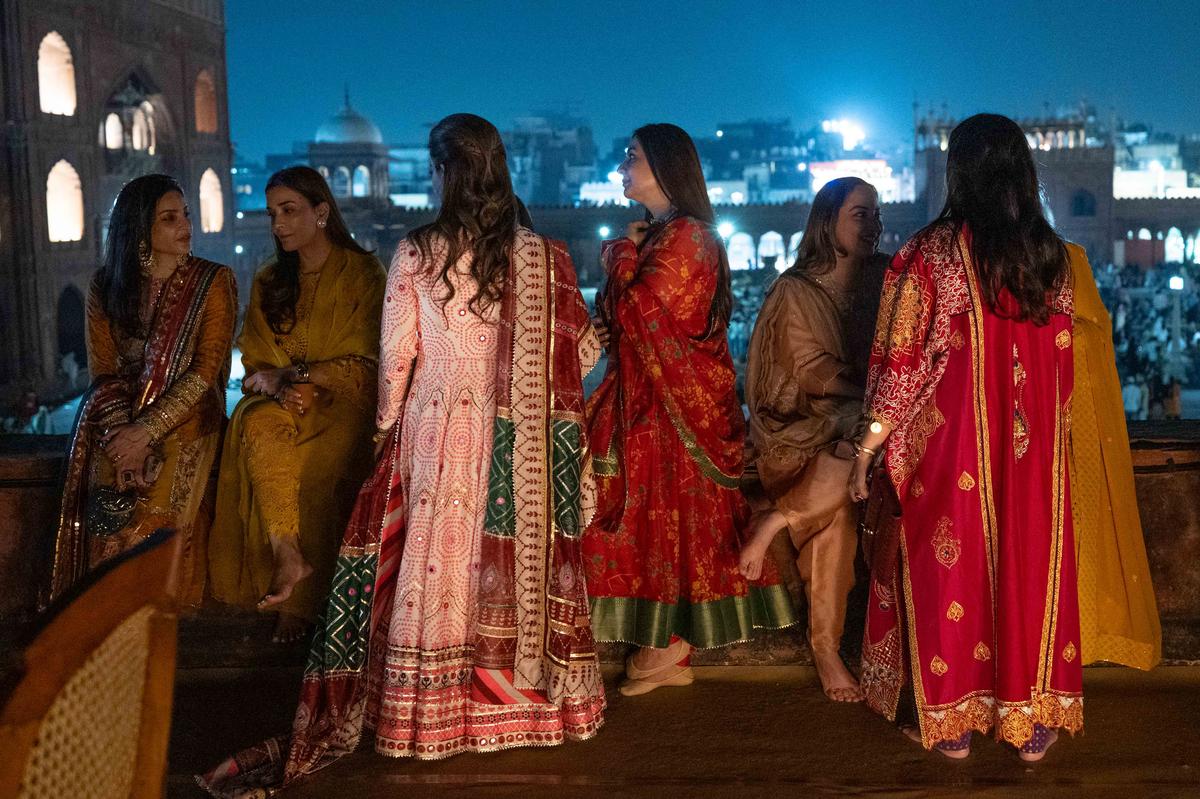
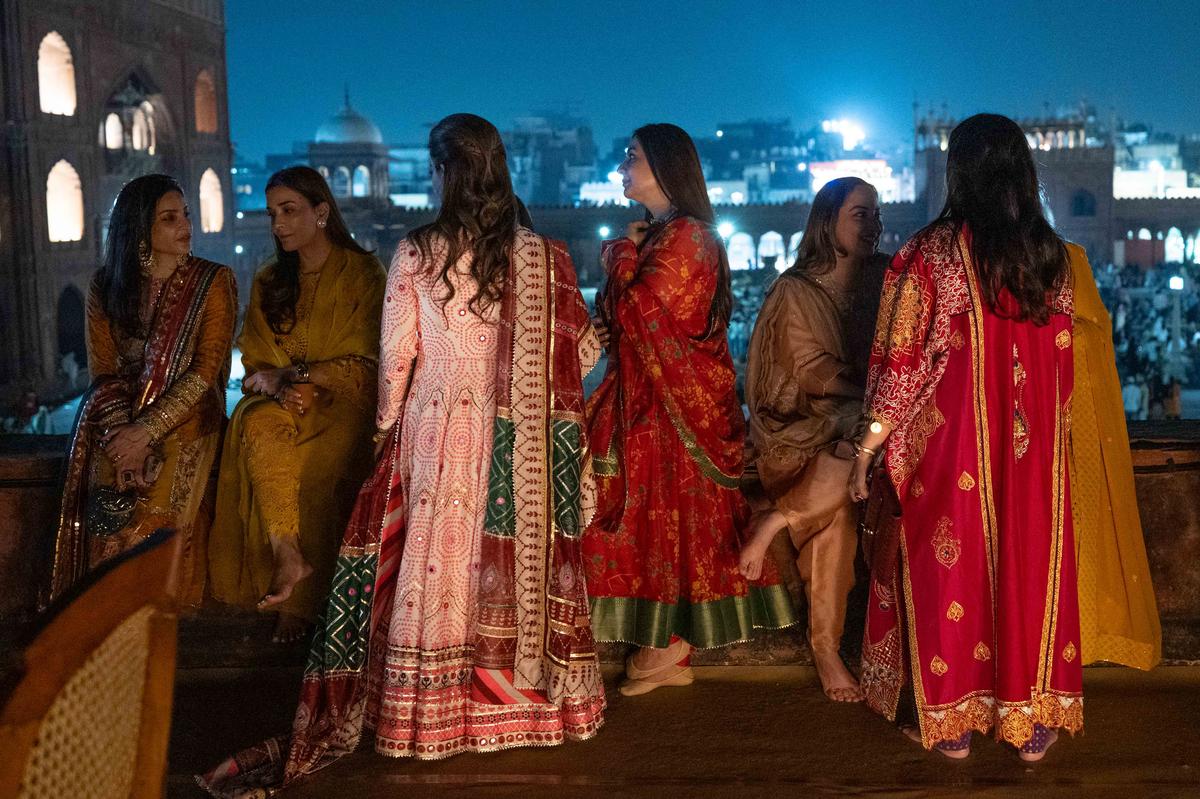
On the day The Collectables launched, the Imam of Jama Masjid along with the designer hosted iftar, where guests wore Mayyur Girotra
| Photo Credit:
Gayatri Nair
So amid the Husains, Vaikuntams and a century-old, wall-length French filet textile, there are Hansel-and-Gretel-style dried roots framing a chandelier, a powder room where birds sport dashing patola scarves, a washbasin by Bangladeshi artist Mahabubur Rahman made with scissors, and a series of dog sculptures. “I have names for all of them,” he says, patting one. “She is Laila.” His actual dog, a Shih Tzu named Soho, saunters confidently between visitors’ ankles. She does not look amused.

He beckons us closer to see the work on the lungi, which has had a signature Mayyur Girotra glow up. Now a sharply tailored waistcoat, the blue and grey checks, familiar to anyone who has loitered beside a chai stall, come from three handloom lungis from Tamil Nadu, Rajasthan and Gujarat. They are layered with Suzani-inspired running stitches, followed by dori work and kora zardozi.
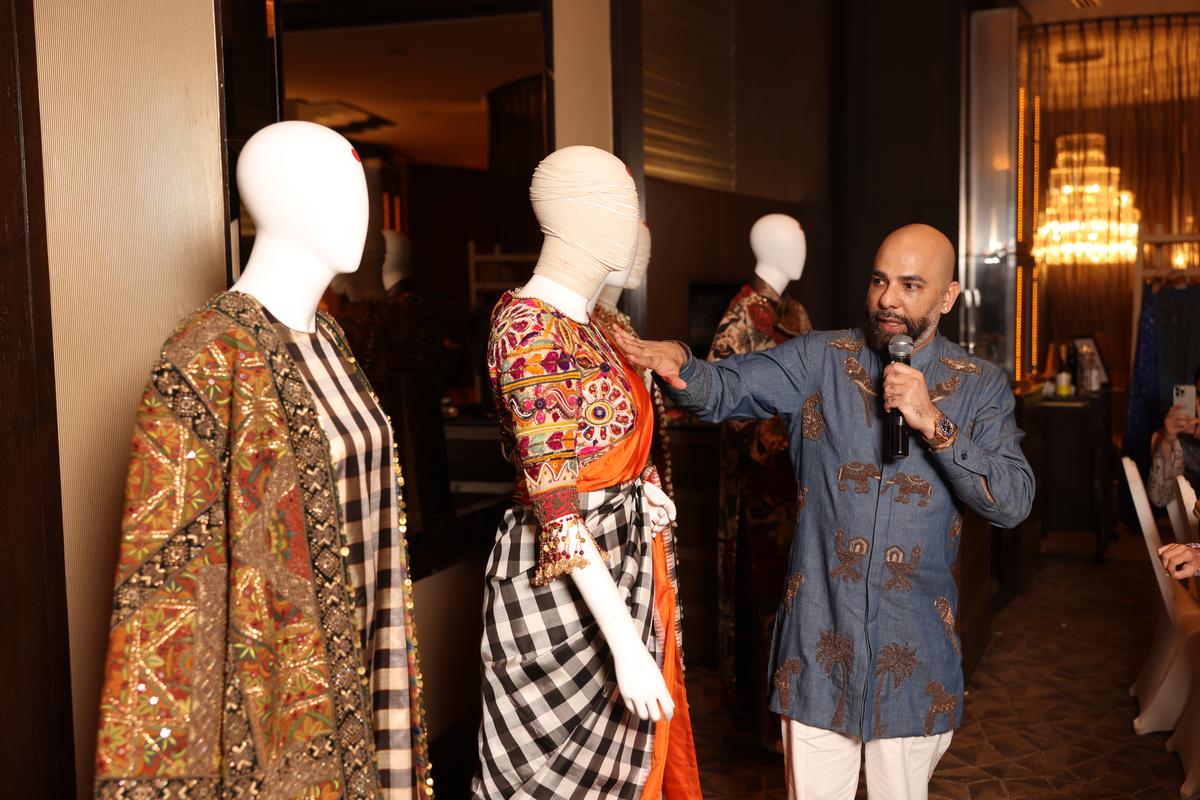
The collectables includes this sari with Madras checks, and a wide orange border from a Rabari shawl
| Photo Credit:
Special Arrangement
In today’s luxury landscape, often dominated by conformity and the quiet tyranny of trends, Mayyur’s magpie-like enthusiasm for things he considers beautiful, and his crusade to save them is refreshing.
“What we call luxury and what we flaunt is made in very dark rooms,” he says. “I was in Kanchipuram last week to collaborate with a weaver and the power went off. He was sitting there, working and sweating.” He pauses to fight back visible emotion. “We wear luxury couture, we wear Kanjeevarams that retail for lakhs. But what about the weaver, he is the mother to this craft. Just talking about bringing Indian textiles on the global stage is not enough, if we are taking undue advantage of the skills of our artisans.”
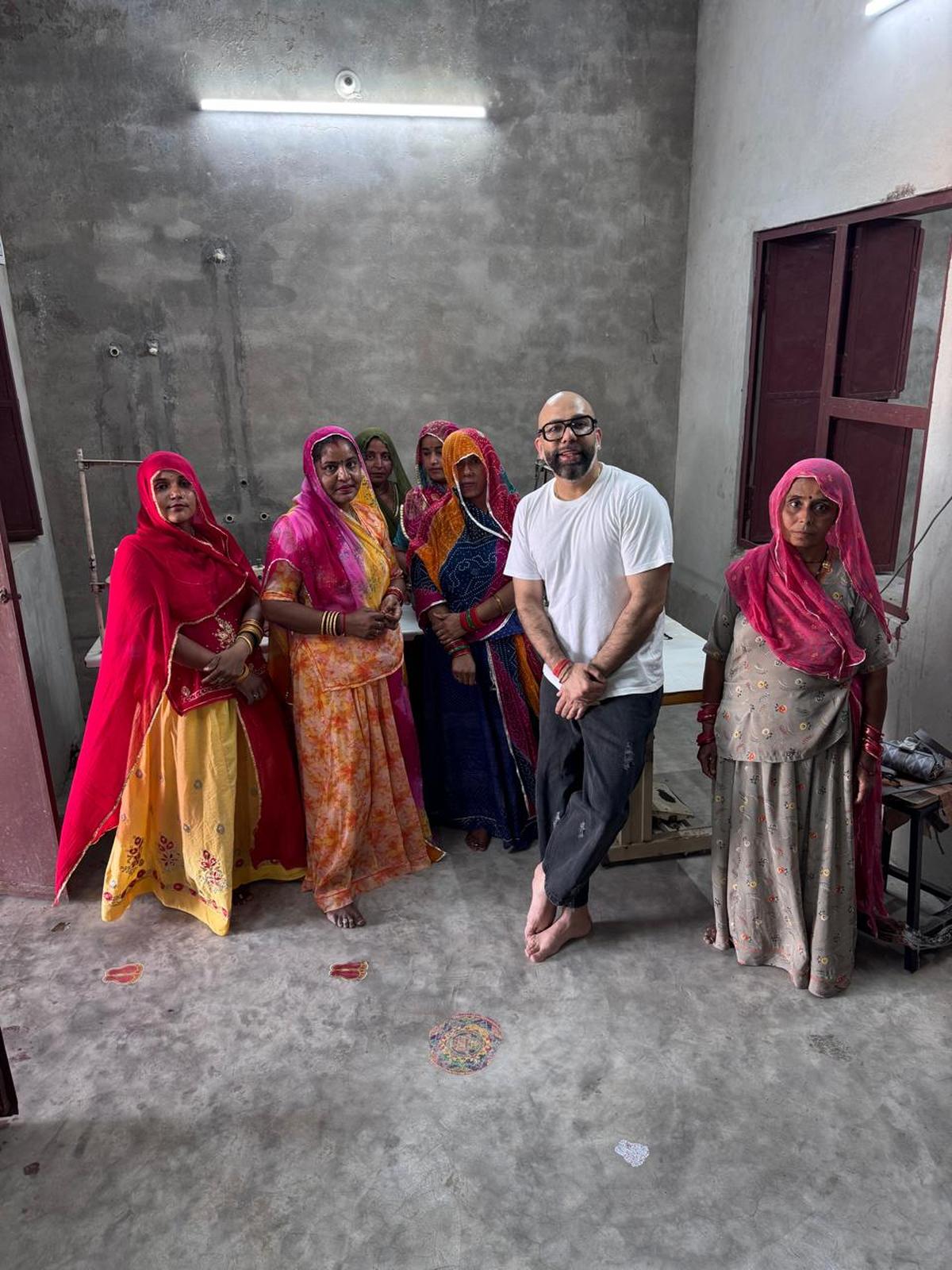
Mayyur works with women in Barmer, Rajasthan, alongside traditional weavers
| Photo Credit:
Special Arrangement
He explains how he now sells not just the work but also the process. He also advocated for fair pay, starting by setting an example himself. “Designers have to give them the right value for the product they are creating. Even if it means cutting from your very, very high margins.” He adds, “I will make sure that whatever money comes to us is also going to them, to their kids. We don’t want their kids to be scared of holding those looms.”
Finding modern uses for century-old crafts and textiles is also a practical way to ensure they survive.
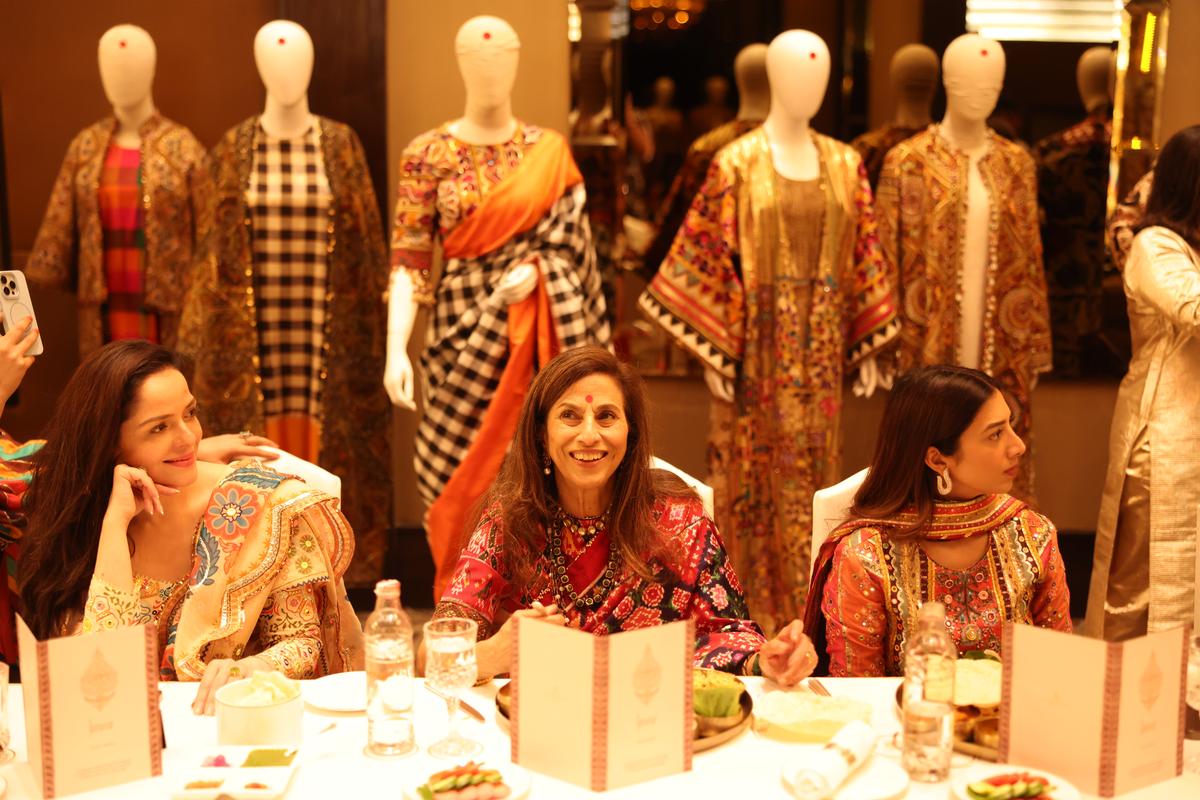
Shoba De in a richly patterned Patola sari by Mayyur Girotra at the launch of The Collectables
| Photo Credit:
Special Arrangement
The Collectables is built around rare and historic finds sourced from all over the world. They are studied and then reimagined into couture, blending techniques, textiles and design languages. Mayyur and his team work with women in Barmer, Rajasthan, alongside traditional weavers and small artisan communities for this, often spending two to three months on a single jacket because of the intricacy of the work. It is a necessarily limited collection. “I have buyers all over: New York, Delhi, Mumbai, Gujarat… They wear, and rewear these pieces.”
Although they are set on mannequins at the launch, that does not deter guests from lifting them up and slipping them on, so they can swivel in front of cameras and mirrors.
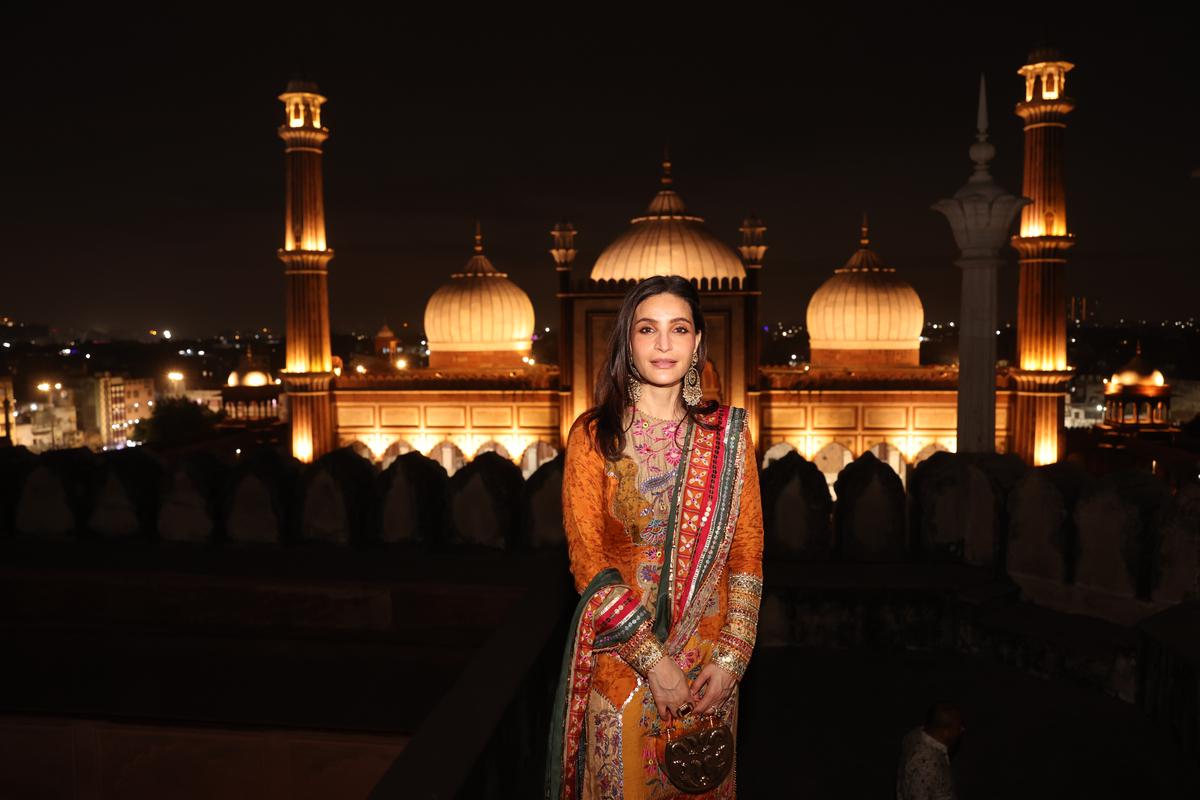
A guest wears Mayyur Girotra at dusk, at Jama Masjid
| Photo Credit:
Special arrangement
The pieces are cinematic: A jacket shimmering with a layering of zardozi and gota, made from old, handcrafted dunki bags, the camel saddle bags carried by nomadic Rabaris across Rajasthan. An old Kutch bedcover from Udaipur that has been transformed into a biker jacket in deep shades of red, spangled with gold. A sari with black and white Madras checks, and a wide orange border from a Rabari shawl. “I just patched on the pallu. I haven’t touched the old Rabari work because it is so beautiful and in such good condition,” says Mayyur.
He then holds up a trench coat with main character energy. “It was found in Tibet. This Pashtun embroidery is probably originally from Afghanistan, and you see it a lot in Pakistan now. We added hoof work, then layered it with gota. There is mul mul inside to give it life… How did it travel? I don’t know,” he shrugs, adding, “That whole emotional energy that comes with the garment is beautiful.”
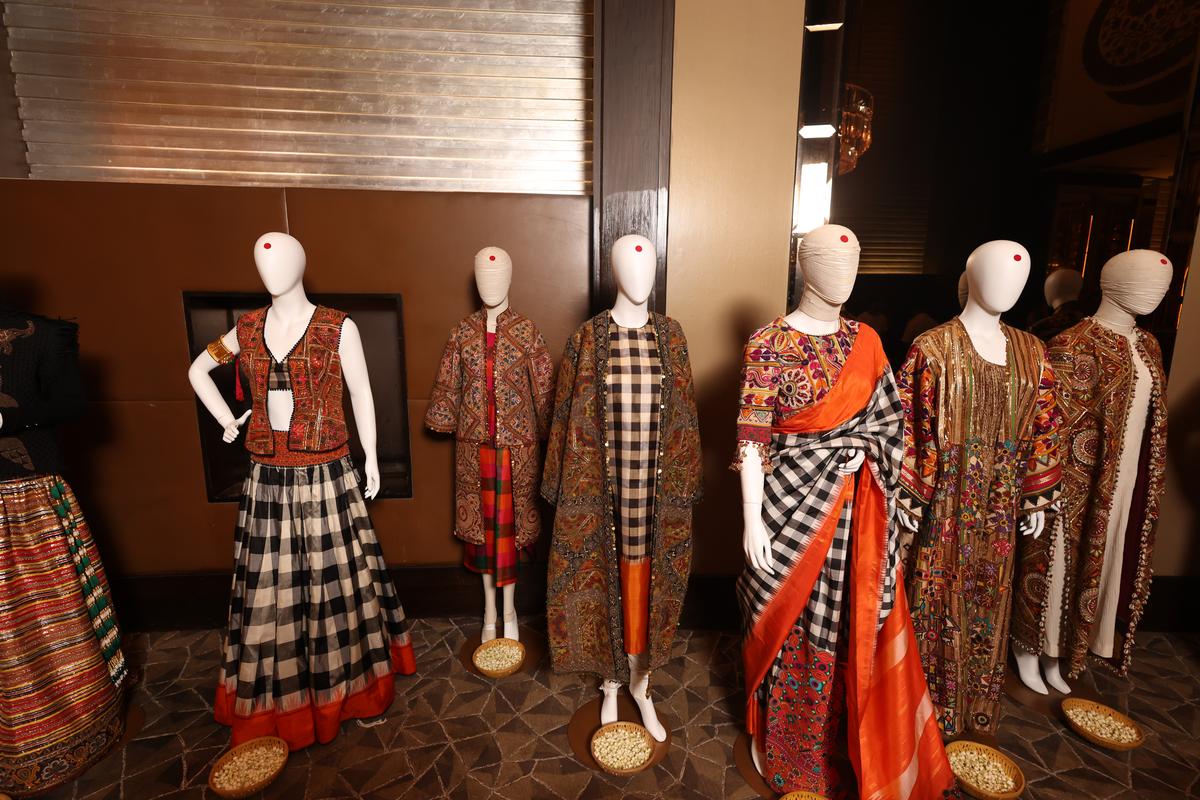
The Collectables is built around rare and historic finds, then reimagined into couture
| Photo Credit:
Special Arrangement
“These are made to become heirlooms. So it’s there now, and it is going to be there forever. For your kids and whoever you pass it on to,” says Mayyur, adding, “When you’re wearing a piece, it holds so much, so many hands, so many regions, so much history. They are a storyline in your wardrobe.”
Published – March 12, 2026 03:25 pm IST
Discover more from stock updates now
Subscribe to get the latest posts sent to your email.