Highest honour: Indian-origin scientist Shri Kulkarni wins Royal Astronomical Society’s Gold Medal |
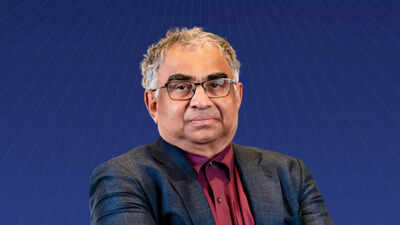
Shri Kulkarni, an Indian-origin astronomer and one of the world’s leading figures in modern astrophysics, has been awarded the Gold Medal of the Royal Astronomical Society (RAS). It is the highest honour conferred by the UK-based scientific body.Awarded annually since 1824, the RAS Gold Medal recognises exceptional contributions to astronomy and geophysics. Past recipients include some of the most influential names in science, making the honour one of the most prestigious in global astronomy.
Shri Kulkarni recognised for transforming time-domain astronomy

In its citation, the Royal Astronomical Society credited Kulkarni for his “sustained, innovative and ground-breaking contributions to multi-wavelength transient astrophysics.” This field focuses on short-lived and rapidly changing cosmic phenomena.Born in Maharashtra, India, Kulkarni earned his master’s degree from IIT Delhi in 1978 before completing his doctorate at the University of California, Berkeley in 1983. His journey from India to the forefront of global astronomy now culminates in one of the field’s most coveted honours.
A career defined by landmark discoveries
Over a career spanning more than four decades, Kulkarni has played a central role in shaping time-domain astronomy, the study of how the universe changes over time rather than appearing static. His work has helped scientists understand some of the most extreme and fleeting events in the cosmos.Kulkarni’s scientific impact dates back to his early years. In 1982, while still a graduate student, he co-discovered the first millisecond pulsar, a rapidly spinning neutron star that transformed understanding of stellar remnants.After joining the California Institute of Technology (Caltech) in 1985, Kulkarni went on to contribute to several major breakthroughs. In 1995, he and his colleagues identified the first brown dwarf, a class of celestial objects that lie between stars and planets. Two years later, his team demonstrated that gamma-ray bursts originate far beyond the Milky Way, overturning long-held assumptions about their nature.More recently, in 2020, Kulkarni was part of the team that identified the first fast radio burst detected within the Milky Way, strengthening evidence that these mysterious flashes are linked to highly magnetised neutron stars known as magnetars.
Building the tools that watch the changing sky
Beyond discoveries, Kulkarni is widely recognised for his role in building the instruments that made many of them possible. He led the development of the Palomar Transient Factory and its successor, the Zwicky Transient Facility (ZTF). These survey projects systematically scan the sky for transient and explosive events.The Royal Astronomical Society noted that the two projects have “revolutionised time-domain astrophysics at optical wavelengths.” The Zwicky Transient Facility continues to survey the entire northern sky every two nights, enabling astronomers to detect supernovae, asteroids, flaring stars and other rapidly evolving phenomena.Kulkarni has repeatedly emphasised the importance of instrumentation in scientific progress. He has often said that building the right tools allows nature itself to reveal new discoveries.
Ongoing work and global recognition
Kulkarni remains deeply involved in future-facing research. He is currently working on NASA’s Ultraviolet Explorer (UVEX) mission, planned for launch around 2030, which aims to conduct the most sensitive ultraviolet sky survey to date. He is also the principal investigator for Z-Shooter, a next-generation spectrometer being developed for the W. M. Keck Observatory in Hawai‘i.His latest honour adds to a long list of accolades, including the Shaw Prize, the Alan T. Waterman Award from the US National Science Foundation, and the Dan David Prize. He is a member of several leading scientific academies, including the US National Academy of Sciences, the Royal Society of London, and the Indian Academy of Sciences.With the Royal Astronomical Society’s Gold Medal, Shri Kulkarni joins an elite group of scientists whose work has fundamentally reshaped how humanity understands the universe as a dynamic and ever-changing cosmic landscape.
Discover more from stock updates now
Subscribe to get the latest posts sent to your email.