


Here’s Why Tesla Is Discontinuing the Model S and Model X
Key Points
Tesla‘s (NASDAQ: TSLA) announcement that it was discontinuing production of its Model S and Model X surprised the market and caused many investors to conclude that Tesla was walking away from the electric vehicle (EV) arena. In fact, that’s far from the truth, and the reality is much more nuanced. Here’s why Tesla is ending production of two of its EVs.
What Elon Musk said
On a recentearnings call CEO Elon Musk explained the decision by saying, “we’re really moving into a future that is based on autonomy.” This fits with Tesla’s goals, but it’s important to understand the full context.
Will AI create the world’s first trillionaire? Our team just released a report on the one little-known company, called an “Indispensable Monopoly” providing the critical technology Nvidia and Intel both need. Continue »
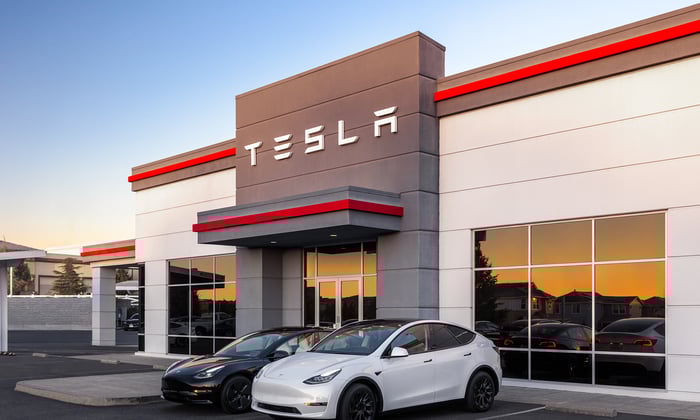
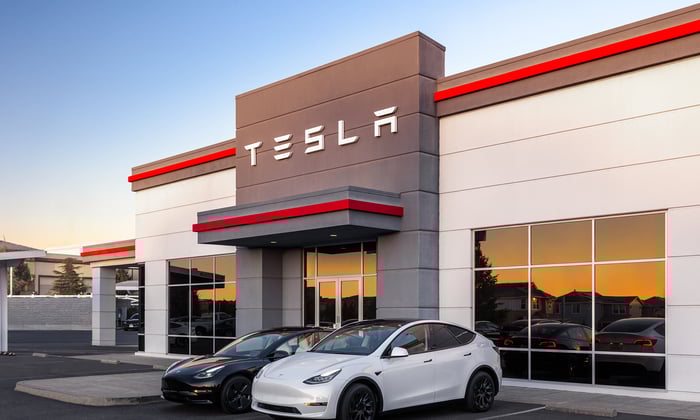
Image source: Tesla.

First, the S and X are higher-cost models that don’t generate significant sales for Tesla. The company doesn’t break out its sales in its delivery reports. Instead, it lumps them in “other models” deliveries, but since “other models” only generated 12,881 unit deliveries in the fourth quarter, compared to Model 3/Y deliveries of 323,800, it’s fair to say they are not significant. According to the Kelley Blue Book Electric Vehicle Sales Report, they totaled just over 4,000, representing 1.2% of deliveries in the quarter.
Second, while Model 3 sales rose modestly in 2025 and Model Y sales were negatively affected by the spring refresh, Model S/X sales fell significantly. It’s clear from the recent massive charges and EV strategy changes at Ford Motor Company and Stellantis that the market has moved toward lower-cost models. Indeed, Tesla has also responded by producing lower-cost, standard models of the 3 and Y.
Third, as part of a $20 billion capital spending commitment in 2026, Tesla is converting space at its Fremont factory used to produce the S and X to manufacture its Optimus robot.
An autonomous future
As Musk noted, Tesla is driving toward an autonomous future. This is not some sort of diversionary or reactive tactic by the company. Instead, it’s an inevitable consequence of where many automakers tried to take the industry. The difference is that, unlike General Motors and Ford (which spent billions failing to develop robotaxis), Tesla is progressing, albeit slowly, toward achieving autonomous robotaxis.
Given the relatively higher upfront cost but significantly lower cost-per-mile dynamics of EVs, their killer benefit is their heavy use, which shines through when they are used as taxis. That benefit is even better if they are autonomous and offer a more affordable price point, as the dedicated robotaxi vehicle, Cybercab, aims to do.
Image source: Getty Images.
Cybercabs, not high-upfront-cost luxury models
Putting it all together, the ongoing production of low-selling, high-priced luxury EVs such as the S and X aligns with neither market conditions nor the direction the EV market is heading. As such, discontinuing these models is a natural evolution of the business. That’s not to say Tesla will necessarily achieve its robotaxi aims, but the lack of S and X models won’t impact that question much.
Don’t miss this second chance at a potentially lucrative opportunity
Ever feel like you missed the boat in buying the most successful stocks? Then you’ll want to hear this.
On rare occasions, our expert team of analysts issues a “Double Down” stock recommendation for companies that they think are about to pop. If you’re worried you’ve already missed your chance to invest, now is the best time to buy before it’s too late. And the numbers speak for themselves:
- Nvidia: if you invested $1,000 when we doubled down in 2009, you’d have $487,361!*
- Apple: if you invested $1,000 when we doubled down in 2008, you’d have $49,619!*
- Netflix: if you invested $1,000 when we doubled down in 2004, you’d have $415,256!*
Right now, we’re issuing “Double Down” alerts for three incredible companies, available when you join Stock Advisor, and there may not be another chance like this anytime soon.
*Stock Advisor returns as of February 21, 2026.
Lee Samaha has no position in any of the stocks mentioned. The Motley Fool has positions in and recommends Tesla. The Motley Fool recommends General Motors and Stellantis. The Motley Fool has a disclosure policy.
The views and opinions expressed herein are the views and opinions of the author and do not necessarily reflect those of Nasdaq, Inc.
Discover more from stock updates now
Subscribe to get the latest posts sent to your email.