


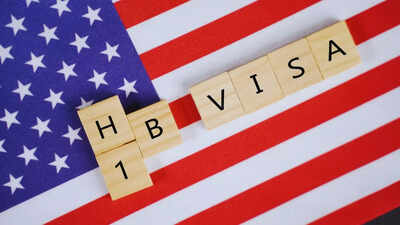
H-1B visa stamping pushed to 2027: What it means for global talent
For thousands of Indian professionals, what was meant to be a routine visa-stamping visit has turned into an open-ended pause on their careers. H-1B interview slots across US consulates in India have been deferred yet again, with many applicants now staring at dates in 2027 — a delay that is altering professional trajectories, family lives and global hiring strategies.The deferrals, which have progressively come to light starting in Dec 2025, have since gained momentum. While interviews have first been postponed till early 2026 and then till late 2026, they are now being postponed till as late as 2027. Immigration lawyers and applicants alike say the pace and scale of the backlog are unlike anything seen in recent years, leaving skilled workers stranded between countries, employers and personal commitments.The interview that never cameAt the centre of the crisis is a simple but devastating reality: interview slots have dried up. Consulates in Delhi, Mumbai, Chennai, Hyderabad and Kolkata no longer show regular availability for H-1B visa-stamping appointments this calendar year.Emily Neumann, a partner at a Houston-based immigration law firm, told The Times of India that she had not seen a single new interview slot open for India in over 50 days. In her view, H-1B holders currently in the US should avoid travelling to India altogether. “They are not in any hurry to give you a visa,” Neumann said in conversation with the newspaper, adding that the present approach marks a sharp departure from the previous administration’s stance.Similar concerns were echoed by an immigration lawyer quoted by American Bazaar, who described the appointment calendar as virtually empty until 2027. Applicants who travelled to India in recent weeks were informed that their interviews had been cancelled, while others with January and February dates received fresh appointments more than a year later.Careers on hold, families dividedThe human cost of the delays is most visible among professionals who travelled to India assuming a short turnaround. However, many of them cannot now return to their US-based jobs. They are separated from their spouses and children who stay back in the US.Online forums and social platforms have become informal support groups. On Reddit, applicants have shared screenshots of rescheduling emails showing appointments pushed from February 2026 to May 2027. Others responded with near-identical experiences, questioning whether prolonged deferrals have effectively become the new norm for the programme.For working professionals, the impact goes beyond inconvenience. Employment contracts, project timelines and career momentum are all at risk. Parents are missing school years with their children; couples are maintaining long-distance marriages with no clarity on reunification. Immigration advocacy groups cited in multiple media accounts warn that the psychological toll is mounting alongside professional uncertainty.Why are the delays happening?The backlog can be traced to a cluster of policy and operational changes introduced at the end of 2025. A key trigger was a rule that came into force on December 15, mandating social media screening for employment-based visa applicants. Lawyers say the added scrutiny has significantly increased processing time per case, reducing the number of interviews consulates can handle each day.Adding to the pressure, the US State Department has ended a long-standing practice that allowed Indian nationals to seek visa stamping in third countries. With that option removed, demand has been funnelled entirely into Indian consulates.In a New Year’s Eve post on X, the US Embassy in India warned applicants that violations of immigration law carry consequences — a message that landed amid growing frustration as waiting periods stretched beyond March 2026 and into 2027.Meanwhile, the Trump administration’s broader reworking of the H-1B programme has contributed to the uncertainty. On December 29, 2025, US Citizenship and Immigration Services published new rules for FY 2027. While the annual cap of 85,000 visas remains unchanged, immigration experts say the tone and enforcement priorities have shifted decisively towards restriction.What the delay really means for professionalsFor H-1B holders stuck outside the US, time is not a neutral factor. If a visa expires while the employee remains abroad, employers may be unable to file extensions. Neumann, speaking to The Washington Post, noted that companies are now far less inclined to restart applications, particularly after the introduction of a $100,000 fee on new H-1B petitions last year.That reluctance puts professionals in a tricky position. Years of career progression, internal mobility, and trust from employers can be undone by a single delayed interview. What was once a technical formality has become a high-stake gamble.Dependents have been affected, too. H-4 visa holders are reportedly facing revocations linked to their H-1B spouses’ status, compounding the sense of instability for families already living across continents.A Shock to the Global Talent PipelineThe ripple effects are also already starting to be felt by American employers. For example, tech firms, universities, and healthcare providers count on experienced H-1B workers to provide continuity. The prolonged absence of workers leads to delays in delivery and increases costs.Similarly, India’s top software companies, which have large bases in the US, like Wipro, TCS, and Tech Mahindra, have begun to rely more and more on locals in order to mitigate risks caused due to visa delays. Some companies have tried out allowing stranded staff to work remotely, although lawyers specializing in immigration have emphasized that such efforts have strict borders drawn around visa rules. Similarly, e-commerce giant Amazon too has allowed workers to work remotely.Other experts and experts also warn of a long-term reputational downside as well. There is a threat of other countries easing the visa process for skilled foreign workers and presenting themselves as a dependable alternative. There is a threat of the US losing its competitive edge in attracting international talent as a result of this backlog.Thousands of people are stuck in limbo, with halted careers, separated families, and put-off futures, and an interview time that is always just out of reach.

Discover more from stock updates now
Subscribe to get the latest posts sent to your email.