


Delhi’s private schools can’t shake off fee committees: HC extends deadlines, autonomy under challenge
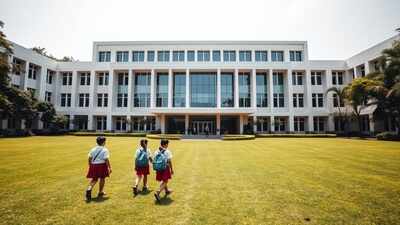
The Public Schools on Private Land Society (PSPLS), a Delhi-based association representing private unaided schools operating on privately owned land, went to the Delhi High Court with a blunt demand: Strike down the Delhi School Education (Transparency in Fixation and Regulation of Fees) Act, 2025, or at least amputate the provisions that, in the schools’ telling, convert “regulation” into control. The writ petition targets the provisions to create fee regulation committees, impose penalties, and vest wide-ranging powers in government authorities.Alongside the constitutional challenge, the petition also sought interim relief, asking the court to put on hold the Directorate of Education’s (DoE) December 24 order that mandates Delhi’s private schools to form School Level Fee Regulation Committees, even as the law itself remains under judicial scrutiny.The DoE had directed private schools to constitute these committees by January 10, and to place their proposed fee structure before them by January 25, setting a tight compliance calendar that schools said left little room for legal clarity or institutional autonomy.On January 8, 2026, the Delhi High Court declined to stay the government order, clearing the way—at least for now—for the committee mechanism to move forward. However, the court tempered the timeline.A Division Bench of Chief Justice Devendra Kumar Upadhyaya and Justice Tejas Karia extended the deadline for constituting the committees to January 20, instead of January 10. The court also granted schools additional time to submit their proposed fee structures, pushing the deadline from January 25 to February 5.Expressing sharp disappointment, Dr. Chandrakant Singh, General Secretary, PSPL Society, said, “No stay on the fee regulation Act—and only a 10-day extension to constitute the School Level Fee Regulation Committee—will create chaos, especially in the final trimester of the academic year. According to him, the timing is particularly disruptive, as schools are in the final stretch of the academic year. “This is when school managements are busy with final preparation for the annual examination. Students and teachers will be disturbed. We are planning to approach the Hon’ble Supreme Court seeking a stay. We are really very upset,” he added.
Clash with the existing 1973 law

In its petition, PSPLS argued that the problem was not just how the 2025 school fees law was being enforced, but the law itself. It said fee regulation was already covered under the Delhi School Education Act (DSEA), 1973, and claimed the new Act duplicated that system while also clashing with it in key places. The result, it submitted, was a confusing overlap—two sets of controls operating on the same issue, and schools left navigating both. Advocate Shikha Sharma Bagga echoed the argument. “There was no requirement for a new Act. The 1973 Act is adequate in all respects. The new Act will only create confusion,” she said. Bagga also pointed out that schools situated on private land had been using their land for a charitable purpose, to provide quality education at affordable fees, and had been enjoying maximum autonomy. “These schools are already charging fees equal to or less than the expenses incurred by the government in the schools run by it. The new fee bill, implemented retrospectively, has been causing confusion, and it is difficult for schools to implement both the DSEA and the new fee bill,” she added.
Constitutional violations alleged
In its petition, PSPLS said the 2025 law was not just strict, but constitutionally unfair, and that it harmed rights protected under three key provisions:
- Article 14 (Equality before law): PSPLS argued the law was drafted and applied in a way that could be arbitrary, with too much room for uneven or inconsistent decisions.
- Article 19(1)(c) (Freedom to form associations): The association said the law’s structure and penalties could undercut how private schools organise and represent themselves through a body like PSPLS.
- Article 19(1)(g) (Right to practise an occupation): PSPLS argued that running a private unaided school was a lawful occupation, and that the new mechanism cut too deeply into how schools manage their finances, especially fee-setting, which they said was essential for day-to-day functioning.
Fee decisions under multiple layers questioned
Under the new Act, the Directorate of Education’s framework requires private schools to move fee decisions through a defined chain. Schools must constitute a School Level Fee Regulation Committee to examine proposed fees, with disputes to be carried to a District Fee Appellate Committee. The law also empowers the Director of Education to step in suo motu—to call for records and issue directions without waiting for a complaint.In its petition, PSPLS objected to this structure, arguing that the layered system goes beyond oversight and into control. It said routing fee decisions through committees and executive intervention would steadily shrink the role of school managements in financial planning and administration. According to the association, this multi-tiered mechanism would erode the administrative and financial autonomy of its 355 member schools, turning fee-setting into a process governed by approvals rather than by the institutions themselves.
What the law now puts to the test
The story now sits in the uncomfortable space where law, logistics and lived reality collide. The DoE’s December 24 order was meant to make fee-setting less of a private ritual and more of a documented process. For many parents, that promise—of a seat at the table and an appeal ladder beyond the school gate—reads like overdue accountability after years of fee shocks and opaque heads. For schools, it reads like a moving target: Multiple committees, administrative paperwork, and the fear that “suo motu” oversight will turn fee planning into an approval economy. The High Court’s order on January 8 did not freeze the machinery, it merely slowed it, signalling that steps taken will remain subject to further orders. The open questions are now sharper than the rhetoric: Can regulation be made participatory without becoming paralysing, and can autonomy be protected without becoming unaccountable? When the petition returns to court—and possibly to the Supreme Court—will the judiciary treat this as a scheduling dispute, or as a test of how far the state may go in governing private education?
Discover more from stock updates now
Subscribe to get the latest posts sent to your email.