


Cuba is reaching ‘breaking point’ as fuel shortage worsens. What to know – National

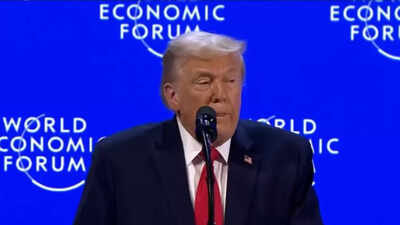
Cuba had been weathering economic hardship before U.S. President Donald Trump effectively cut off oil shipments to the island by blockading its chief supplier, Venezuela, and threatening tariffs on any country that stepped in to fill the void.

After the U.S. captured Venezuelan President Nicolas Maduro in early January, Trump predicted Cuba’s government was “ready to fall” next.
U.S. Secretary of State Marco Rubio told senators at a hearing late last month that “we would love to see a change” in the regime, but added the U.S. wouldn’t “make” that change.

The White House has labelled Cuba “an unusual and extraordinary threat” to the U.S. due to the communist nation’s alliances with Russia, China and Iran.
Last week, Cuban President Miguel Díaz-Canel said his government is willing to enter negotiations with the Trump administration that could ease some of the economic pain. Whether that means the fall of the Cuban government is an open question.
“We may be reaching a breaking point,” said Max Cameron, a political science professor at the University of British Columbia who studies Latin America.
Cuba has been facing fuel shortages for years, and particularly since the outbreak of the COVID-19 pandemic, as Venezuela’s state oil company PDVSA has reduced exports in order to avoid fuel scarcity at home.
Other suppliers like Russia and Mexico have also reduced oil shipments, which the Cuban government has blamed on new U.S. sanctions imposed during Trump’s first term and later by former U.S. president Joe Biden.

The shortages have led to blackouts of the island’s fuel-powered electrical grid. In 2024, the entire population of over 10 million people was plunged into darkness when the grid ran out of fuel.

Cubans have also faced food and medicine shortages in recent years that have been exacerbated by hurricanes disrupting shipments of essential goods.

Get daily National news
Get the day’s top news, political, economic, and current affairs headlines, delivered to your inbox once a day.
Trump’s Venezuelan oil blockade, and his Jan. 29 order that countries will face tariffs if they supply oil to Cuba, has further compounded the pain the country is facing.
Diaz-Canel has imposed emergency measures including shorter workweeks and school days, limited transport between provinces and fuel rationing for essential services.
“I know we are going to live through difficult times. But we will overcome them together, with creative resilience,” he said during a rare press conference on Feb. 5 where he told residents they must “sacrifice” and “resist.”
Mark Entwistle, who served as Canada’s ambassador to Cuba from 1993 to 1997, said Trump’s pressure campaign on Cuba also puts countries like Canada in a “vice grip.”
“The reality is that we need to manage and renegotiate (the Canada-U.S.-Mexico Agreement on free trade),” he said in an interview.
“The Canadian government … needs to manage the U.S. relationship in a smart-minded way, (but at the same time) nobody wants to see a fellow country of the Americas be bullied and crushed and potentially fall into chaos.”
Entwistle said the federal government will also need to ensure the safety and security of thousands of Canadians in Cuba.
Global Affairs Canada says it is aware of more than 7,200 Canadians in Cuba and is providing consular assistance to anyone who requests it.
It also pointed to the government’s travel advisory for Cuba, which was upgraded Feb. 3 to warn travellers to “exercise a high degree of caution,” citing worsening power outages and shortages of basic necessities.

Canadians have long been the top market for Cuba’s lucrative tourism industry, which once generated $3 billion annually but has struggled to return to pre-pandemic levels. Many resorts have been forced to close or reduce their bookings because of the fuel and supply shortages.


Last year, around 754,000 Canadians visited the island, a 12-per cent drop from the year before and well below the 1.3 million pre-pandemic annual average, according to Cuba’s national statistics agency ONEI.
The number still outpaces other top markets like Russia and even Cuban nationals visiting from the U.S., and even exceeds the combined number of visitors from several other countries.
Pedro Monreal, a Cuban economist, said on X this week that Cuba’s tourism industry has become increasingly reliant on Canadian visitors, and that the recent drop-off has created a “pneumonia” across the sector.
The question of who’s to blame for Cuba’s economic crisis has led to finger-pointing between the Cuban government and the United States.
The U.S. has had an economic embargo on Cuba since the early 1960s, shortly after Fidel Castro’s socialist revolution in 1959. That embargo was codified into law in the 1990s, and has been relaxed and strengthened at various points since then.
A period of renewed U.S.-Cuba relations under the Obama administration came to an end when Trump took over the White House in 2017, an approach that continued under Biden.

Díaz-Canel said last week that U.S. sanctions have cost the country over $7.5 billion between March 2024 and February 2025, and called the “energy blockade” enacted by Trump a “psychological war.”
Rubio, the son of Cuban immigrants with deep ties to Miami’s Cuban community, told the U.S. Senate foreign relations committee on Jan. 28 that Cuba’s economic problems are the fault of the government’s decades of mismanagement.
“The suffering in the rural areas of Cuba are acute and they’re deep, and it’s not because of the embargo. It’s because they don’t know how to run an economy,” he said.
“How is it the fault of the U.S. embargo that Cuba, one of the world’s largest sugar producers, now imports sugar? Because no sector of their society works. It’s frozen and it’s broken.”
Entwistle and Cameron said both sides are partially responsible for the current situation. They said Cuba’s investments in health care and social services, while laudable, came at the expense of infrastructure that has been failing for decades.
The U.S. embargo, meanwhile, has blocked foreign investment and made sourcing goods difficult, though countries unfriendly to the U.S. like Russia, China and Venezuela have often stepped in to help.
The embargo has also, in the eyes of many experts and researchers, aimed to provoke regime change and force Cuba away from communism.
Although Entwistle said Cubans are “exhausted” by the worsening economic crisis and “would love to see a change in government,” he added the pressure from the U.S. is fueling Cuban nationalism and “anti-Americanism.”
“If there is a view in Washington that all Cubans on the island are waiting for them to come, or that Cubans will endure all suffering so that there can be a change in government — suffering even provoked by the U.S. government itself — that is an incorrect assessment,” he said.
Cameron added that a fall of the regime in Cuba could spark a power vacuum and civil strife that may create a new security crisis for the U.S. and the wider region.
“You don’t want to turn Cuba into another Haiti,” he said.
Discover more from stock updates now
Subscribe to get the latest posts sent to your email.