Confronting protests, Iran vows to strike back if the U.S. attacks
Sopa Images | Lightrocket | Getty Images
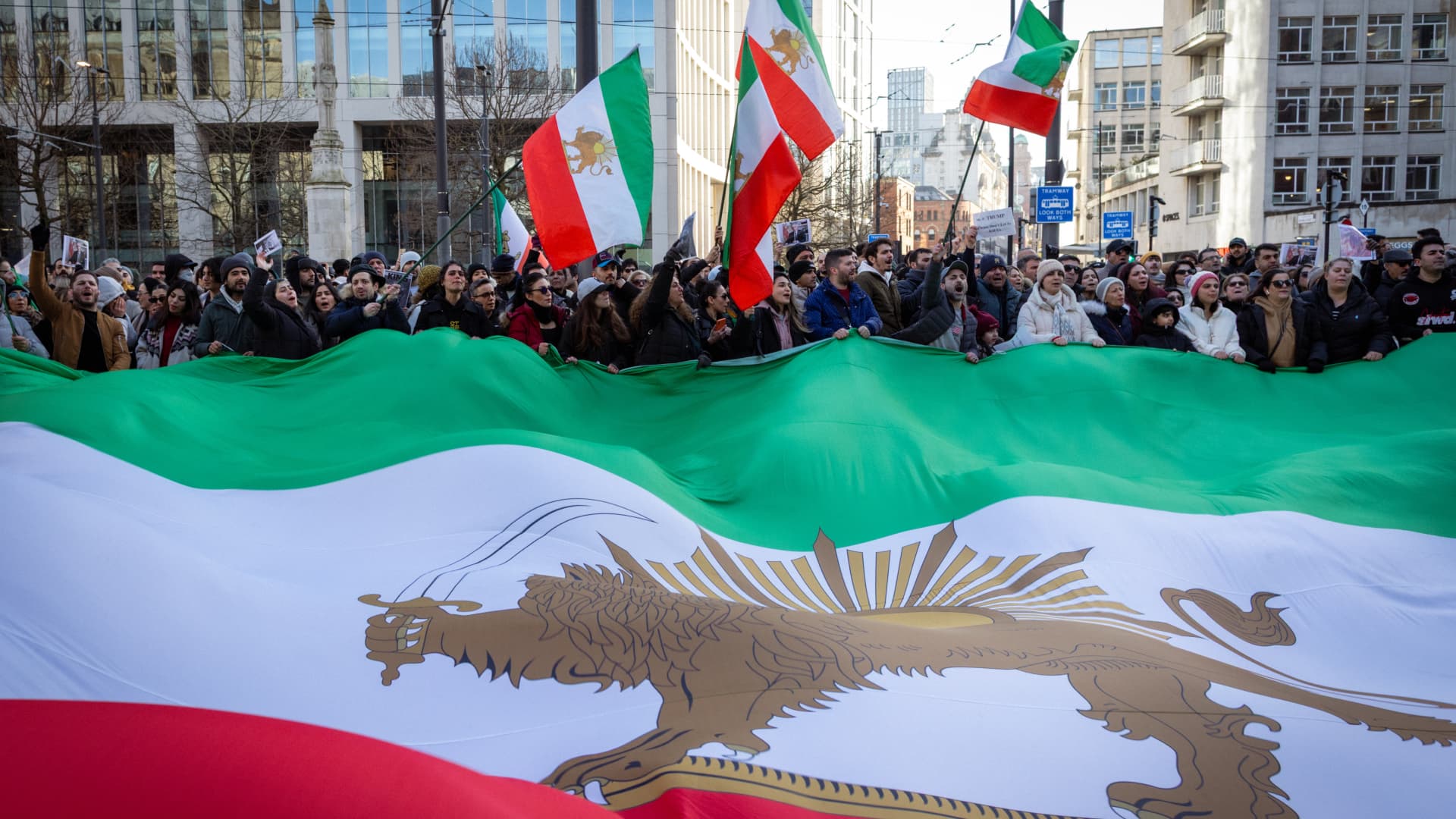
With Iran’s clerical establishment facing the biggest anti-government protests since 2022, U.S. President Donald Trump has repeatedly threatened to intervene in recent days, warning Iranian leaders against using force against demonstrators. On Saturday, Trump said the U.S. stands “ready to help.”
Iranian Parliament Speaker Mohammad Baqer Qalibaf, speaking in parliament on Sunday, warned against “a miscalculation.”

“Let us be clear: in the case of an attack on Iran, the occupied territories (Israel) as well as all U.S. bases and ships will be our legitimate target,” said Qalibaf, a former commander in Iran’s elite Revolutionary Guards.
Death toll increases
Authorities have stepped up efforts to quell the unrest that has spread across Iran since December 28. A U.S.-based rights group, HRANA, reported the death toll stood at 116, mostly protesters but including 37 members of the security forces.
The protests began in response to soaring inflation, before turning against the clerical establishment that has ruled since the 1979 Islamic Revolution. The government accuses the U.S. and Israel of fomenting unrest.
Three Israeli sources, who were present for Israeli security consultations over the weekend, said Israel was on a high-alert footing, but did not elaborate on what that meant.
An Israeli government spokesperson declined to comment. The Israeli military did not immediately respond to a request for comment.
Israel and Iran fought a 12-day war in June last year, in which the U.S. joined Israel in launching airstrikes. Iran retaliated for those U.S. strikes by firing missiles at an American air base in Qatar.
The flow of information from Iran has been hampered by an internet blackout imposed by the authorities since Thursday. Internet monitoring watchdog Netblocks reported national connectivity levels remained about 1% of the norm.
A social media video posted on Saturday showed large crowds gathered in Tehran’s Punak neighbourhood at night, drumming rhythmically on the railings of a bridge or other metal objects in an apparent sign of protest. Reuters verified the location.
Iranian state TV broadcast funeral processions in western Iranian cities such as Gachsaran and Yasuj for members of the security forces killed in the protests. The authorities have not said how many have been killed.
State TV reported that 30 members of the security forces would be buried in the central city of Isfahan, and that six security force members were killed by “rioters” in Kermanshah in the west. State TV also reported a mosque was torched by “rioters” in Mashhad, in the northeast, on Saturday night.
The Revolutionary Guards on Saturday accused “terrorists” of attacking security facilities.
Ahmad-Reza Radan, Iran’s police chief, said security forces had stepped up efforts to confront “rioters.”
Iran’s rulers have quelled previous bouts of unrest, most recently in 2022 over the death in custody of a woman accused of violating dress codes.
U.S. official sees ‘endurance game’ in Iran
Trump, posting on social media on Saturday, said: “Iran is looking at FREEDOM, perhaps like never before. The USA stands ready to help!!!”
In a phone call on Saturday, Israeli Prime Minister Benjamin Netanyahu and U.S. Secretary of State Marco Rubio discussed the possibility of U.S. intervention in Iran, according to an Israeli source who was present for the conversation.
A U.S. official confirmed the two men spoke but did not say what topics they discussed.
A senior U.S. intelligence official on Saturday described the situation in Iran as an “endurance game”. The opposition was trying to keep up pressure until key government figures either flee or switch sides, while the authorities were trying to sow enough fear to clear the streets without giving the United States justification to intervene, the official said.
Israel has not signalled a desire to intervene, with tensions between the two arch-foes high over Israeli concerns about Iran’s nuclear and ballistic missile programmes.
In an interview with the Economist published on Friday, Netanyahu said there would be horrible consequences for Iran if it were to attack Israel. Alluding to the protests, he said: “Everything else, I think we should see what is happening inside Iran.”
Discover more from stock updates now
Subscribe to get the latest posts sent to your email.