Bibha Chowdhuri: a barrier breaker in STEM

A progressive childhood
Born in 1913, Bibha Chowdhuri was born into a family of progressive views — one that encouraged her to study beyond school and pursue science, in particular physics, a subject rarely touched by women of the time.
In 1936, she completed her MSc in physics from Calcutta University, believed to be the only woman in her class and among the very first few Indian women to obtain a postgraduate degree in physics. She walked through corridors and classrooms untouched by women before, fighting battles — subtle and otherwise.

In later interviews, she often talked about how very few women were entering physics, and it’s important to encourage more participation to ensure equal decision-making powers when it comes to technology and power in modern society.

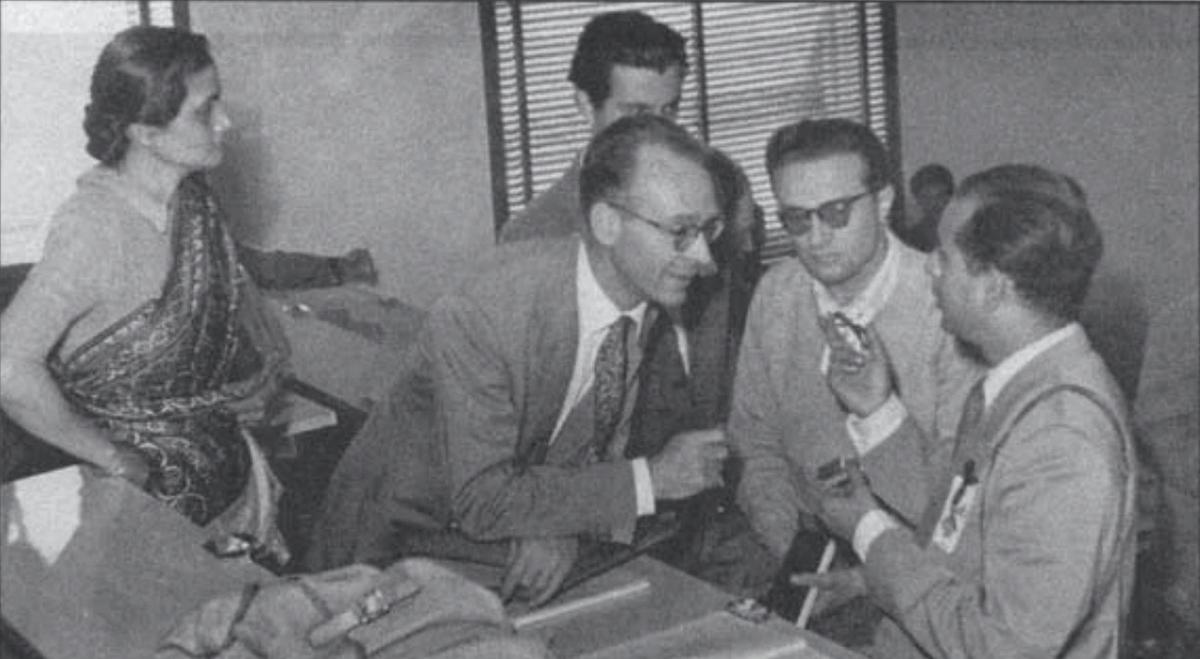
Bibha Chowdhuri at the International Conference in Pisa, Italy 1955.
| Photo Credit:
Wikimedia Commons
Meeting the mentor
After her MSc, Bibha wanted to do research in cosmic rays and subatomic particles, an ambitious choice at a time when experimental particle physics itself was still emerging globally.
She approached Debendra Mohan Bose, a renowned physicist, to work under his guidance. Initially, like many senior scientists who had reservations about taking women into serious research roles, Bose was also reluctant. However, Chowdhuri persisted, and he eventually accepted her into his group, which was forming a new cosmic-ray research program in Kolkata.
Between roughly 1938 and 1942, she and D.M. Bose published several important papers on cosmic-ray particles, including early observations related to mesotrons, particles now known as mesons. Their work used high-altitude stations, where Bibha was responsible for setting up emulsion plates, retrieving them after exposure, and meticulously analysing them under the microscope.
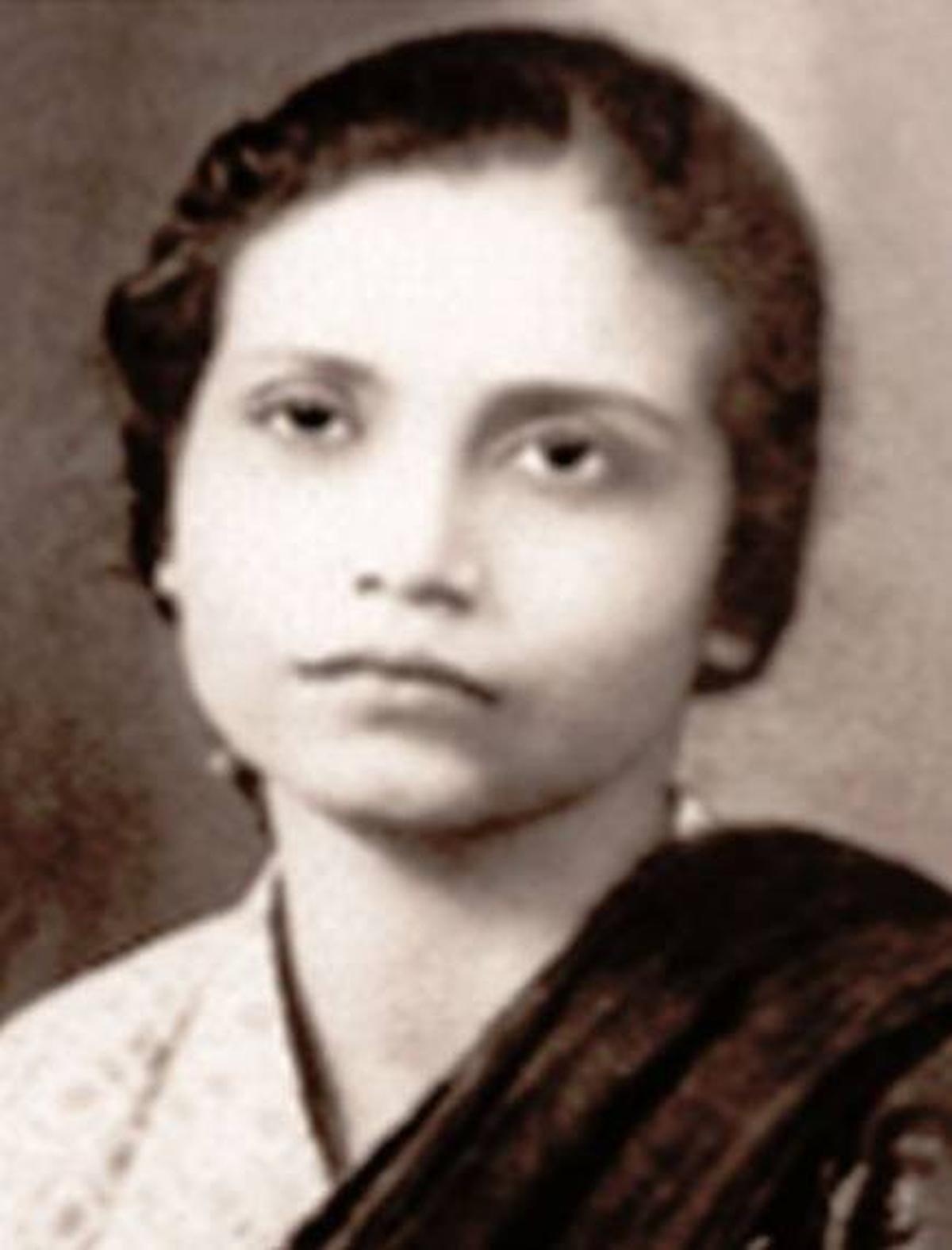
Bibha Chowdhuri
| Photo Credit:
Wikimedia Commons
First Indian woman PhD in physics
Soon, Chowdhuri moved to the United Kingdom to deepen her research and joined the University of Manchester. Under Patrick M.S. Blackett, she continued to study cosmic rays and extensive air showers, now embedded in a major international centre of physics. Working past cultural shocks, gender, and racial prejudices in a colonial era is definitely not a cakewalk. Yet she advanced enough to earn her PhD in 1945, making her the first Indian woman to obtain a doctorate in physics.

It was during her time in Manchester that a local newspaper profiled her as “India’s new woman scientist,” highlighting both her scientific work and her status as a rare woman physicist from a colonised country. That article gave her the kind of public acknowledgement she seldom received in India, as well as recorded her concern that too few women were entering physics. In 1949, after her PhD, Chowdhuri returned to an independent but scientifically fragile India.
At that time, Homi J. Bhabha was building the Tata Institute of Fundamental Research (TIFR) in Mumbai into a flagship centre for theoretical and experimental physics. On Blackett’s recommendation, Bibha joined TIFR and became the first woman researcher in the institute’s cosmic-ray group.
A woman of firsts
Bibha Chowdhuri is often described as a “woman of firsts” in Indian physics: first woman to obtain a PhD in physics from India, first woman researcher at TIFR, and one of the first women anywhere to make sustained contributions to cosmic-ray and particle physics. Yet, for decades, her name remained largely invisible from the industry’s history.
In today’s age
In recent years, historians of science, journalists, and institutions have begun to recover Bibha Chowdhuri’s legacy. In 2018, almost 30 years after her demise, her biography, A Jewel Unearthed: Bibha Chowdhuri, was published by Rajinder Singh and Suprakash C. Roy.
In an age where women in STEM are a growing topic of discussion, Bibha Chowdhuri stands as a beacon of motivation and encouragement for women to walk the STEM path without doubts and their heads held high.
Published – March 17, 2026 01:45 pm IST
Discover more from stock updates now
Subscribe to get the latest posts sent to your email.