


As federal civil rights enforcement in schools weakens: Here’s why families are turning to states for justice
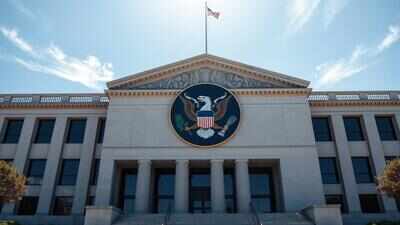
As federal civil rights enforcement in schools weakens under the Trump administration, families across the United States are increasingly turning to state governments for help in addressing discrimination in education. With the U.S. Department of Education facing layoffs, office closures and a growing backlog of complaints, advocates warn that the responsibility of protecting students’ civil rights may shift unevenly to state systems.Federal inaction leaves families searching for answersFor families in the Pennridge School District in Pennsylvania, the expectation that federal authorities would intervene in cases of racial bullying has largely faded.In 2024, parents filed a complaint with the U.S. Department of Education alleging that Black students in the mostly white district were frequently subjected to racial slurs from classmates. Insults such as “slave” and “monkey,” they said, were often directed at students without meaningful disciplinary action.According to an Associated Press report, the complaint is now among thousands sitting unresolved in federal offices following layoffs and operational changes within the department.“There was an expectation that something was going to happen,” Adrienne King, president of the NAACP Bucks County chapter and a parent in the district, told Associated Press. “When nothing did, it’s a very hollow, empty feeling.”The Education Department’s Office for Civil Rights (OCR) has historically played a central role in investigating discrimination complaints in schools. But with fewer staff and shifting policy priorities, many families say their cases are not receiving attention.States begin stepping inIn response, lawmakers and advocates in several states are exploring ways to strengthen state-level civil rights enforcement in education.Pennsylvania Senator Lindsey Williams has proposed creating a new state civil rights agency dedicated to investigating discrimination in schools — a role traditionally handled by the federal government.“If the federal government won’t stand up for our most vulnerable students, I will,” Williams said, according to Associated Press.The proposal, expected to be introduced this spring, faces an uncertain future in Pennsylvania’s Republican-controlled Senate. Nevertheless, supporters believe the idea could inspire similar initiatives in other states.Indeed, lawmakers in Maryland and Illinois have already floated comparable proposals aimed at empowering state agencies to investigate discrimination in schools.Existing state agencies under pressureWhile new legislation is being debated, advocates are urging families to approach existing state bodies that already have limited authority to address discrimination.In Pennsylvania, the Human Relations Commission can investigate complaints related to education, though the agency has historically focused on employment discrimination cases. Only about 5% of its recent caseload involves education issues.Kristina Moon, a lawyer with the Education Law Center in Pennsylvania, told Associated Press she has begun advising families to bring complaints to the commission rather than waiting for federal action.“It’s incredibly important for students and families to be aware of any other option available to them,” Moon said.However, the agency itself acknowledges resource constraints. Its staff has dropped from more than 200 employees in the past to roughly 100 today.“A stark influx would definitely put some weight on our agency,” Desireé Chang, the commission’s education director, told Associated Press. “But we would do it because that is what we are charged with doing.”Federal data cited by Associated Press show that more than 300 investigations in Pennsylvania alone were still open as of January 2025 — cases that could potentially shift to state authorities.Civil rights enforcement slows at federal levelThe slowdown comes after sweeping layoffs in the Department of Education that closed civil rights offices in cities including Philadelphia, Boston and Chicago.Even before these cuts, the Office for Civil Rights faced a heavy backlog of complaints. According to Associated Press, remaining staff members now tend to prioritise quicker cases rather than lengthy investigations.At the same time, the office has redirected some attention toward cases involving transgender student policies, with administration officials arguing that certain accommodations discriminate against girls and women.Critics say these shifting priorities have further delayed responses to other civil rights complaints.A patchwork of protections?Advocates warn that transferring responsibility from federal to state agencies could create uneven protections for students.Some states are considering legislation that would allow agencies to mediate disputes or issue legal orders against schools. Others are focusing mainly on providing guidance and training.In Maryland, a proposed bill would allow the state’s Commission on Civil Rights to investigate school discrimination complaints directly.“Offices have been closed, people have been fired, cases are piling up or not even moving — that’s why we sought to step in that gap and provide Maryland students an option,” Glendora Hughes, general counsel for the commission, told Associated Press.But experts caution that without federal oversight, enforcement could vary widely depending on a state’s political leadership and resources.Families still waiting for changeFor families in Pennridge, the policy debate offers little immediate relief.King says the racial harassment her daughters experience at school has not stopped. Students still make comments about their hair and continue using slurs.“I feel as though my girls have normalized a lot of this, but for the sake of survival — middle school is hard,” she told Associated Press. “You just want to be like everybody else.”As federal civil rights enforcement remains uncertain, families like hers are left weighing whether state agencies can truly fill the growing gap.

Discover more from stock updates now
Subscribe to get the latest posts sent to your email.