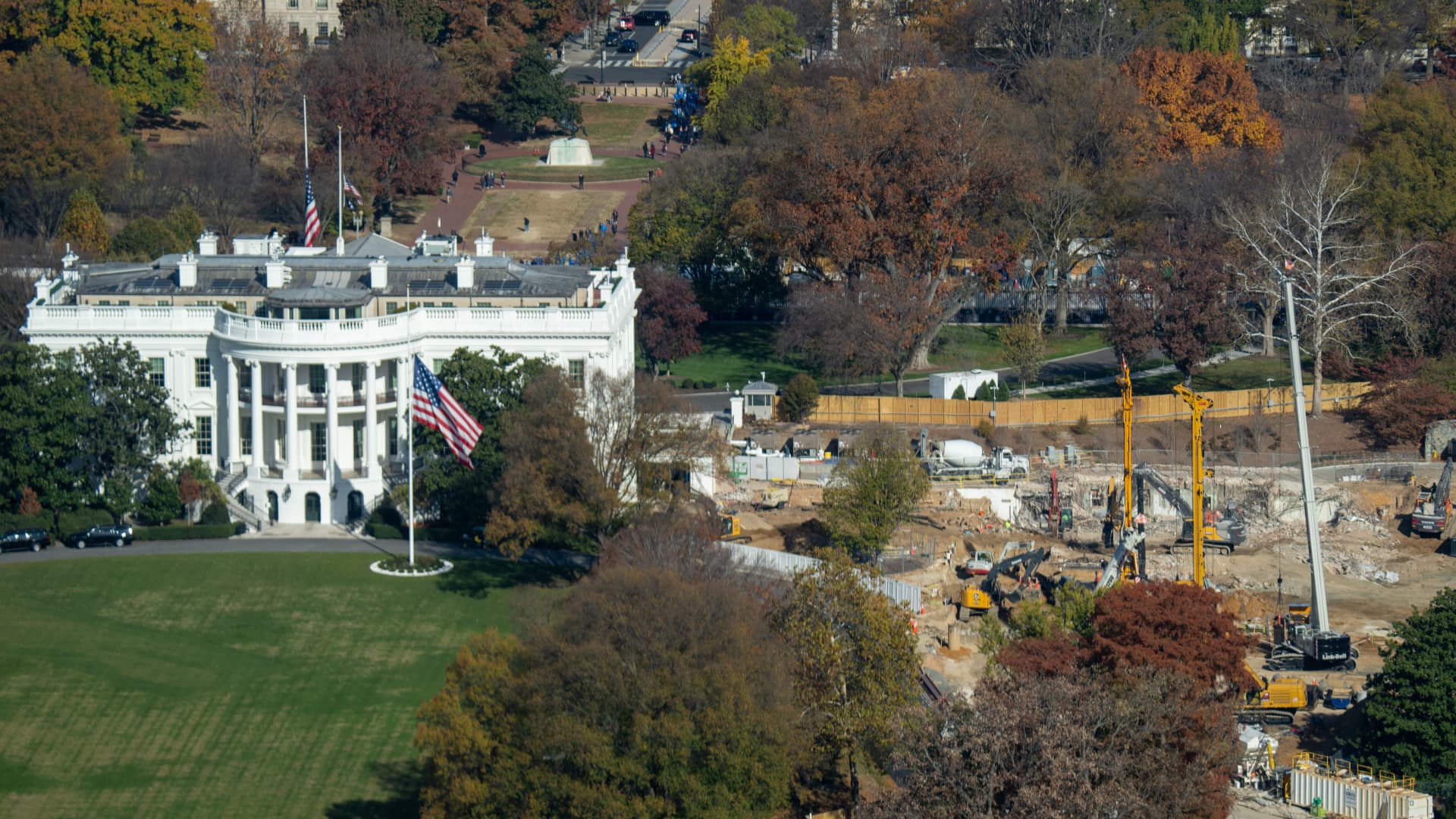



Appeals court allows Trump White House ballroom construction to resume
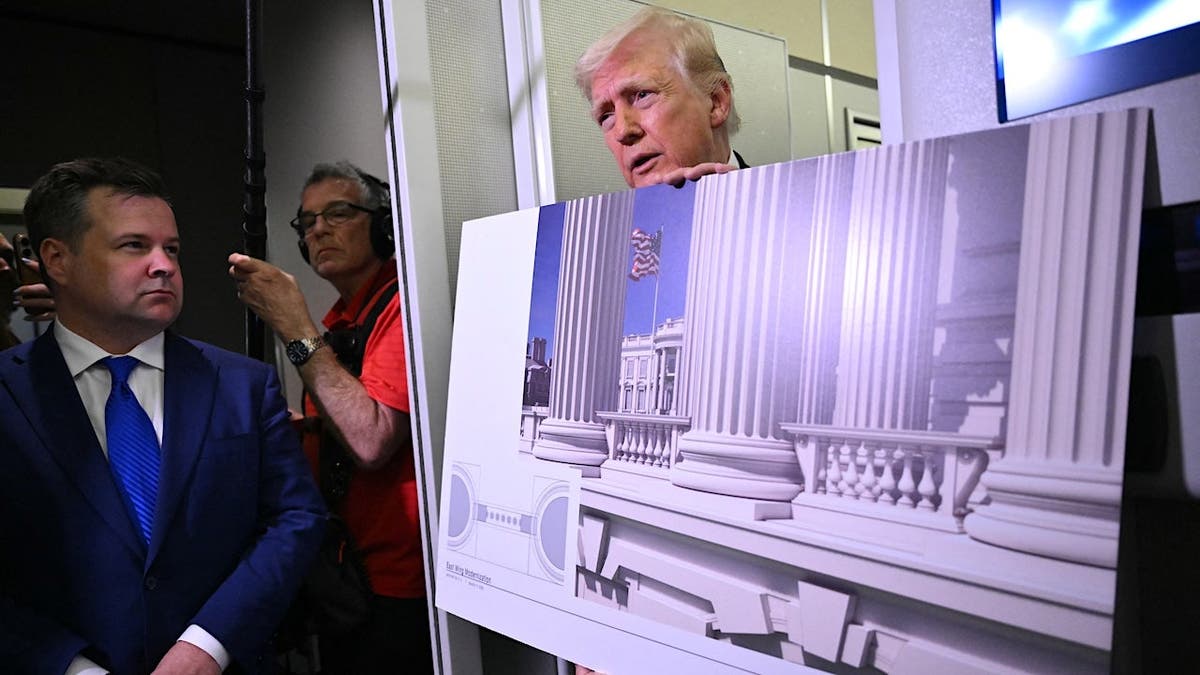
President Donald Trump’s $400 million White House ballroom construction will be able to continue for at least a little while longer, after an federal appeals court instructed a District Court judge to reconsider the situation.
A a three-judge panel for the U.S. Court of Appeals for the D.C. Circuit ruled Saturday that construction can proceed until Friday, April 17, giving the president time to seek a Supreme Court review as the Trump administration is claiming delaying the prospect leaves the construction site exposed and risks the security of the president and his staff.
The panel instructed U.S. District Judge Richard Leon to clarify whether — and how — his injunction interferes with the administration’s claims over safety and security.
Government lawyers argued that the project includes critical security features to guard against a range of possible threats, such as drones, ballistic missiles and biohazards and that holding up construction “would imperil the president and others who live and work in the White House.”
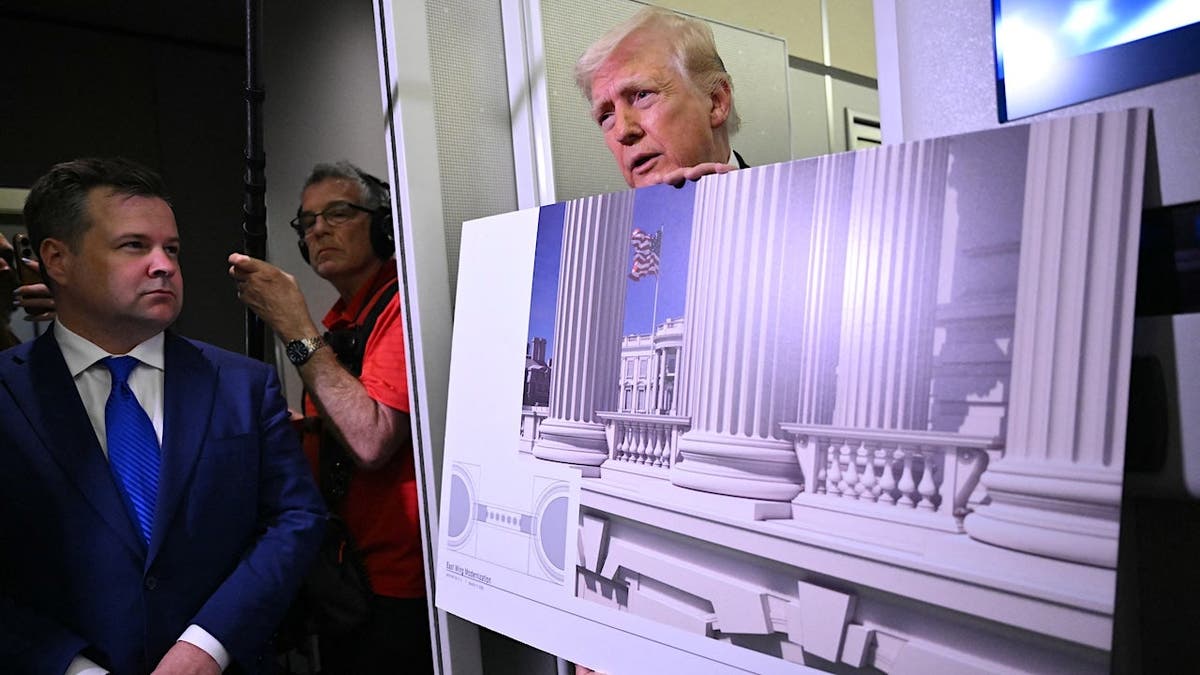
Trump had also made the case the U.S. military was installing a “heavily fortified” facility under the ballroom, including bomb shelters and a medical facility.

Under obstruction from Democrats, their lawyers, the National Trust for Historic Preservation (NTHP) sued in December, a week after the White House finished demolishing the East Wing for a 90,000-square-foot (8,400-square-meter) ballroom.
The group claimed Trump exceeded his authority when he demolished the dated East Wing — originally built in 1902 during Theodore Roosevelt’s presidency and expanded in 1942 — arguing the president needed congressional authorization.
TRUMP SAYS IT ‘IS TOO LATE’ TO STOP THE WHITE HOUSE BALLROOM CONSTRUCTION AMID LAWSUIT
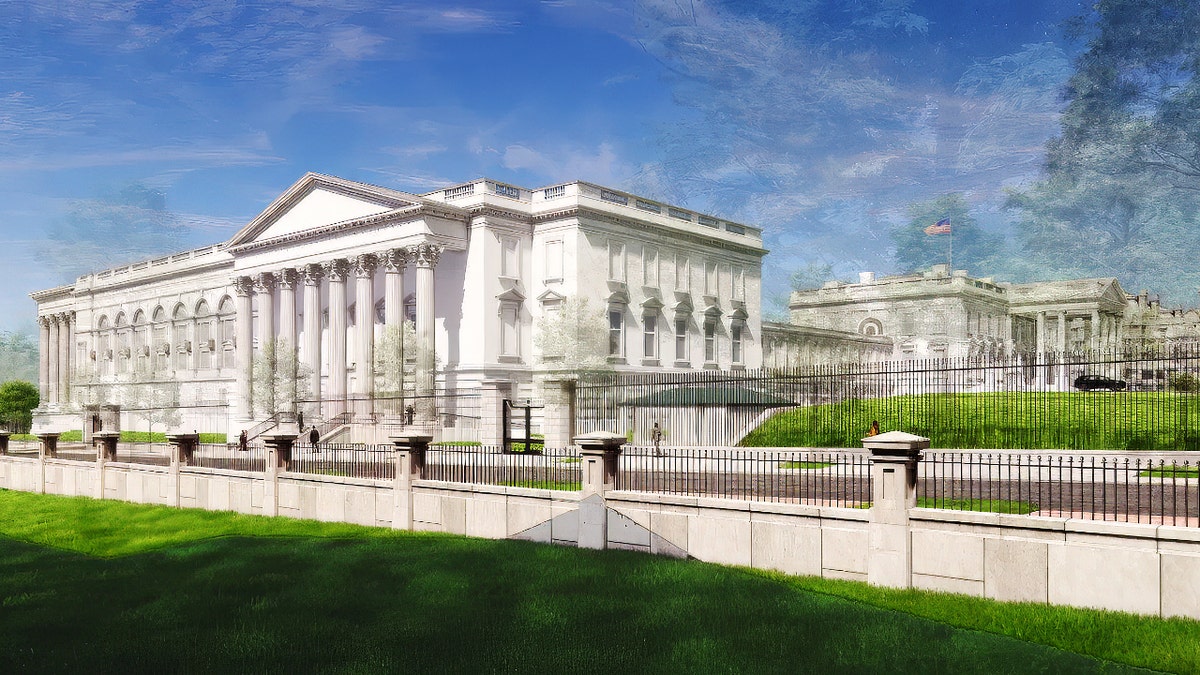
A rendering of the proposed White House ballroom shared by President Donald Trump on Truth Social on Feb. 3, 2026. (Copyright Donald Trump/Truth Social)
Trump has said the president has historically had say over the White House remodeling, and has long noted Congress does not have to pay for the privately funded project.
A lower court had issued a March 31 injunction to halt ballroom construction, but it also paused that injunction to allow for an appeal.
The White House has argued that the injunction left the White House “open and exposed,” threatening security for the building, the president and his family and staff.
TRUMP UNVEILS NEW RENDERING OF SPRAWLING WHITE HOUSE BALLROOM PROJECT
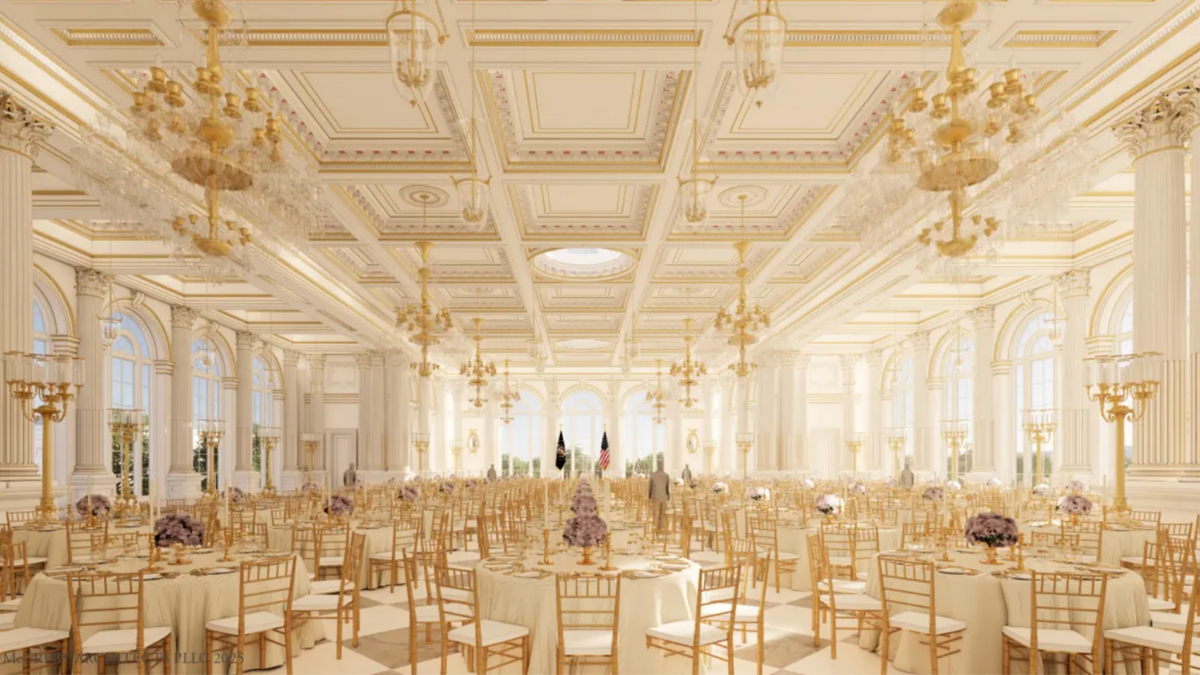
A McCrery Architects rendering provided by the White House of the new ballroom. (McCrery Architects/White House)
NTHP CEO Carol Quillen said in a statement that the organization awaited further clarification from the district court.
She said the group was committed “to honoring the historic significance of the White House, advocating for our collective role as stewards, and demonstrating how broad consultation, including with the American people, results in a better overall outcome.”
Judge Leon exempted any construction work necessary to ensure the safety and security of the White House, but said he reviewed material the government privately submitted before determining that a halt would not jeopardize national security.
“We cannot fairly determine, on this hurried record, whether and to what extent the district court’s “necessary for safety and security” exception addresses Defendants’ claims of irreparable harm, insofar as it may accommodate the Defendants’ asserted safety and security need for the ballroom itself or other temporary measures to secure the safety and security of the White House, the President, staff, and visitors while this appeal proceeds,” the D.C. Circuit said in its ruling.
WARREN-LED INQUIRY DRAWS NEW DETAILS ON TRUMP BALLROOM DONATIONS FROM MAJOR CORPORATIONS
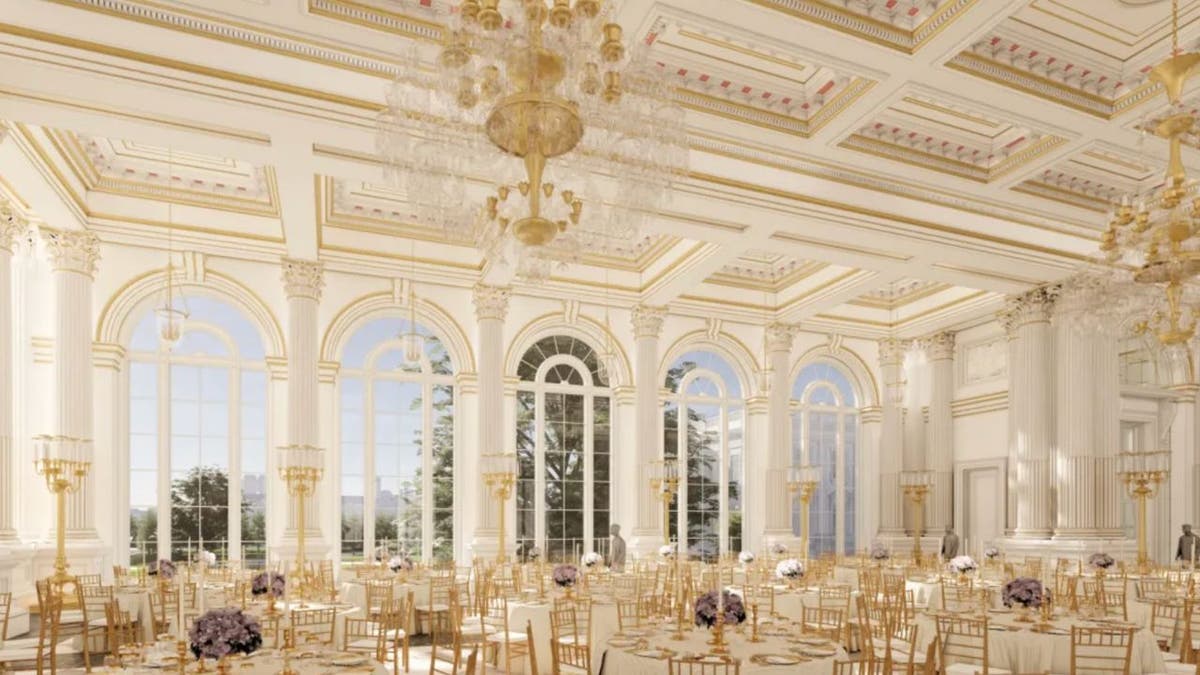
A McCrery Architects rendering provided by the White House of the new ballroom. (White House)
The appeals panel noted that much of the government’s concerns focused on that below-ground security work, which the White House argued was “distinct from construction of the ballroom itself and could proceed independently.”
The White House is making the case now that those security upgrades are “inseparable” from the project as whole, the appeals court said, making it unclear “whether and to what extent” moving forward with certain aspects of the ballroom is necessary for the safety and security of those upgrades.
Although Trump’s project is funded by private donations, public money is paying for construction of underground bunkers and security upgrades.
The three-judge appeals court panel was made up of Judges Patricia Millett, Neomi Rao and Bradley Garcia. Millett was nominated by former President Barack Obama, a Democrat. Rao was nominated by Trump. Garcia was nominated by former President Joe Biden.
Rao wrote a dissenting opinion, which cited a statute that allows the president to undertake improvements to the White House.
CLICK HERE TO DOWNLOAD THE FOX NEWS APP
“Importantly, the government has presented credible evidence of ongoing security vulnerabilities at the White House that would be prolonged by halting construction,” Rao wrote, adding that such concerns outweigh the “generalized aesthetic harms” presented in the lawsuit.
Reuters and The Associated Press contributed to this report.
Discover more from stock updates now
Subscribe to get the latest posts sent to your email.