


Airspace closures halt hundreds of Middle East flights after Iran attacks
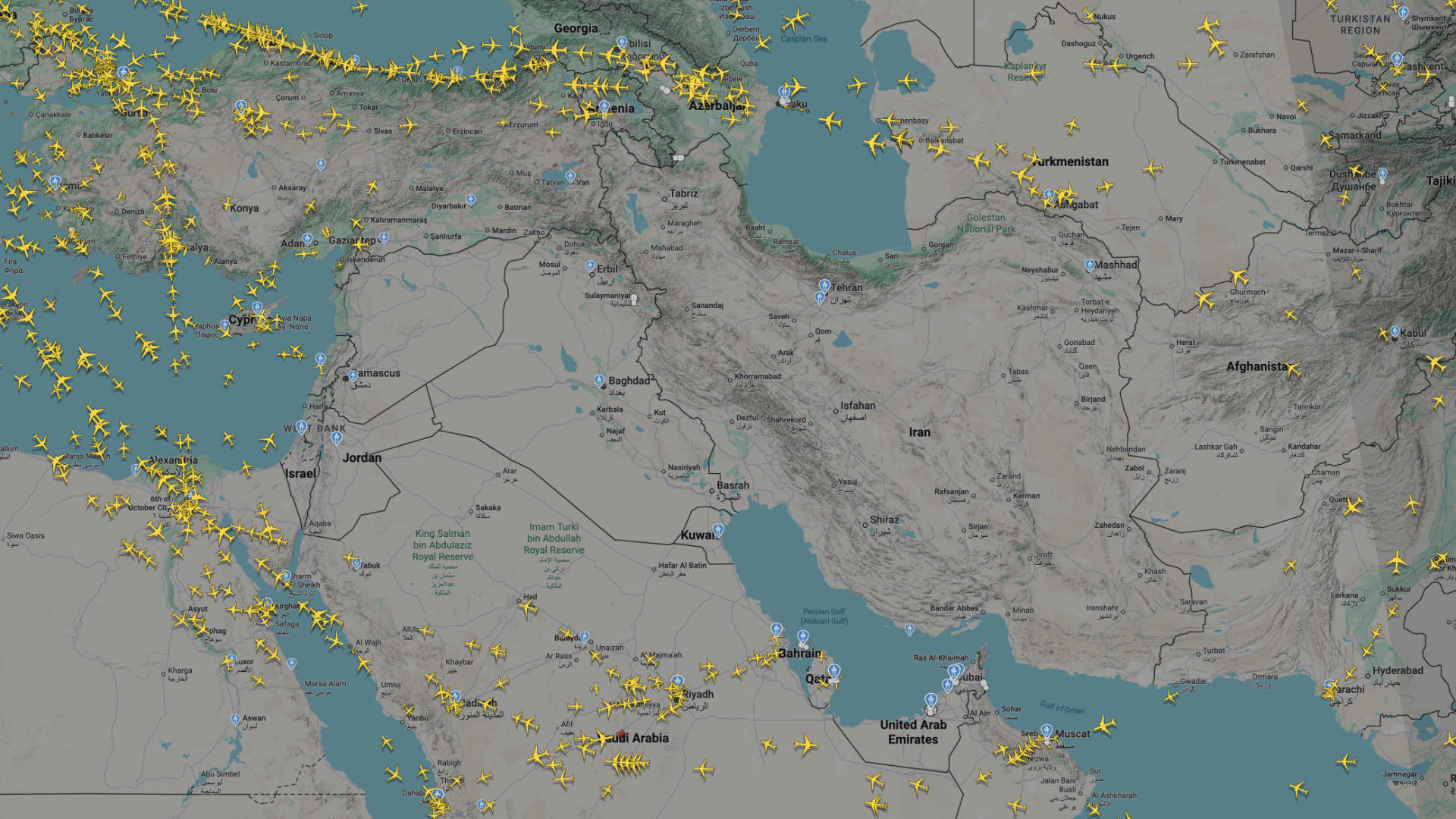
Source: Flightradar24

Airlines canceled 868 flights into Middle East countries on Saturday, according to aviation data firm Cirium.
Qatar Airways said it was temporarily suspending all flights while Dubai-based Emirates said service in and out of Dubai International Airport, one of the world’s busiest airports, was halted. “We apologise to customers affected by disruptions for any inconvenience caused, and we are assisting them with rebooking, refunds, or alternative travel arrangements,” Emirates said, in a statement. “The safety and security of our passengers and crew remain our highest priority.”
Airspace was closed over Iran, Iraq, Kuwait, Bahrain and Qatar, according to Flightradar24.
Air India said it was suspending all Middle East flights on Saturday. It later also canceled flights between India and both Europe and the United States scheduled for Sunday, a sign of how the airspace closures were affecting flights that regularly transit the region. Abu Dhabi-based Etihad also canceled its departures through Sunday afternoon in and out of that airport.
Lufthansa Group said it suspended flights to Israel, Lebanon, Jordan Iraq, and Tehran until March 7. It also said it would reroute some of its flights to avoid airspace in the area.
An American Airlines flight from Philadelphia to Doha turned around near Spain and was en route back to Philadelphia as of Saturday at 9:30 a.m. ET, according to FlightRadar24. Emirates’ Dubai-bound flights from the U.S. diverted to airports throughout Europe.
United Airlines said Tel Aviv flights from the U.S. are canceled through March 6 with flights to Dubai canceled through March 4. Crews and aircraft have departed Tel Aviv and plans are in the works to remove crews in Dubai, a spokesman said. Tel Aviv flights are among the most profitable for the airline, which has the most international service of the U.S. airlines.
Delta Air Lines said its Tel Aviv service would be canceled through at least Sunday.
Airlines have periodically canceled flights and skirted parts of the Middle East because of security concerns. The airspace closures also mean airlines have to longer routes to other destinations that previously transited the area, requiring them to use more fuel.
Discover more from stock updates now
Subscribe to get the latest posts sent to your email.