Aerosols aloft lift, thicken winter fog over North India: IIT-M study

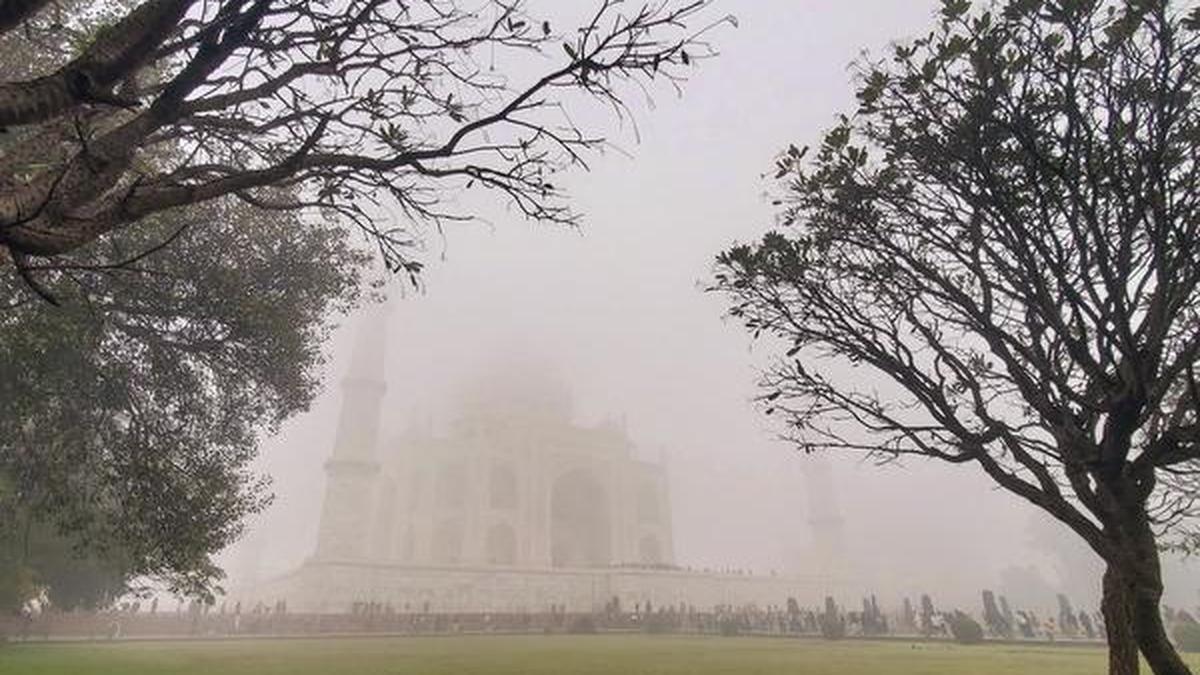
The Taj Mahal in Agra covered by fog as people visit the iconic structure during the holiday season on December 28, 2025.
| Photo Credit: PTI
New research from IIT-Madras has reported based on 15 years of CALIPSO satellite data that aerosol loading above fog over the Plain thickens fog layers. The top rises while the base stays near the ground, and droplets near the top become larger. The findings were published in Science Advances on January 9.

The researchers created a number called AODFOG to estimate how much dust and smoke sat in the air above a layer. Then they looked at a part of the Plain where thick fog occurs often and compared days with low AODFOG (less pollution overhead) to those with high AODFOG. On more polluted days, the layer was about 17% thicker because its top rose higher.
Next, the researchers used MODIS satellite data to estimate the size of water droplets near the top. On days with high AODFOG, the droplets were slightly bigger on average.
Finally, the team used a weather model to replay a major fog event in January 2014. The model suggested a self-strengthening cycle: when there were more pollutants in the air, there were more ‘seeds’ for water vapour to stick to, so more fog droplets formed. As vapour condensed, it released some heat. As many droplets formed, the heat could stir the fog and help it mix upwards.
At the same time, a fog layer with many droplets could lose heat more efficiently by emitting infrared radiation, keeping the air near the top cold and humid, conducive for more water vapour to condense there.
“North India’s winter haze is a vicious cycle: aerosols fuel fog, fog traps pollution, impacting air quality, aviation, and daily life. Tackling air pollution can clear skies, boost health, and energise the economy,” IIT-Madras earth system scientist and study corresponding author Chandan Sarangi told The Hindu.
The team also said soot can absorb sunlight and warm air near or above the fog, a “semi-direct” effect they didn’t isolate because aerosol properties above the fog are poorly known and observations are too sparse to constrain the model. This is a limitation.
Published – January 10, 2026 05:30 am IST
Discover more from stock updates now
Subscribe to get the latest posts sent to your email.