A failed chemistry exam and a Nobel Prize for DNA repair: What Tomas Lindahl’s story gets right about talent
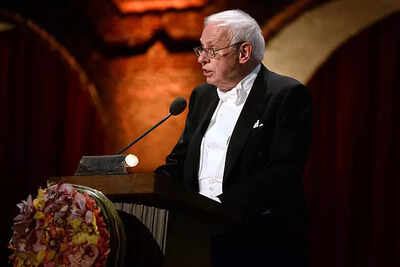
Great scientific careers rarely follow straight lines. They are shaped not only by talent and persistence, but also by institutions—and by the people who operate them. Tomas Robert Lindahl’s story begins with an uncomfortable reminder of that reality: failure.“I had a teacher who didn’t like me and I didn’t like him. At the end of the year he decided to fail me,” he mentioned in a X post (formerly Twitter).It is a familiar scenario, almost banal. Personality enters the classroom, judgement follows, and assessment quietly becomes subjective. What gives Lindahl’s recollection its edge is the irony he draws out himself. His post mentioned, “The ironic thing is that the topic was chemistry. I have the distinction of being the only chemistry laureate who failed the topic in high school!”In an age when education systems place extraordinary weight on early sorting—grades, rankings, entrance tests—the episode functions as a small but telling counterpoint. Schools are often treated as neutral filters of ability. In practice, they are human systems, shaped by bias, friction, and misjudgement, rewarding conformity as often as curiosity.The larger arc of the story lies well beyond the classroom. These words come from a scientist whose later work would transform the field he once failed. In 2015, Lindahl was awarded the Nobel Prize in Chemistry for uncovering how cells repair damaged DNA—research that reshaped modern understanding of cancer and cellular ageing. The contrast is understated but striking: a student once failed in chemistry eventually redefining it.
From Stockholm classrooms to global laboratories

Born on January 28, 1938, in Kungsholmen, Stockholm, Lindahl grew up far from the spotlight of international science. His academic path gathered momentum at the Karolinska Institutet, where he earned his PhD in 1967, followed by an MD qualification in 1970.What followed was a period of rigorous global training. Lindahl pursued postdoctoral research at Princeton University and Rockefeller University, sharpening his focus on molecular biology. In the late 1970s, he established himself as a professor of medical chemistry at the University of Gothenburg, thus initiating a career that would span chemistry, medicine, and genetics.His move to the United Kingdom in 1981 marked a turning point. Joining the Imperial Cancer Research Fund (now Cancer Research UK), Lindahl entered a phase of sustained discovery. From 1986 to 2005, he served as the first Director of Cancer Research UK’s Clare Hall Laboratories in Hertfordshire, later part of the Francis Crick Institute, while continuing active research until 2009.Across decades, he authored and contributed to a vast body of work on DNA repair and the genetics of cancer, research that helped explain how cells survive constant molecular damage and what happens when those repair systems fail.
Decoding DNA repair and changing cancer science
Lindahl’s central contribution lay in revealing that DNA is far less stable than once believed and that living cells rely on intricate repair mechanisms to survive. He was the first to isolate a mammalian DNA ligase and identified previously unknown DNA glycosylases involved in excision repair. He also discovered methyltransferase enzymes that help cells respond to DNA damage and clarified defects underlying Bloom syndrome.These findings did more than advance basic science. They opened pathways toward more precise cancer treatments by explaining how genetic damage accumulates and how it might be countered. His work also shed light on viral transformation in immune cells, deepening understanding of diseases linked to the Epstein–Barr virus.In recognition of these breakthroughs, Lindahl shared the 2015 Nobel Prize in Chemistry with Paul L. Modrich and Aziz Sancar for their mechanistic studies of DNA repair, research the Nobel committee described as foundational to modern medicine.
Recognition that followed persistence
Long before the Nobel, Lindahl’s peers had already acknowledged his impact. He was elected Fellow of the Royal Society in 1988 and later received its Royal Medal in 2007 for his original and lasting contributions to DNA repair. The Copley Medal followed in 2010, alongside memberships in leading scientific academies across Europe and the United States. Yet his journey remains most powerful for students not because of medals, but because of its starting point.
The long view
Lindahl’s story carries a message for classrooms everywhere, but it is not the usual inspirational slogan. It is a correction to how we read early performance. A failed grade in chemistry did not prevent him from changing the field; it simply did not predict what came next.For students living under the pressures of education—or the uncertainty of a career path—his experience offers a more realistic kind of reassurance. Achievement is not always immediate, and it is not always linear. Sometimes it arrives later, shaped by hard work, circumstance, and the decision to keep moving when a system has issued an early judgement.Set beside each other, a failed high school chemistry class and a Nobel Prize in Chemistry make the point with unusual clarity: education is not a single moment, or a single result. It is a long process of accumulation—skills, interests, discipline, confidence—unfolding over years. And within that process, failure is not always an end. Occasionally, it is simply the first data point in a much larger trajectory.
Discover more from stock updates now
Subscribe to get the latest posts sent to your email.