Artemis Ii: ‘Love you to the Moon’: Artemis II astronauts propose naming lunar crater after commander’s late wife |
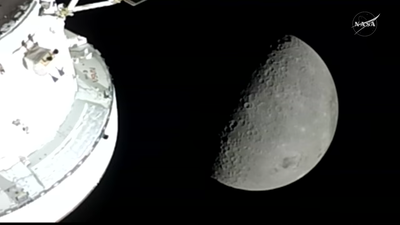
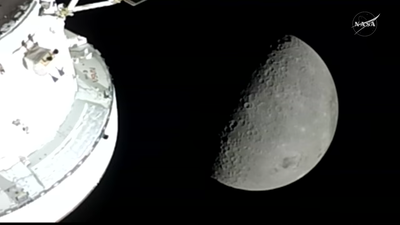
Love You to the Moon and Back. The Moon and love have long kept each other’s company. Since the earliest ages of human expression, poets have used the Moon to speak of longing, lovers have looked up at it for comfort, husbands have reached for it when words ran dry, and newly married couples have made it a silent, luminous witness to their bond. When Romeo and Juliet stood beneath the open sky, it was the Moon that cast its silver spell over them, blessing and haunting their love in equal measure. There is something about the Moon, its constancy, its quiet presence, its willingness to shine even in the darkest hours, that has always made it the most faithful companion of the human heart.From art and literature, the Moon passed naturally into science. Curiosity, it seems, is just another form of love. Scientists and space agencies began sending missions moonward, first rovers and probes, cold and mechanical, to map and measure what the poets had already claimed. But some missions carried something more: they carried humans. And wherever humans go, they carry their emotions, their memories, their stories.One such story, perhaps the most quietly devastating and beautiful of them all, unfolded 252,756 miles from Earth on April 6, 2026.NASA‘s Artemis II mission, humanity’s first crewed return to the lunar skies since Apollo 17 in 1972, had just broken the record for the farthest distance any human beings had ever traveled from Earth. The crew of four, aboard their spacecraft named Integrity, floated in the vast silence between worlds. Commander Reid Wiseman, pilot Victor Glover, mission specialist Christina Koch, and Canadian astronaut Jeremy Hansen had come farther than any humans before them.And then, at the edge of all that infinite darkness, they looked down and saw the Moon, pockmarked, ancient, bearing its craters like old wounds. Among them, they spotted one that had no name. Small, bright, sitting quietly just on the nearside boundary where the Moon’s familiar face meets its hidden far side, a place that could, at certain times, still be glimpsed from Earth.It was Jeremy Hansen whose voice first broke the silence on the radio. Speaking slowly, his words thickening with emotion, he told Mission Control: “A number of years ago, we started this journey in our close-knit astronaut family and we lost a loved one. Her name was Carroll, the spouse of Reid, the mother of Katie and Ellie. And it’s a bright spot on the Moon. And we would like to call it Carroll.”Carroll Taylor Wiseman had died of cancer in 2020. Reid Wiseman, a former fighter pilot who had trained to face the unknown without flinching, had since been raising their two daughters alone, carrying his grief the way astronauts carry everything in space: quietly, efficiently, with no room for excess weight. Yet love, it turns out, is never excess weight. It travels with you. All 252,756 miles of it.When Hansen finished speaking, Mission Control fell silent for forty-five seconds. Not a technical pause. Not a communications delay. Just silence, the kind that only descends when words would be inadequate. Up in the Orion capsule, the crew gathered around their Commander, and in the weightlessness of deep space, they held each other.Then the voice of CapCom Jenny Gibbons came through, steady and soft: “Integrity and Carroll Crater. Loud and clear. Thank you.”On Earth, ground staff wept. In space, astronauts wept. And somewhere on the Moon, on a bright unnamed spot at the boundary of light and shadow, a woman who had never left the Earth was given a home among the stars.The ancient poets were right after all. The Moon has always been love’s most faithful witness. Reid Wiseman simply flew close enough to prove it.

Discover more from stock updates now
Subscribe to get the latest posts sent to your email.