Middle East crisis exposes global energy fault line as UN urges shift to renewables
The disruption to supplies has already resulted in reduced access to the fossil fuels which countries around the world need to produce power, leading to higher prices rattling global markets in the process.
The United Nations says the bottleneck caused by the virtual closure of the strait underscores a fundamental issue that energy security is no longer just about supply, but also about resilience and finding alternative power sources in an increasingly unstable world.
Why it matters
Concern over the use of fossil fuels has typically been linked to climate change, due to the warming effects of the gases they produce when burned, but now energy security has come more into focus.
Earlier this year, the UN Secretary-General António Guterres cautioned that “in this age of war…our addiction to fossil fuels is destabilizing both the climate and global security.”

The impact of war
Since the outbreak of the war in the Middle East, it has become increasingly evident that:
- Important oil and gas supplies are concentrated in regions vulnerable to conflict
- Transport routes can be disrupted by military escalation
- Price volatility quickly spreads across economies
The big picture
As countries around the world continue to rely on fossil fuels to meet the daily needs of citizens and to drive economic growth, it has become clear that they are more vulnerable than ever before to sudden supply disruptions.
Stable and strategic relations with other countries to ensure power supplies are at a premium as energy demands grow.
“Three-fourths of humanity lives in countries that are net importers of fossil fuels, dependent on energy they do not control, at prices they cannot predict,” said Mr. Guterres in February this year.
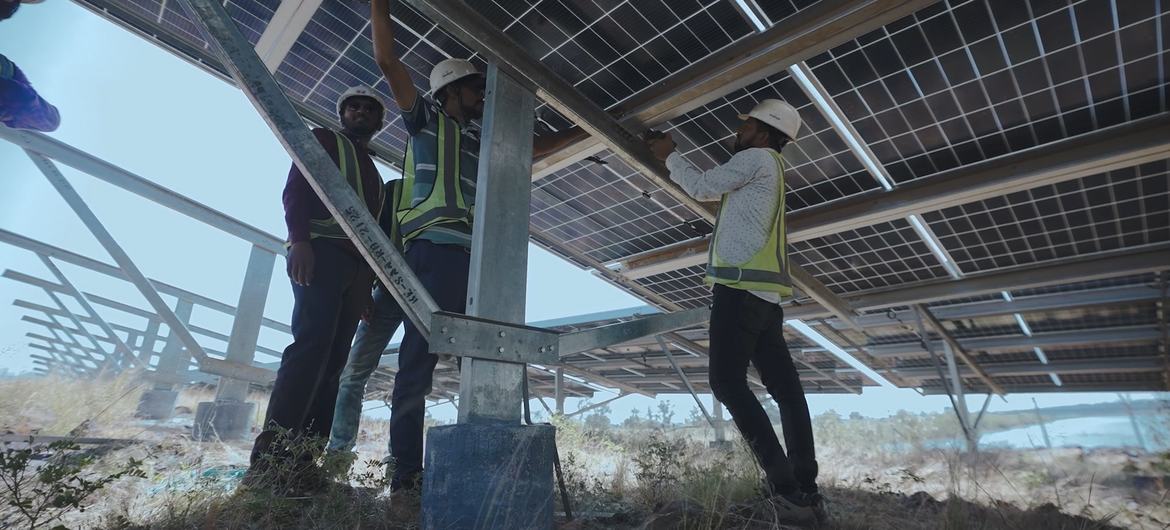
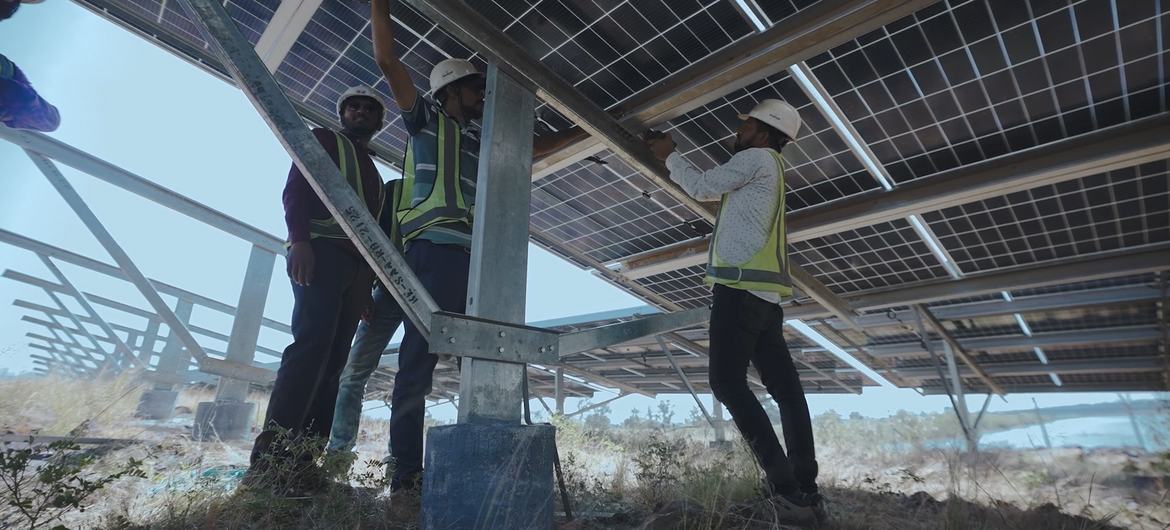
Technicians work on a solar panel in Chattisgarh State, India.
The UN chief also warned about the risk of development budgets “siphoned into fuel bills, at the constant mercy of geopolitical turmoil and supply disruptions”, insisting: “We must stop treating the transition away from fossil fuels as taboo.”
The promise of renewable energy
One solution to guard against the crisis and chaos caused by a lack of access to fossil fuels is to transition to renewable energy sources, for example solar, wind and water power.
These offer a fundamentally different power provision model, one that is more widely accessible and potentially cheaper.
Renewable energy is often locally sourced, domestically produced, and thus less vulnerable to the global upheaval that geopolitical crises can spark.
As the UN’s climate chief Simon Stiell emphasized earlier this year, “renewables are the clearest, cheapest path to energy security and sovereignty, shielding countries and economies from shocks unleashed by wars, trade turmoil and the ‘might-is-right’ politics that leave every nation poorer.”
Energy transition underway
The transition from fossil fuel sources to renewable energy has already begun.
Kenya, in East Africa, has become a global leader in renewable energy, particularly geothermal power, generating the vast majority of its electricity from renewables.
The South American nation, Chile, is one of the world’s fastest-growing renewable energy markets. It has moved away from coal-fired power generation by scaling up solar and wind power, taking advantage of natural conditions of the type found in the Atacama Desert.
India, too, has focused on expanding solar and wind infrastructure, integrating renewables into its national development and electrification strategies, although it still relies heavily on oil and gas which are typically delivered through the Strait of Hormuz from countries bordering the Persian Gulf.
Read the UN’s 2025 Energy Progress Report
People’s power, the bottom line
While energy security is a growing geopolitical issue that sovereign nations need to address, it is also deeply personal, affecting families and individuals around the world, as people face higher energy bills and an overall increase in the cost of living.
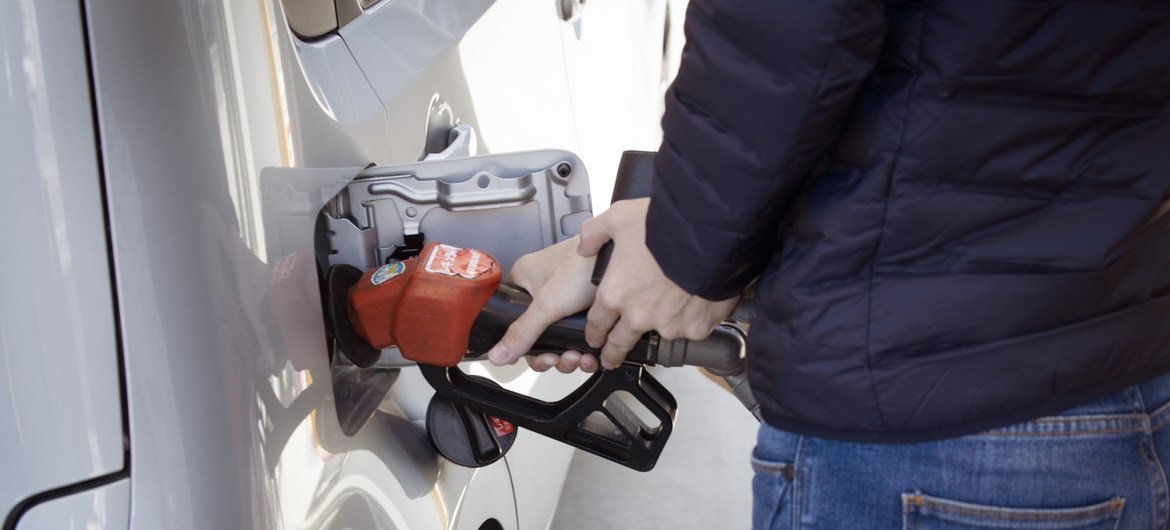
Petrol prices are increasing globally.
In most cases, according to the UN, renewables are cheaper than coal, oil or gas, and so can directly lower electricity costs for households.
Renewables can also protect people from future price spikes by providing cheaper, more stable power directly to communities.
Discover more from stock updates now
Subscribe to get the latest posts sent to your email.