Government allows SEZ export units to sell in domestic market at concessional rates

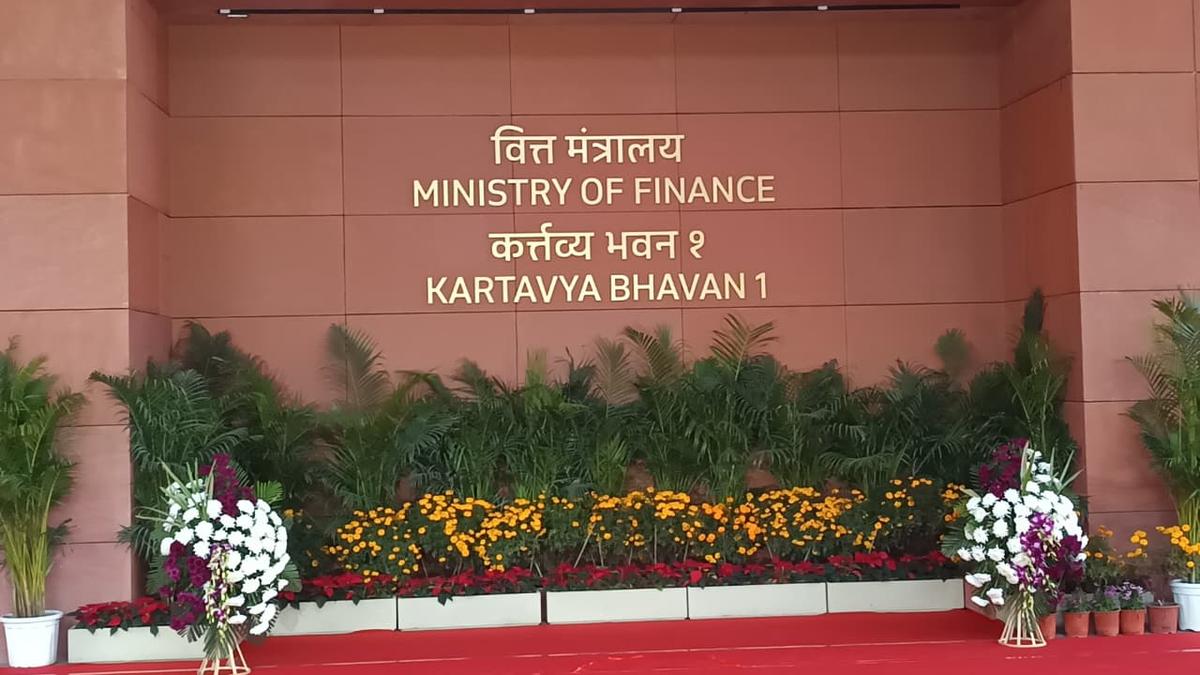
The move follows an announcement to this effect in Budget 2026 presented by Finance Minister Nirmala Sitharaman on February 1.
| Photo Credit: The Hindu
The move follows an announcement to this effect in Budget 2026 presented by Finance Minister Nirmala Sitharaman on February 1. Experts say this would have the dual advantage of allowing export units to remain operational while allowing domestic units to reduce their reliance on imports.
“In pursuance of the Union Budget 2026-27 announcement to address the concerns faced by the manufacturing units in the Special Economic Zones (SEZ) due to ongoing global trade disruptions, the Central Board of Indirect Taxes and Customs (CBIC) today introduced a special one-time relief measure to facilitate sales by eligible manufacturing units in SEZs to the Domestic Tariff Area (DTA) at concessional rates of duty,” the Ministry of Finance said in a release.

Concessions and caveats
The government added that the duty concessions have been provided after taking “due care” to maintain a level playing-field for the units operating within India but outside the SEZs.
The concessional duties also come with some caveats. They will apply for one year, from April 1, 2026, to March 31, 2027. Further, the SEZ units claiming benefit under this window would have to have begun production on or before March 31, 2025.
“The goods manufactured by such units, for which benefit is claimed under this relief window, should have undergone value addition of minimum 20% over the inputs,” the release added.
The government also said that the emphasis on exports by SEZ units shall remain. That is, these SEZ units will not be overly-incentivised to divert their export production towards India’s domestic market.
“DTA sales at concessional rates by the eligible SEZ units shall not be more than 30% of the highest annual Free On Board (FOB) value of exports in any of three immediately preceding financial years,” the release said.
According to sources in the Ministry of Finance, this kind of concession is a one-time thing rather than a longer-term shift in strategy.
“The relief is primarily driven by immediate external challenges rather than a long-term policy shift,” the official said, declining to be named. “The backdrop is clearly one of global trade uncertainty, geopolitical disruptions, and weakening export demand, all of which have placed pressure on the capacities of the existing SEZ units that are dependent on international markets. It is a one-time, time-bound relief, and that framing is important.”
Dual benefit
According to Krishan Arora, Partner and Leader of Indirect Tax and India Investment Advisory at Grant Thornton Bharat, this relaxation would have a dual benefit for India’s businesses.
“This policy change guarantees that our cutting edge SEZ infrastructure does not lie idle as Indian exporters navigate the dual challenges of rising international tariff barriers, geopolitical uncertainties and supply chain disruptions in the face of US-Israel-Iran war, blocking much of the trade routes,” Mr. Arora said.
Apart from helping SEZ units address these under-capacity issues, the relaxation also helps those companies that rely on imports, he explained.
“At the same time, domestic industry also benefits by exploiting available capacity of SEZ and shall have reduced reliance on imports which are getting both delayed and expensive, owing to the war era global economy is currently grappling with,” Mr. Arora said.
Published – April 01, 2026 07:24 pm IST
Discover more from stock updates now
Subscribe to get the latest posts sent to your email.