



How humans came to inhabit every corner of the world
The answer lies in evolution – not biological adaptation or genetic mutations – but through a “cultural evolution,” according to a new study published in the Proceedings of the National Academy of Sciences, by a scientist from the Arizona State University (ASU).
The author of the paper, an associate professor at ASU’s School of Human Evolution and Social Change, defines cultural evolution as “a process that enabled the rapid and cumulative acquisition of adaptive behaviours and technologies.” Using empirical data, the scientist determined how important culture was relative to biology.
These cultural adaptations can emerge without genetic changes, since cultural evolution operates on faster timescales, he wrote in the paper. So, as humans moved into new environments, they didn’t have to wait for genetic mutations to adapt to Arctic cold, tropical forests, deserts or high altitudes, Dr. Perreault says in a release. “Instead, humans adapted through culturally transmitted technologies, ecological knowledge and cooperative social norms.”

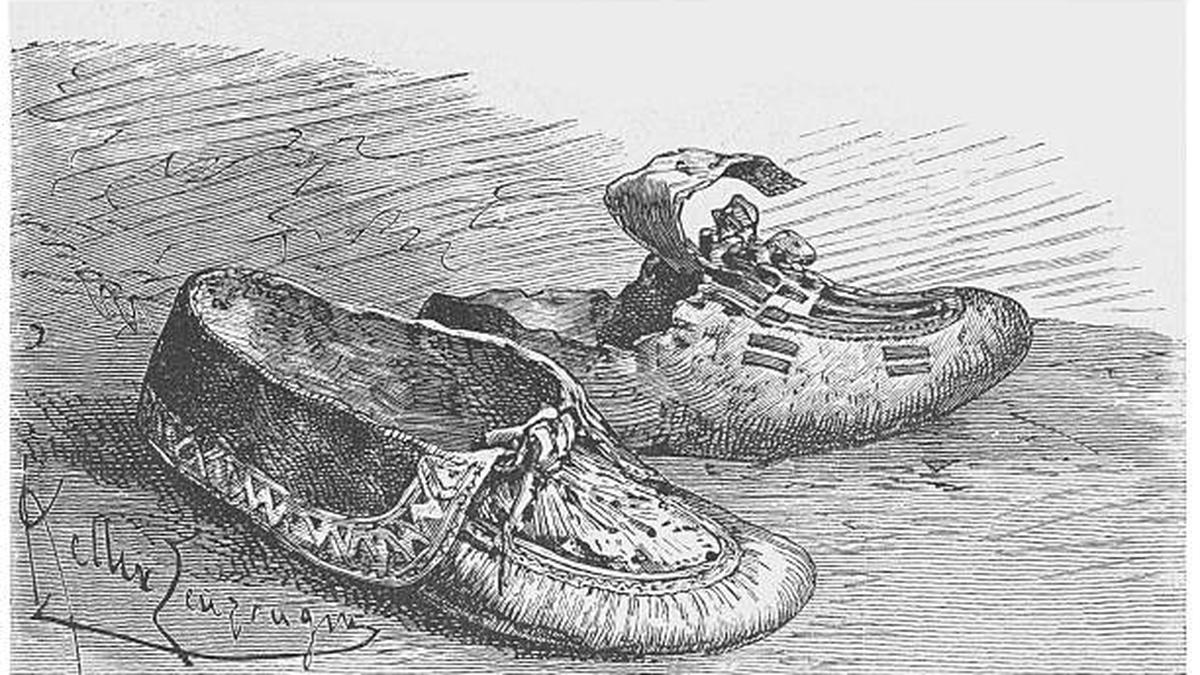
The rapid spread of ‘social learning’ brought about innovations in clothing, shelter, hunting strategies, food processing and social organisation, he added. Cultural traits diffused not only from parents to offspring, but also spread in an epidemic-like manner, the scientist wrote in the paper, citing the example of the creation of footwear.
What makes us different
Does culture separate us from nom-human species? Here we can estimate by how much, he said. The results suggest that cultural evolution compressed what would normally require roughly 88 million years of biological diversification into about 300,000 years within a single species.
“This research helps put human uniqueness into a measurable evolutionary perspective,” Dr. Perreault said. “We often say that culture makes us different, but here we can estimate by how much. The results suggest that cultural evolution compressed what would normally require roughly 88 million years of biological diversification into about 3,00,000 years within a single species.”
Unlike humans, most animals adapt to their environment through biological evolution (a combination of natural selection and phenotypic plasticity) for morphological, physiological, and behavioural adaptations. Signs of genetic adaptations have been found in humans, for instance, in physiological and metabolic adaptations to high-altitude zones.
Dr. Perreault compiled geographic range maps for nearly 6,000 species of terrestrial mammals, which he separated into genera, families and orders. Then he compared the size and ecological diversity of those ranges to the range of humans.
He finally compared mammal species’ ranges to cultural group territories, showing that culture uniquely enables humans to be globally generalists as a species while locally specialised as cultural groups.
Following a swift expansion within Africa around 70,000 years ago, a subset of the human population had begun moving into Eurasia 60,000 years ago. By 50,000 years ago, “humans had already navigated the deep ocean channels separating Asia from Sahul—a feat matched among terrestrial mammals only by a murid rodent,” said the paper.
By the end of the Pleistocene, human foragers had colonised every major ecosystem—arid deserts, high-altitude plateaus, savannas, temperate forests, coastal margins, tropical jungles, and polar tundra—across Africa, Eurasia, Sahul, and into the Americas.
7,150 languages
Homo sapiens then rapidly expanded their range into more challenging environments: By 45,000 years ago, some groups were hunting mammoths in the Siberian Arctic. By the end of the Pleistocene, human foragers inhabited every major ecosystem—arid deserts, high-altitude plateaus, savannahs, temperate forests, coastal margins, tropical jungles, and polar tundra—across Africa, Eurasia, Sahul, and into the Americas, said the paper.
How did early modern humans adapt to these ecological habitats so rapidly? “To expand into new ecological areas, a population must accumulate a certain amount of adaptive evolutionary change. In humans, this can be accomplished not only through biological evolution but also, crucially, through cultural evolution,” he wrote in the paper.
The behavioural diversity among human societies far exceeds that of any other species, he wrote. By comparing humans to mammals, we can more clearly isolate the distinctive effects of cultural evolution on the expansion of ecological range. For instance, there are more than 7,150 languages spoken by humans worldwide, said the paper.
Human foragers deployed an array of food-getting technologies, clothing, shelter and other habitat-specific cultural adaptations “resulting in a level of behavioural diversity among human societies that far exceeds that of any other species,” said the paper.
This study is part of a broader effort to build a quantitative science of human macroevolution, Dr. Perreault said. “By combining large comparative datasets with evolutionary theory, we can begin to measure the distinctive role of culture in shaping our species’ trajectory in a way that would have been almost impossible before.”
Published – March 23, 2026 08:30 am IST
Discover more from stock updates now
Subscribe to get the latest posts sent to your email.