Nissan’s new hybrid is a U.S.-first that mixes EV driving, gas engine
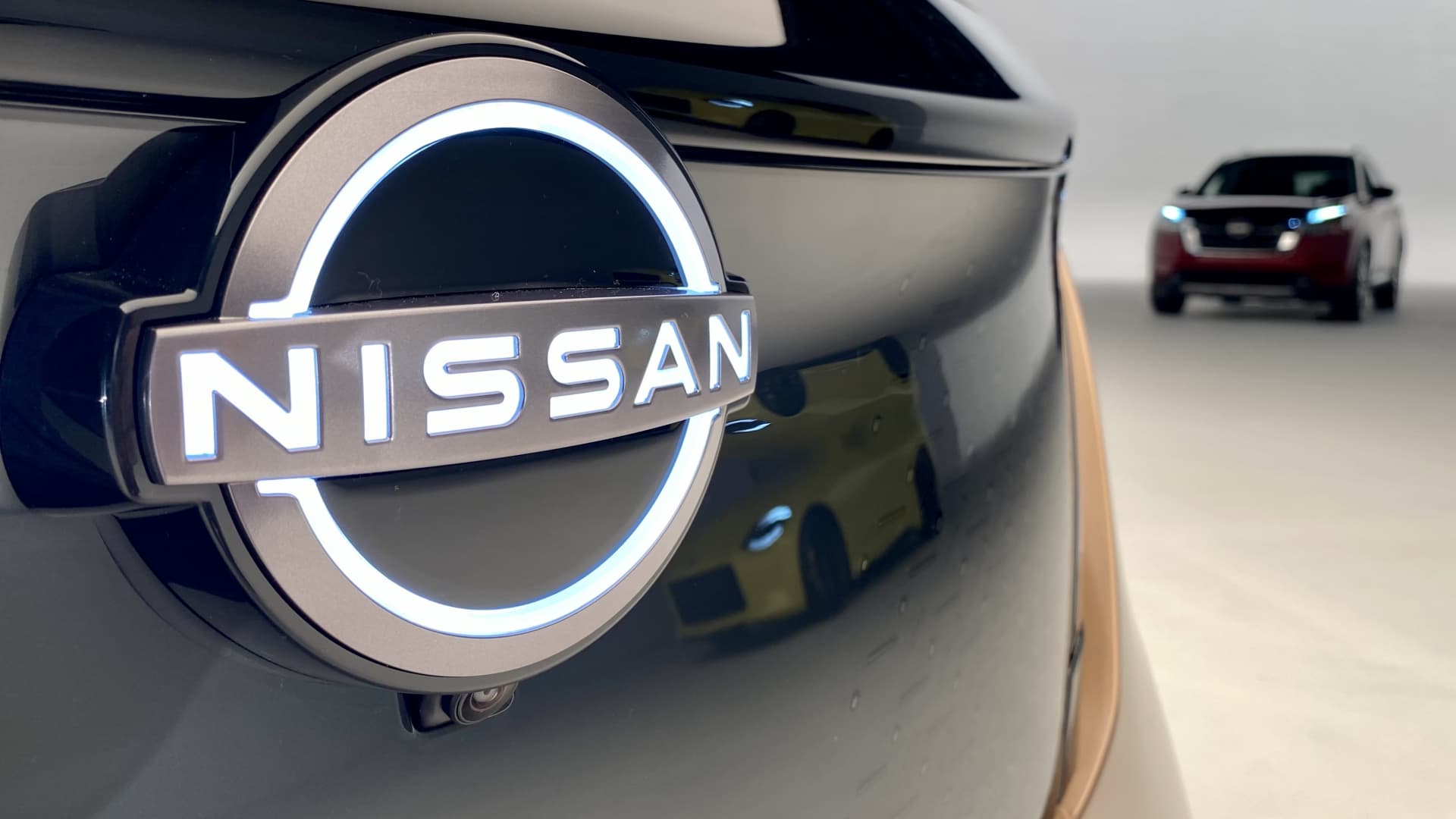
Michael Wayland / CNBC
The new Nissan “e-Power” is called a series hybrid. It uses the engine as a generator to power the vehicle’s electric motors that then propel the vehicle. It operates like emerging extended-range electric vehicles, or EREVs, but has a smaller battery and doesn’t require a plug.
It’s also different from a traditional hybrid, such as the Toyota Prius, because the gas engine in those vehicles is used to propel the vehicle. The series hybrid’s engine just keeps the battery charged to power the electric motors in the vehicles.
The e-Power hybrid system for Nissan is planned to launch domestically later this year in a new version of its popular Rogue compact SUV.

Timing for such a vehicle could be ideal for Nissan with climbing gas prices, slower-than-planned adoption of EVs and an expected surge in hybrid sales amid new entries, according to officials.
After losing billions of dollars on EVs, automakers such as Nissan are turning to hybrid vehicles to meet customer expectations for fuel economy and to help with driving performance.
S&P Global Mobility expects hybrids in the U.S. this year to increase to 18.4% of new vehicle sales, up from 12.6% last year and 7.3% in 2023. It’s forecasting pure EVs, meanwhile, will be 7.1% of new vehicle sales, down from 8% last year.
“This is a unique powertrain for the for the U.S.,” Kurt Rosolowsky, Nissan North America vehicle evaluation and test engineer, said during a media briefing. “This is an electrically driven vehicle, as far as what is powering the wheels, but it doesn’t have a plug, and you fill it up with gas like you do with a normal car.”
Series hybrids
Nissan and other automakers have used series hybrids elsewhere, particularly in Asia, but companies have been reluctant to bring the vehicles to the U.S. because of consumer expectations for driving dynamics and power.
To address those concerns, Nissan said it has developed a more powerful 1.5-liter, three-cylinder turbocharged engine specifically for the e-Power system, in addition to new packaging and other upgrades, to appease American buyers.
“The turbo is only there to serve efficiency at higher speeds for the gas engine to deliver energy,” Rosolowsky said.
The e-Power for the U.S. market is Nissan’s third generation of the series hybrid since it debuted in Japan in 2016. Since then, Nissan said it has sold more than 1.6 million vehicles globally with e-Power in nearly 70 countries.
“I think it’s going to be a really good system. I think it’s going to be very popular for Nissan in the new Rogue when it arrives later this year,” said Sam Abuelsamid, vice president of market research at communications and consulting firm Telemetry.
Abuelsamid said the only real drawback to the series hybrid is that it’s less efficient at higher speeds, which Nissan is trying to overcome with the new engine as well as battery size.
Driving e-Power
Driving a European version of the Nissan Rogue Sport sold with the ePower system around suburban Detroit, the vehicle’s driving dynamics — specifically fast acceleration and regenerative braking — are formidable.
They come with the familiar sound of an engine revving but without the shifting or sputtering of transmission gears and far less noise, vibration and harshness, or NVH, as the industry commonly refers to it.
“The driving experience really is what makes it different with those fewer components. You have less noise and less vibration,” Rosolowsky said.
Nissan e-Power logo
Courtesy Nissan
Unlike traditional gas-powered vehicles, the e-Power system also does not require a traditional transmission to shift gears or a driveshaft that transfers torque from the transmission to the differential, powering the wheels.
While the Rogue Sport is a smaller vehicle and only forward-wheel-drive, it’s easy to see how the system will translate to a larger vehicle with all-wheel-drive, which the new Rogue with e-Power will be.
The lack of a plug, some engine noise and slight vibration also might be more familiar for drivers who have been reluctant to adopt all-electric vehicles.
While Nissan is not releasing specifics such as pricing or fuel economy for the upcoming Rogue with e-Power, the Rogue Sport was achieving more than 40 miles per gallon during heavy city driving, according to the vehicle’s MPG system.
The current Nissan Rogue, depending on the model, can achieve more than 30 MPG, according to U.S. Department of Energy and the U.S. Environmental Protection Agency.
Nissan’s vehicles historically been less fuel efficient than those from its larger Japanese rivals. Honda Motor and Toyota Motor, the latter of which pioneered traditional hybrids with the Prius and continues to dominate the sector in the U.S.
Nissan declined to discuss the possibility of expanding the e-Power system to other vehicles in the U.S., but confirmed the new system is modular and capable of working with many different engines.
“If we were to expand this to other vehicles, you can theoretically bolt this onto another gasoline engine of a different size and have more options for an e-Power system,” Rosolowsky said.
Discover more from stock updates now
Subscribe to get the latest posts sent to your email.