From crypto to crops: Bitcoin mining heat warms a Dutch greenhouse for growing tulips |
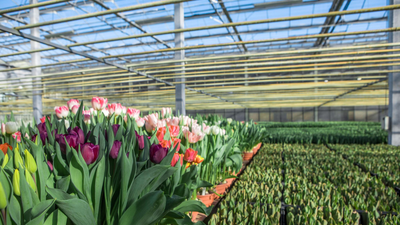
In a greenhouse on the outskirts of the Netherlands’ flower-growing regions, rows of tulips bloom in a climate controlled not only by traditional horticultural equipment but also by humming cryptocurrency computers. Instead of allowing heat generated by Bitcoin mining machines to dissipate into the air, farmers and engineers have begun redirecting that waste heat to warm greenhouses. The unusual partnership between digital finance and agriculture emerged during Europe’s energy crisis in 2022, when soaring gas prices forced growers to seek alternative heating methods. By integrating mining rigs with greenhouse infrastructure, the Dutch experiment demonstrated how excess heat from computing could support crop production while reducing fossil fuel use, an idea that is now sparking wider discussion about energy efficiency and sustainability.
A Dutch experiment linking crypto and Agriculture
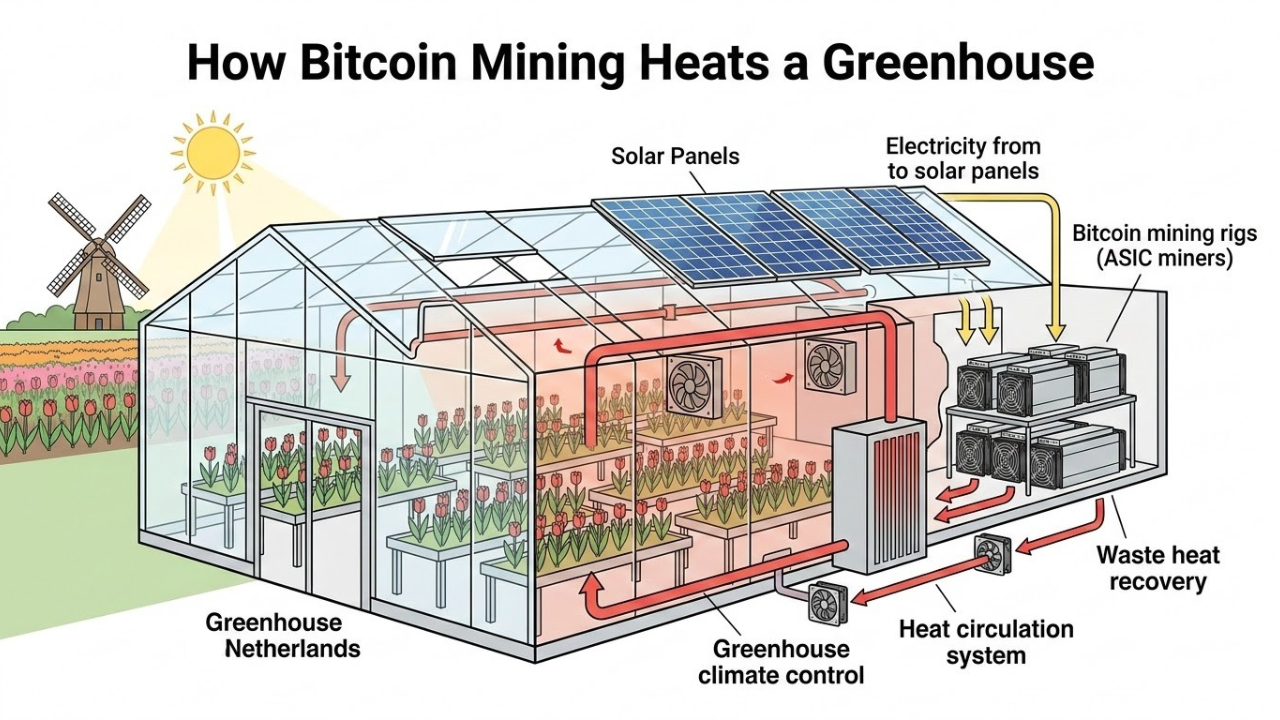
The project began when Dutch tulip grower Bert de Groot, founder of the initiative often referred to as BitcoinBloem, partnered with local cryptocurrency entrepreneurs to install Bitcoin mining rigs inside or alongside the greenhouse structure. Instead of venting the heat produced by the computers, the system captures and circulates it to maintain the temperature required for growing flowers.Greenhouses require stable warmth to grow crops year-round, making heating one of the largest operating costs for farmers. Traditionally, Dutch growers rely heavily on natural gas. But the surge in energy prices across Europe during 2022 forced many farmers to search for alternatives. In response, the Dutch greenhouse experiment used heat from mining machines to partially replace gas heating.The Netherlands is one of the world’s largest flower producers and a global leader in greenhouse agriculture, making the experiment particularly relevant for the industry. The country’s greenhouse sector consumes significant energy because it enables crops like tulips, tomatoes and cucumbers to grow in controlled environments throughout the year.Bert de Groot described the pairing of cryptocurrency mining and greenhouse farming as an unexpected but practical solution. “Bitcoin and tulips are a perfect match,” he said while explaining how the heat generated by mining machines could support greenhouse operations while also producing digital currency.
How Bitcoin mining produces usable heat

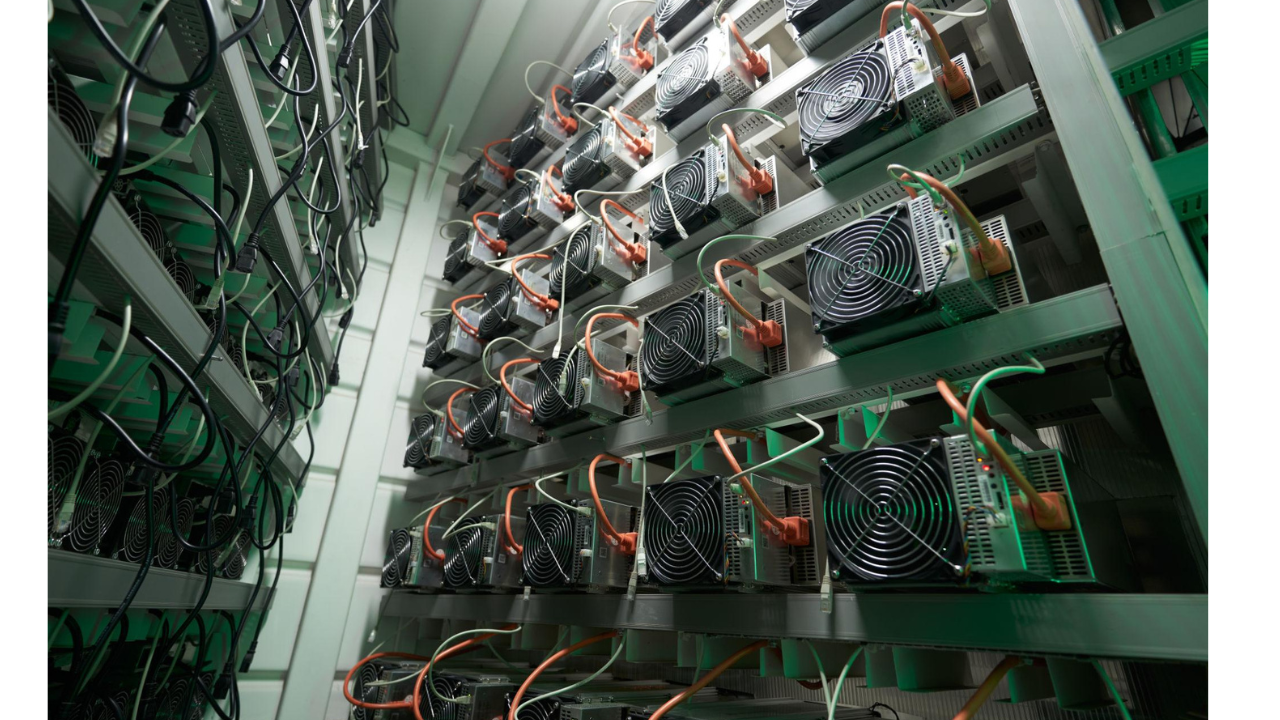
Bitcoin mining is the process through which transactions on the cryptocurrency network are verified and recorded. It relies on specialised hardware known as application specific integrated circuits, which perform complex calculations continuously.These machines consume large amounts of electricity and generate significant heat as a by product. In most data centres, that heat is treated as waste and removed through cooling systems. However, researchers and engineers have increasingly explored ways to reuse it.According to Dr Christian Stoll, a researcher at the University of Cambridge’s Centre for Alternative Finance, most of the electricity used by Bitcoin mining hardware eventually becomes heat. Capturing and redirecting that heat could allow it to be reused in other sectors such as agriculture or residential heating.In the Dutch greenhouse experiment, the heat generated by mining rigs is circulated through the greenhouse environment, helping maintain temperatures needed for plant growth. This turns what would normally be wasted energy into a useful resource.
Turning waste heat into agricultural energy
The concept of repurposing heat from computing systems is part of a broader movement toward circular energy systems, where waste energy from one process is reused elsewhere.Energy researcher Dr Nima Asgari and other analysts studying greenhouse energy systems have found that waste heat from cryptocurrency mining can offset natural gas heating in certain scenarios depending on electricity prices and system design.In practical terms, this means that a greenhouse equipped with mining rigs could reduce its reliance on fossil fuels while still maintaining optimal growing conditions. Some experiments also explore powering mining operations with renewable energy such as solar or wind power, further lowering carbon emissions.According to Professor John E. Taylor, an engineering researcher who studies the energy footprint of digital infrastructure, integrating computing with heat recovery systems could become an important strategy for improving energy efficiency in future data centres.
The sustainability debate around Bitcoin mining
Despite experiments like the Dutch greenhouse project, Bitcoin mining remains controversial because of its high electricity consumption. The global Bitcoin network consumes a large amount of electricity each year, contributing to concerns about carbon emissions and environmental impact.Environmental researcher Alex de Vries, founder of the Digiconomist platform, has been one of the most vocal critics of Bitcoin’s energy footprint. He argues that the environmental costs of cryptocurrency mining remain significant, particularly when operations rely on fossil fuel powered electricity.Critics say such energy consumption is difficult to justify for a digital financial system. Environmental researchers have also warned that emissions associated with mining could have broader climate and health implications if powered by fossil fuels.However, supporters of the technology say innovative uses of mining infrastructure could help mitigate these concerns. Nic Carter, a partner at Castle Island Ventures and a prominent Bitcoin researcher, has argued that mining can help utilise stranded energy and that waste heat recovery systems could improve overall energy efficiency.
Experts see potential in heat recycling systems
Energy experts say the idea of repurposing waste heat is not unique to cryptocurrency mining. Similar approaches are already used in industrial processes and large data centres.Recovering excess heat from energy intensive processes can reduce reliance on fossil fuel heating and lower greenhouse gas emissions. If computing infrastructure is integrated with heat recovery systems, it could potentially contribute to more efficient energy use.For greenhouse farming, the advantages are clear. Heating often accounts for a large share of operating costs, especially in colder climates. If excess heat from computing systems can supplement traditional heating systems, it could help farmers reduce expenses while lowering emissions.According to Dr Christian Stoll, such experiments demonstrate how digital infrastructure could eventually become part of broader energy networks rather than existing as isolated power consuming facilities.
Could this model scale globally
The Dutch tulip greenhouse remains a relatively small experiment, but it has attracted global attention. Similar ideas are now being explored in other sectors including residential heating and aquaculture.Some technology companies and startups are studying ways to integrate Bitcoin mining with renewable power sources and smart climate control systems to maintain ideal conditions for crops.However, scaling such systems widely will require careful planning. Electricity costs, cryptocurrency price fluctuations and equipment lifespans all affect the economic viability of mining operations. Policymakers and environmental groups continue to debate how best to regulate energy intensive digital infrastructure.
A glimpse of a hybrid energy future
The Dutch tulip greenhouse experiment represents a broader trend toward hybrid energy systems that combine digital technologies with traditional industries. Instead of treating computing heat as waste, engineers and farmers are exploring how it can support agriculture, heating and other energy demanding activities.For tulip growers in the Netherlands, the concept has shown that innovation can come from unexpected partnerships. The same machines that power global cryptocurrency networks are now helping cultivate one of the country’s most iconic flowers.As the world searches for ways to reduce emissions and improve energy efficiency, experiments like this suggest that the future of sustainability may lie in unexpected connections, where the heat generated by digital infrastructure helps crops grow in a greenhouse.
Discover more from stock updates now
Subscribe to get the latest posts sent to your email.