Failure of atomic clock cripples ISRO’s NavIC system

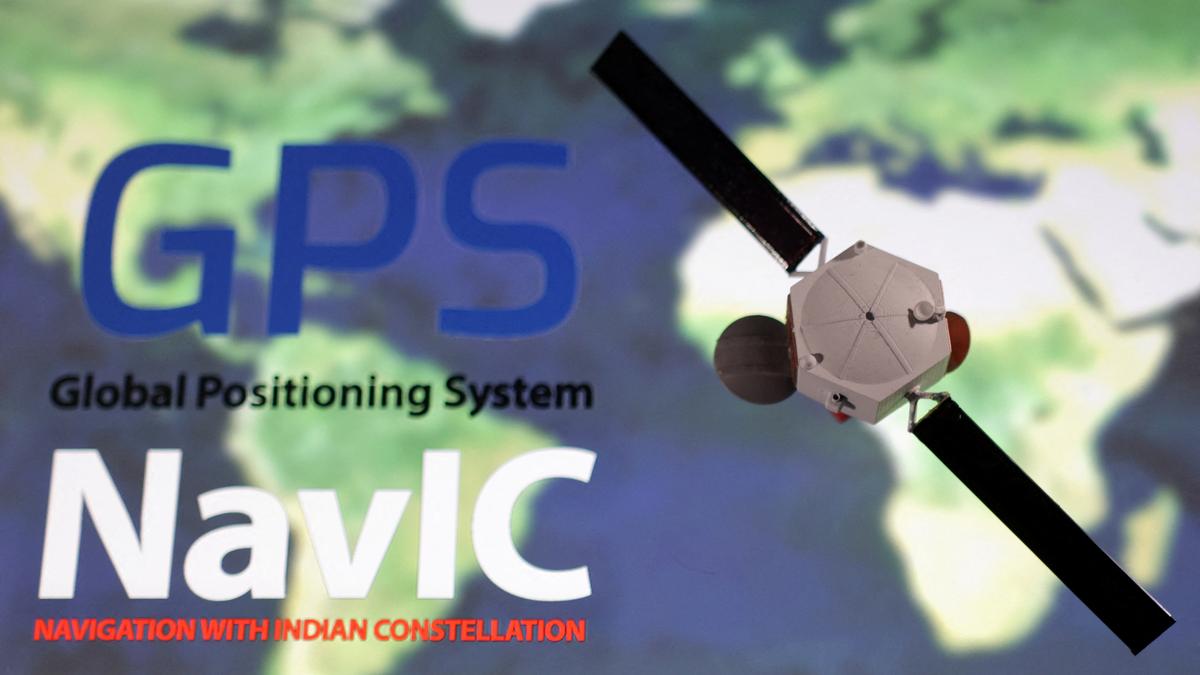
The NavIC (Navigation with Indian Constellation) and GPS (Global Positioning System) logos, along with a satellite model, are shown on the map in this illustration. File
| Photo Credit: Reuters
Atomic clocks are critical to satellites being able to offer positional, navigational, and timing services. Since the first of the eight satellites in the IRNSS system were launched between 2013-2018, the government has encouraged Indian enterprises, including computer manufacturers and electronic goods having timing services, to rely on NavIC for determining the Indian Standard Time.

Currently, the U.S.’s Global Positioning System (GPS), with its 30 satellite systems, is the reference standard for such purposes.
“On 13th March 2026, the procured on-board atomic clock stopped functioning. However, the satellite will continue to function in-orbit for various societal applications to provide one way broadcast messaging services. IRNSS-1F satellite launched in March 2016 has completed its design mission life of 10 years on 10th March 2026,” ISRO said in a statement on its website late on Friday (March 13, 2026).
Nine IRNSS satellites have been launched since 2013. Eight of them reached their intended orbit. The last of this constellation of satellites (IRNSS-1I) was launched in 2018. While equivalent American, Chinese and European systems provide global positioning services, NavIC is expected to do so only within India and within a radius of 1,500 km. This is, however, viewed more as a fall back system in case of future global conflicts in which India is denied access to these foreign constellations.
In July 2025, ISRO revealed via a Right to Information request that five of the NavIC satellites were completely defunct, with all three of clocks in each satellite not working. In one of the three satellites with functioning atomic clocks, two of the three clocks had failed.
The atomic clocks in this constellation of satellites were imported by ISRO from SpectraTime, a Switzerland-based maker of high precision atomic clocks. Four working satellites could be relied upon for providing positional and navigation services, the Union Minister for Space Jitendra Singh has said in Parliament. With the failure of the IRNSS-1F’s clock, their number is down to three.
For the next series of satellites that will replace the impaired and ageing fleet of IRNSS satellites — two of the three being used have passed their rated shelf life of 10 years though it’s possible for these systems to function beyond — ISRO has decided to install indigenously developed rubidium clocks.
One replacement satellite, the NVS-01 launched in May 2023, hosts an indigenously developed rubidium (atomic) clock. The second, the NVS-02 satellite, launched in January 2025, failed to reach its intended orbit.
ISRO had earlier said that it would be launching at least three satellites by the end of 2026 to replace defunct and ageing satellites.
Published – March 14, 2026 07:38 pm IST
Discover more from stock updates now
Subscribe to get the latest posts sent to your email.