Tokenization and the Future of Markets: Nasdaq Chair & CEO at FIA Boca
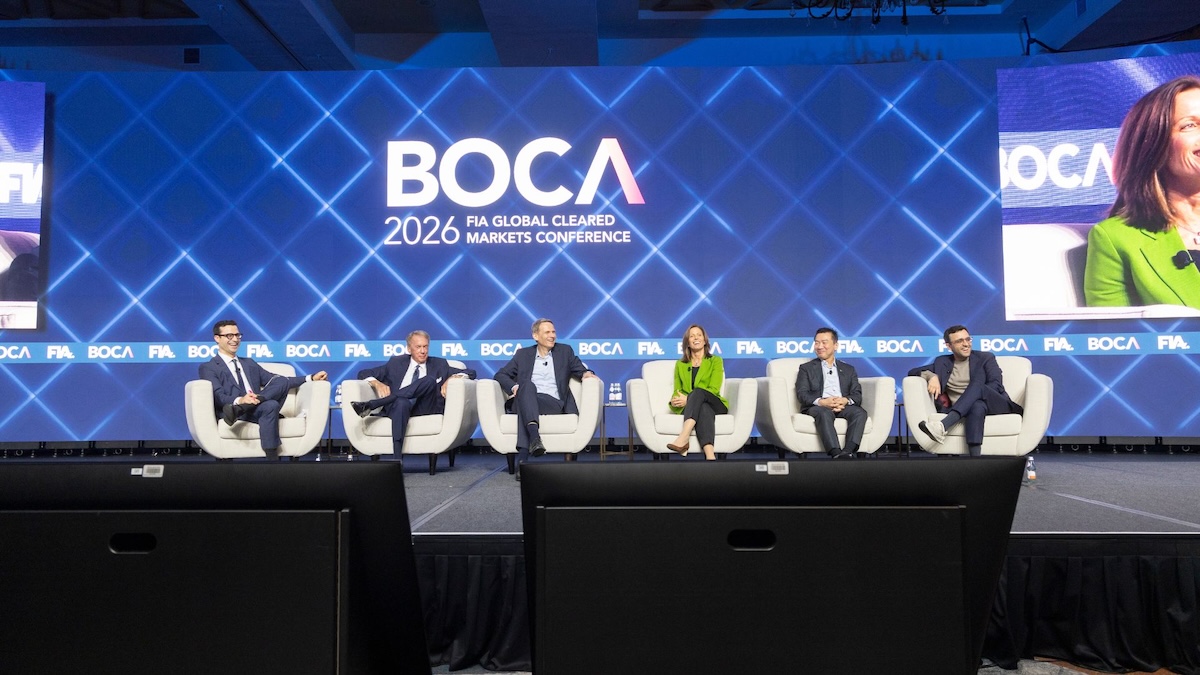
Global capital markets stand at a pivotal moment defined by rapid technological change, rising expectations for access and efficiency, and the need to modernize market infrastructure without compromising trust. As industry leaders gathered this week at the FIA Global Cleared Markets Conference in Boca Raton, Nasdaq Chair and CEO Adena Friedman took the stage to outline how the company is building the foundation for continuous, always-on markets — with equity tokenization emerging as a critical frontier in the future of market infrastructure.
Her remarks followed a series of strategic announcements that set the stage for Nasdaq’s presence at the conference, positioning the company at the forefront of digital asset innovation. Friedman described tokenization as “the next leg of innovation for securities markets,” positioning it as the natural extension of Nasdaq’s work toward always-on markets and as connective tissue linking ambitions across equities, collateral, and post-trade infrastructure.
Putting Issuers at the Center of Tokenization
The centerpiece of Nasdaq’s presence at Boca was the launch of a new equity token design — a framework for tokenizing equities that places public companies at the center of ownership rights, the investor experience, transparency, and governance. The initiative builds on Nasdaq’s tokenization proposal filed with the U.S. Securities and Exchange Commission (SEC) in September 2025, in which Nasdaq proposed enabling equity securities to trade on its markets and settle in token form.
The design ensures that a transfer of a token constitutes a transfer of the underlying security itself, preserving full legal and regulatory equivalence. Blockchain records will be integrated directly into the issuer’s official share registry, providing a regulated bridge between on-chain records and off-chain identity — maintaining the price discovery, consolidated liquidity, and investor protections that define U.S. equity markets.
Central to the approach is giving issuers meaningful control over how their securities exist in tokenized form.

“We want to give the issuers, number one, the choice: Do they want their securities to be tokenized? Secondly, control in terms of understanding who their investors are, modernizing their experience and connecting with those investors,” Friedman said. “Hopefully modernizing the proxy process, hopefully making some really big changes to their experience in both a permissioned and a permissionless world. We think this is the future of markets.”
The equity token design also introduces programmable investor engagement — modernizing the connection between issuers and investors as it relates to proxy-related actions, corporate actions, and governance rights. Nasdaq will engage issuers, transfer agents, regulators, infrastructure operators, and market participants as the token framework evolves, with the program expected to be operational in 2027.
“Tokenization has the potential to unlock the benefits of an always-on financial ecosystem — enhancing how investors access markets, how issuers engage with shareholders,” said Tal Cohen, President of Nasdaq, in a press release unveiling the design. “We believe that public companies should always remain at the center of the equity market ecosystem. This issuer-sponsored approach for tokenized equity securities is designed to empower public companies and enhance global accessibility to U.S. equity markets.”
Bridging Market Ecosystems
Nasdaq’s ambition extends beyond permissioned markets. “There’s the permissioned world and then there’s the permissionless world,” Friedman said. “We’re looking to create the right bridge between the permissioned world, which is the world we operate in, to the permissionless world that does have instant settlement, that does have different market structures.”
Nasdaq’s partnership with Payward, the parent company of global crypto platform Kraken and the infrastructure layer behind xStocks, will help build that bridge. The collaboration will focus on designing an equities transformation gateway that enables issuers and investors to move seamlessly between permissioned and permissionless environments. The gateway is designed to allow tokenized equities to move fluidly between regulated markets and global on-chain markets while preserving issuer rights, regulatory compliance, and price integrity — and will be available to clients in jurisdictions around the world where xStocks are available.
Nasdaq also announced this week a strategic partnership with Seturion, Boerse Stuttgart Group’s pan-European settlement platform for tokenized assets, extending the tokenization vision to European capital markets. Through the partnership, Nasdaq’s European trading venues will connect to Seturion to facilitate trading of tokenized securities that will be settled through the platform.
With an initial focus on structured products, Nasdaq and Seturion will work to expand the network of financial institutions connecting to Seturion — building an ecosystem of issuers, brokers, and industry partners across Europe in a bid to address the post-trade fragmentation that limits the efficiency of EU capital markets.
In a press release announcing the partnership, Roland Chai, EVP and President of European Market Services and Head of Digital Assets at Nasdaq, heralded the opportunities that thoughtful enablement of tokenization could bring.
To learn more about this partnership, read the Q&A with Roland Chai here.
“European capital markets face fragmentation and efficiency challenges that limit the region’s competitive potential,” he said. “Tokenization presents a transformative opportunity to address inefficiencies in settlement and securities processing workflows, while preserving the trust, stability, and regulatory rigor that underpin well-functioning markets.”
Real-Time Infrastructure for Always-On Markets
Underpinning Nasdaq’s vision for continuous markets is the need for post-trade infrastructure built to match. Nasdaq Calypso is partnering with Baton Systems to transform collateral workflows and mobility across the global post-trade ecosystem — addressing one of the most pressing operational challenges facing clearing members today.
Capital markets have long contended with fragmented post-trade infrastructure, forcing participants into inefficient prefunding arrangements and collateral over-provisioning. The problem is intensifying as markets evolve toward always-on operations, with a recent Nasdaq report finding that one in every two firms is considering how distributed ledger technology (DLT) can address manual processing, high operating costs, and settlement risk.
Through the partnership, Nasdaq Calypso will integrate with Baton’s real-time network — which connects major global banks and futures commission merchants directly to central counterparties (CCPs), and already processes billions in daily settlement volumes — to provide clients with advanced collateral workflow automation and fast, efficient asset mobilization. The integration gives Nasdaq Calypso clients live information on eligibility, margin requirements, and CCP data, along with the ability to instruct collateral movements across multiple CCPs through a unified interface, without replacing existing core systems.
Looking ahead, the same infrastructure is designed to support the mobilization of tokenized cash and securities, creating a through-line from today’s collateral challenges to the digital asset ecosystem being built in parallel.
Building the Infrastructure of Tomorrow’s Markets
Together, Nasdaq’s announcements at FIA Boca reflect the company’s focus on building reliable, resilient market infrastructure that supports issuers, investors, and market participants around the world. As Friedman told the Boca audience, always-on markets demand infrastructure that operates with the same continuity.
Cautionary Note Regarding Forward-Looking Statements
Information set forth in this communication contains forward-looking statements that involve a number of risks and uncertainties. Nasdaq cautions readers that any forward-looking information is not a guarantee of future performance and that actual results could differ materially from those contained in the forward-looking information. When used in this communication, words such as “intend,” “will,” “enable” and similar expressions and any other statements that are not historical facts are intended to identify forward-looking statements.
Such forward-looking statements include, but are not limited to, statements regarding the benefits of tokenization. Forward-looking statements involve a number of risks, uncertainties or other factors beyond Nasdaq’s control. These factors include, but are not limited to, Nasdaq’s ability to implement its strategic initiatives, economic, political and market conditions and fluctuations, geopolitical instability, government and industry regulation, interest rate risk and U.S. and global competition. Further information on these and other factors are detailed in Nasdaq’s filings with the U.S. Securities and Exchange Commission, including its annual reports on Form 10-K and quarterly reports on Form 10-Q which are available on Nasdaq’s investor relations website at http://ir.nasdaq.com and the SEC’s website at www.sec.gov. Nasdaq undertakes no obligation to publicly update any forward-looking statement, whether as a result of new information, future events or otherwise.
Discover more from stock updates now
Subscribe to get the latest posts sent to your email.