Trump Section 301 trade probes to replace IEEPA tariffs
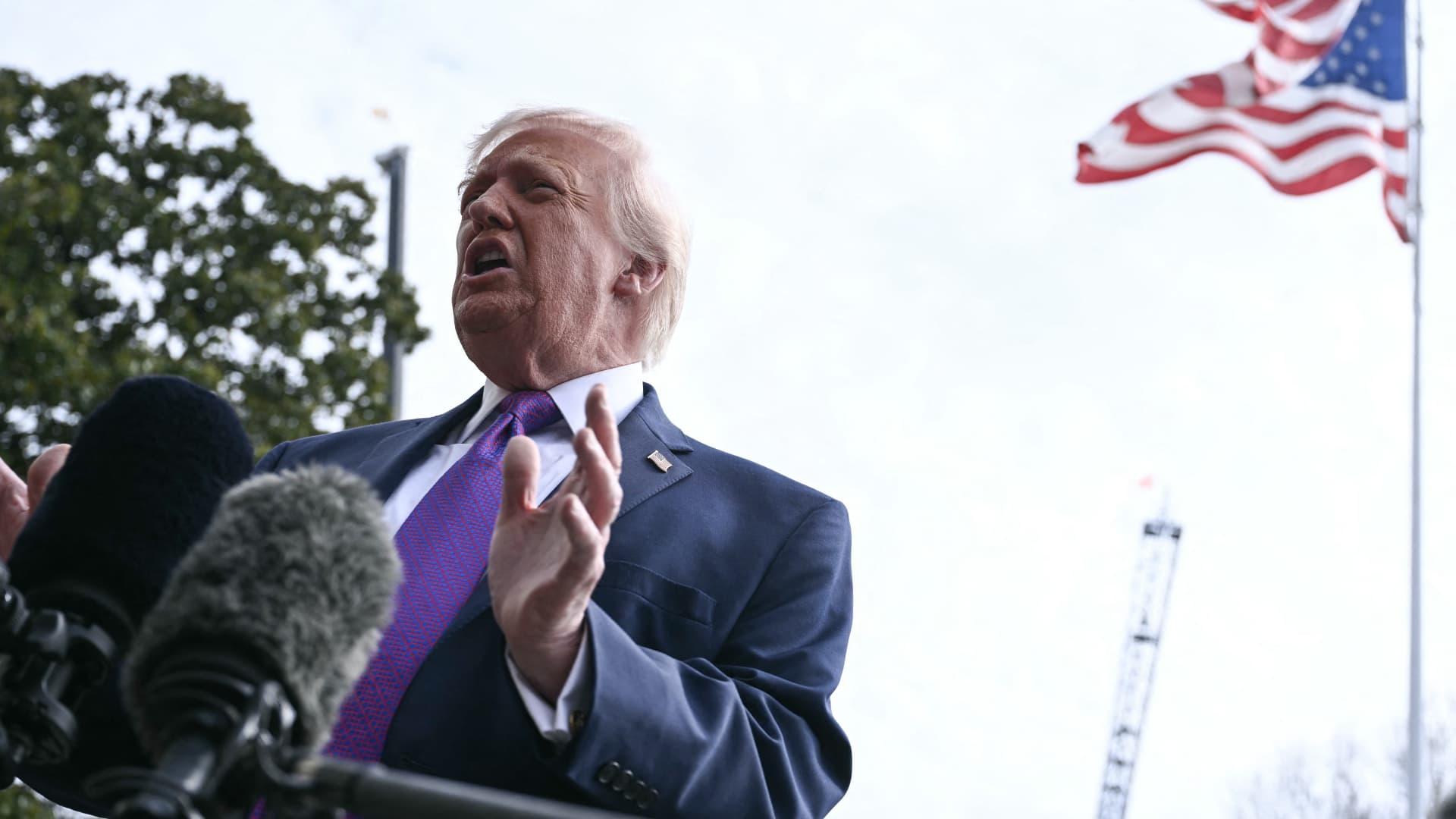
Brendan Smialowski | AFP | Getty Images
The probes, which will likely expand to more nations, will be conducted under Section 301 of the Trade Act of 1974, U.S. Trade Representative Jamieson Greer told reporters during a call.

That law permits the U.S. to impose tariffs on imported goods from other nations found to have engaged in unfair trade practices.
Section 301 tariffs could replace at least some of the reciprocal tariffs on most of the world’s nations that Trump imposed on them last year without congressional authorization.
“The president’s trade policy remains the same,” Greer said.
“Protect American jobs and to make sure we have fair trade with our trading partners,” he said.
Greer said that the Section 301 probes “will cover acts, policies and practices of certain economies relating to structural excess capacity and production in manufacturing sectors.”
“We expect that this investigation will uncover a variety of unfair trading practices related to excess capacity and production in manufacturing,” he said. “Our view is that key trading partners have still production capacity that is really untethered from the market incentives of domestic and global demand.”
He said that has led to large and persistent trade surpluses.
Besides Mexico, China, and the EU, the other economies being investigated are Japan, India, Taiwan, Vietnam, South Korea, Singapore, Switzerland, Norway, Indonesia, Malaysia, Cambodia, Bangladesh, and Thailand.
“We do expect that there will be other Section 301 investigations on a country-specific basis, or maybe other tools or investigations that may come up,” Greer said. “I won’t go into too much detail.”
Under Section 301, the Trade Representative Office will receive written comments on the probe and hold a hearing. “We’ll also be consulting with our trading partners who are subject to this investigation,” Greer said.
“After all of that, the USTR, we will have our findings and our analysis, and we will propose, if necessary, a responsive action,” he said. “Responsive action can take a number of forms. It can be tariffs, it can be fees on services, it can be other things.”
The Supreme Court, in a 6-3 ruling Feb. 20, said Trump did not have the authority to levy such duties under the International Emergency Economic Powers Act, or IEEPA, as he had claimed he did.
Trump, within hours of that decision, signed an executive order imposing a new 10% “global tariff” under Section 122 of the Trade Act. Section 122 tariffs expire within 150 days.
Treasury Secretary Scott Bessent, in an interview with CNBC last week, predicted that by August, U.S. tariffs would return to the levels in effect before the Supreme Court’s ruling.
Bessent said that in the coming months, the Office of the U.S. Trade Representative and the Commerce Department will complete trade-related studies that would allow them to impose more tariffs.
“It’s my strong belief that the tariff rates will be back to their old rate within five months, and those are very fulsome authorities,” Bessent said.
“They have survived more than 4,000 legal challenges. They are more slow-moving, but they are more robust,” he said.
Discover more from stock updates now
Subscribe to get the latest posts sent to your email.