Teachers College at Columbia University launches first Ph.D. in educational neuroscience: Fully funded program to begin fall 2027


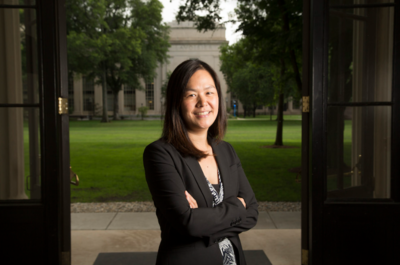
Teachers College at Columbia University is set to offer its first neuroscience-focused doctoral program following the University Senate’s approval last month, according to reporting by The Columbia Spectator. The new Ph.D. in educational neuroscience aims to formalize research at the intersection of brain science and education while ensuring full funding for all enrolled students. The program reflects a growing institutional emphasis on interdisciplinary approaches to education grounded in research.Associate professor of neuroscience and education Kay James, a leading advocate for the initiative, shared at the February 6 Senate plenary that the college will only accept candidates for whom “full funding at the institutional level” can be provided. Funding will come from Teachers College doctoral fellowships covering tuition and stipends, as well as external faculty research grants. “As a result of that, the economic implications are zero, or rather close to it, which feels very unusual these days,” James said, as reported by The Columbia Spectator.
Streamlining pathways for neuroscience research

Currently, Teachers College offers a master’s in neuroscience and education, which provides a multidisciplinary foundation for understanding cognitive and educational processes. However, students seeking doctoral-level research in neuroscience previously had to enroll in other programs, such as communication sciences and disorders or cognitive science in education, to pursue related research.James highlighted that the new program will simplify and clarify these pathways: “With this proposal, we are seeking to streamline those pathways, make them more transparent, and make them more directly related to the work that we are actually doing,” she told The Columbia Spectator. This structure is designed to build on ongoing student research in educational neuroscience, which has been conducted under individual faculty mentorship.Alumni like Paul Smith, TC ’20, TC ’26, who completed a master’s in neuroscience and education and continued with a Ph.D. in cognitive science, emphasized the significance of the new track. Smith noted that the doctoral program in cognitive science did not fully address the theories and material central to neuroscience, and he would have pursued the new Ph.D. in educational neuroscience if it had been available.
Fully funded, research-focused program
The 30-page proposal for the Ph.D. program anticipates that 6–10 master’s students from each graduating cohort may pursue doctoral training each year. The program will be led by associate professor Karen Froud, director of the graduate program in neuroscience and education. Its curriculum emphasizes a multidisciplinary approach designed to bridge research on brain, cognition, and behavior with practical challenges in schools and applied settings.Sarmishta Bhardwaj, TC ’26, who will be among the first cohort, said continuing her work with James was a natural step. “She has influenced how I approach research, particularly in emphasizing theoretical clarity and restraint when interpreting neuroscientific findings,” Bhardwaj told The Columbia Spectator.
Advancing educational equity through neuroscience
James emphasized the broader purpose of the program: connecting neuroscience research to educational equity and social justice. “The Senate’s approval of our proposed Ph.D. program in Educational Neuroscience reflects a growing recognition that neuroscience has an important role to play in advancing educational equity and social justice,” James wrote in a statement to The Columbia Spectator. The program aims to equip scholars to translate findings from neurobiological research into educational practice, policy, and ethics.Housed in the biobehavioral sciences department, the Ph.D. program prioritizes interdisciplinary scholarship while preparing students for professional roles that connect science to real-world educational contexts. According to James, “Educational neuroscience is fundamental to these endeavors because it grounds our commitments in evidence about how people actually grow and learn,” underscoring the program’s mission to combine rigorous research with applied educational impact.The program is expected to begin accepting applications for fall 2027 enrollment.
Discover more from stock updates now
Subscribe to get the latest posts sent to your email.