Who is Mojtaba Khamenei? Ayatollah Khamenei’s son likely to be Iran’s next Supreme Leader

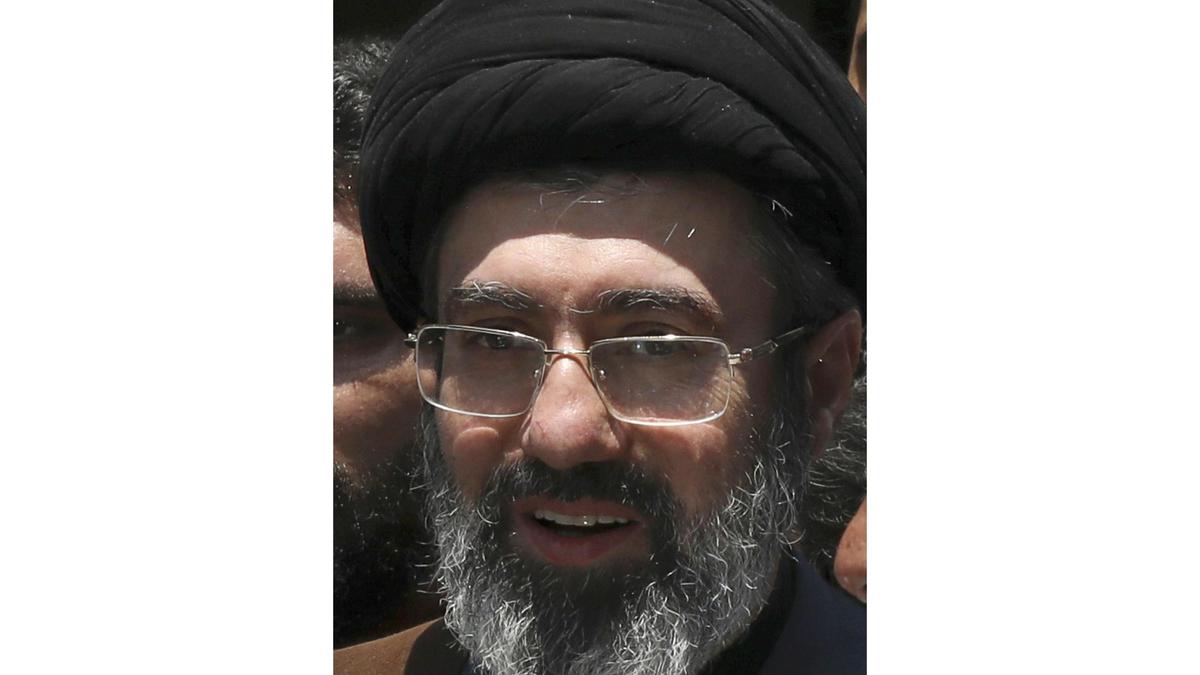
Mojtaba Khamenei, son of former Iranian Supreme Leader Ayatollah Ali Khamenei
| Photo Credit: AP
The announcement by the Iran’s Assembly of Experts came just over a week after his father Ayatollah Ali Khamenei’s death on February 28, 2026 in joint strikes by Israel and the U.S.
Follow | Iran-Israel war LIVE
The 56-year-old mid-ranking cleric, who has survived the U.S.-Israeli air war on Iran, was named as the successor after the council had more or less reached a “majority consensus”. Assembly of Experts member Ayatollah Mohsen Heidari Alekasir, said in a video on Sunday (March 8, 2026) that a candidate had been selected based on Khamenei’s guidance that Iran’s top leader should be “hated by the enemy”.
Also Read | A look at some of the contenders to be Iran’s supreme leader after the killing of Khamenei

Who is Mojtaba Khamenei?
Mojtaba Khamenei is the second son of Ayatollah Ali Khamenei and Mansoureh Khojasteh Bagherzadeh. He was born on September 6, 1969, in Mashhad, a major Shia religious centre in northeastern Iran. He has five siblings — three brothers and two sisters.

Childhood amidst father’s revolution
Mr. Mojtaba spent most of his childhood amid his father’s active resistance against the Shah of Iran’s monarchy, which eventually led to the election of Ali Khamenei as the country’s Supreme Leader and the exercise of significant political and military power.
With his father repeatedly being arrested by SAVAK(the Shah’s secret police), much of Mr. Mojtaba’s childhood was spent in frequent raids and turmoil.
After the 1979 revolution, the family moved to Tehran, where Mr. Mojtaba attended the prestigious Alavi High School.
He also studied under religious conservatives in the seminaries of Qom, Iran’s center of Shi’ite theological learning, and has the clerical rank of Hojjatoleslam.
Military life
Mr. Mojtaba joined the Iranian Revolutionary Guard Corps (IRGC) soon after completing his education and reportedly formed lifelong ties with comrades who later went on to hold high posts in the Iranian military establishment.
He also served in the Habib Battalion during the final years of the Iraq-Israel war of 1987-88.
Shadow power
Mr. Mojtaba is not considered a major leader in the Iranian establishment or a high-ranking religious scholar. He has never been elected and holds no formal government post. He has appeared at loyalist rallies, but has rarely spoken in public. However, he is widely believed to have managed the Office of the Supreme Leader and has been reportedly “gatekeeping” it due to his deep ties with the IRGC and the Intelligence services.
He has also opposed reformers seeking to engage with the West as it tries to curb Iran’s nuclear programme.
The U.S. Treasury Department imposed sanctions on Mr. Mojtaba in 2019, saying he represented the supreme leader in “an official capacity despite never being elected or appointed to a government position” aside from working in his father’s office.
Its website said Khamenei had previously delegated some of his responsibilities to Mr. Mojtaba, who it said had worked closely with the commander of the IRGC’s Quds Force and the Basij, a religious militia affiliated with the Guards, “to advance his father’s destabilising regional ambitions and oppressive domestic objectives”.
What does his succession mean for Iran?
The selection of Mr. Mojtaba is historic because Iran’s establishment has long rejected the idea of hereditary succession from father to son. This is also viewed as unfavourable by Shiite clerics. Thus, his appointment will be a departure from traditional political and religious norms.
Mr. Mojtaba was a particular target for criticism by protesters during unrest over the death of a young woman in police custody in 2022, after she was arrested for allegedly breaching the Islamic Republic’s strict dress codes.
In 2024, a video was widely shared in which he announced the suspension of Islamic jurisprudence classes he was teaching at Qom, fuelling speculation about the reasons.
He was widely believed to have been behind the sudden rise of hardliner Mahmoud Ahmadinejad, who was elected president in 2005. He also backed Ahmadinejad in 2009 when he won a second term in a disputed election which resulted in anti-government protests that were violently suppressed by the Basij and other security forces.
Mr. Mojtaba’s appointment as the Supreme Leader will mean a continuation of the late Ali Khamenei’s legacy, in a sign that hardliners were still firmly in charge.
With inputs from Reuters
Published – March 09, 2026 03:23 am IST
Discover more from stock updates now
Subscribe to get the latest posts sent to your email.