


Iran-Israel Conflict: Oil prices rise sharply after attacks in Middle East disrupt global energy supply

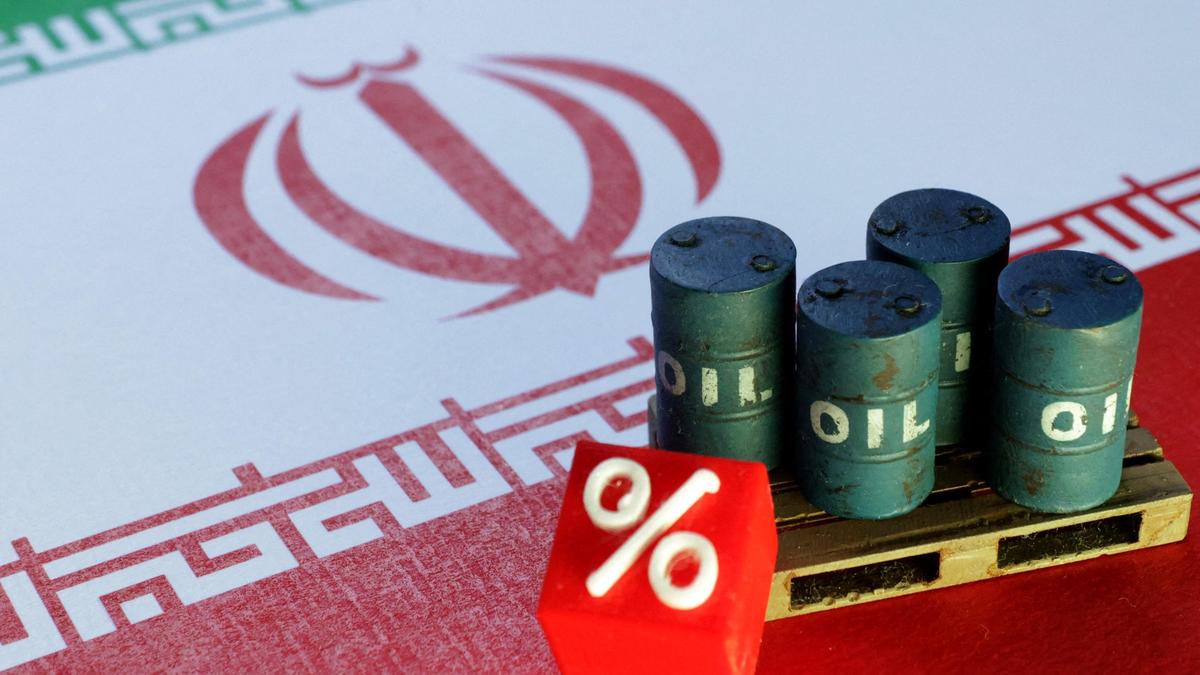
Image used for representational purposes. File
| Photo Credit: Reuters

At the time of writing (12:20 p.m.), Brent Crude Futures (May) was trading about 8.34% higher from the previous close at $78.95 per barrel breaching more than a one-year high.

In fact, intraday, the Futures had briefly jumped about 12% to $81.5 for every barrel. Further, WTI crude at the time of writing was trading 7.16% higher at $71.82 per barrel.
Global oil markets were already anticipating an upward price shock as Tehran called to close the Strait of Hormuz, which accounts for approximately one-fifth of the global crude oil flow, following the death of their supreme leader Ayatollah Ali Khamenei. Analysts at S&P Global Commodities at Sea (CAS) had noted that activities in the Strait had fallen by 40-50% as on 7:30 p.m. (UTC) on February 28, 2026.

Essential to note, on Sunday (March 1, 2026) eight OPEC+ countries, that is, Saudi Arabia, Russia, Iraq, UAE, Kuwait, Kazakhstan, Algeria, and Oman agreed to boosting oil supply by 206 thousand barrels per day.
Further, Fatih Birol, Executive Director at the Paris-headquartered International Energy Agency (IEA) stated they were “actively monitoring events in the Middle East and the potential implications for global oil and gas markets and trade flows”. “Markets have been well supplied to date,” Mr. Birol maintained.
Published – March 02, 2026 08:27 am IST
Discover more from stock updates now
Subscribe to get the latest posts sent to your email.