


What does the India-Brazil critical minerals MoU mean for the two countries?
What is India doing about critical minerals?
India is currently trying to build capacity at home across the critical minerals value chain and to reduce dependence on any one country by building more overseas partnerships for minerals and processing. On the domestic front, the Union Cabinet approved the National Critical Mineral Mission in January 2025 to cover all stages of the value chain, including exploration, mining, beneficiation, processing, and recovery from end-of-life products. It is meant to run from 2024-25 to 2030-31 with substantial public expenditure.
India also published a list of 30 critical minerals in July 2023 and has used the Mines and Minerals (Development and Regulation) Amendment Act 2023 to give the Centre more power to auction blocks for critical and strategic minerals. By September 2025, the Ministry of Mines said it had run multiple rounds of such auctions covering several blocks. Further, the state-backed vehicle Khanij Bidesh India Ltd. is currently exploring overseas acquisitions and signing exploration arrangements, including in Argentina and Chile.
India has also used changes in customs duty to reduce the cost of importing inputs that it doesn’t have enough of at home. This includes customs duty cuts in recent budgets for some critical minerals and for scrap and waste that can be processed to recover these minerals.

Finally, the Indian government is also pushing late-stage manufacturing. According to Union Minister for Mines G. Kishan Reddy, India aims to begin domestic production of rare-earth permanent magnets by the end of 2026 under a government-backed programme, with the stated goal of cutting import dependence in sectors like electric vehicles and defence.
What does the MoU mean for India?
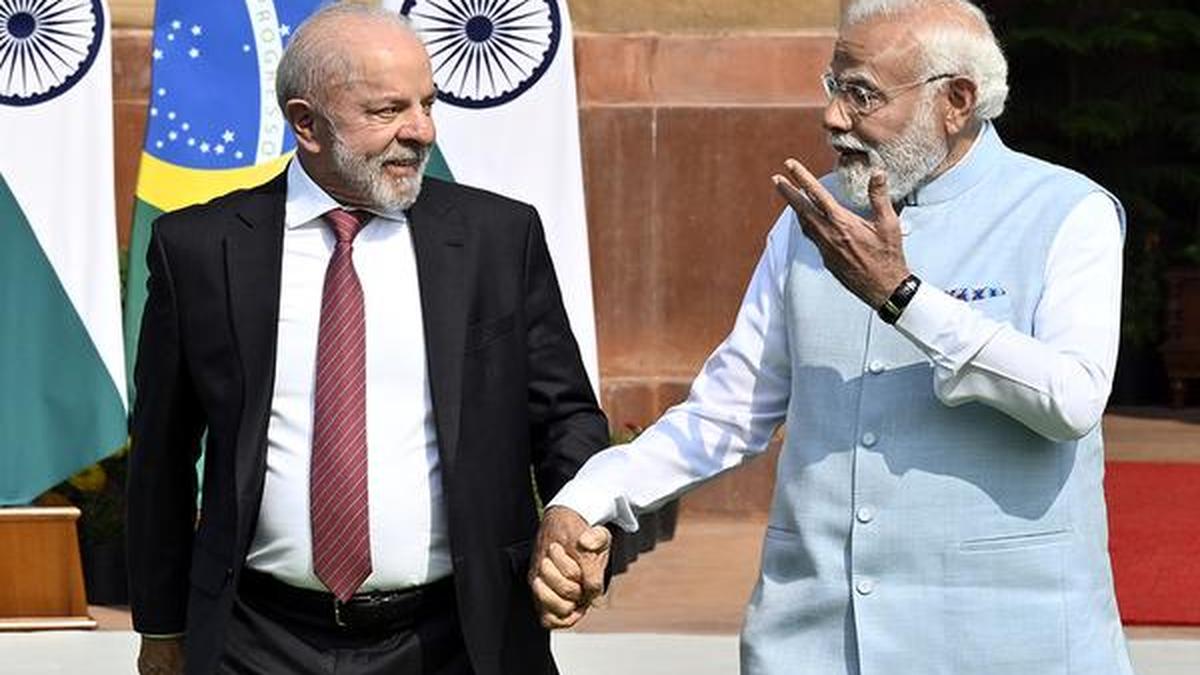
In India’s official briefing, Secretary (East) P. Kumaran said President Lula spoke of Brazil’s “substantial” reserves of which only about 30% had been explored and that Brazil would value India as a partner to explore and process them. Associated Press reported that the MoU is non-binding.
Among other things, the agreement will increase India’s bargaining power. If India had only one or two realistic sources of these materials, sellers would know India can’t walk away from their terms even if they were exorbitant. Now, however, India can say “we can source from Brazil”, which will affect sellers’ incentives.
The MoU also signals to companies that their inputs won’t be disrupted by export controls or geopolitical shocks, encouraging them to invest more. Likewise if India and Brazil get on the same page vis-à-vis environmental and other standards, India can more easily sell finished products into markets that increasingly demand proof about where materials were sourced from.
Does the MoU intersect with Pax Silica?
Pax Silica is a U.S.-led initiative that brings together partner countries; India joined it on February 20. It’s meant to make the “silicon stack” — the system that starts with raw materials and runs through factories and equipment, all the way to modern computing, including data centres and AI hardware — more secure.
Plainly speaking, Pax Silica sets out a general goal in the form of securing supply chains for the U.S. and its partner countries. The bilateral MoU, signed the next day, could help with one part of that goal, which is to access, and possibly process, certain minerals.
The MoU doesn’t make Brazil a Pax Silica member, however, nor will activities under the MoU be run as part of Pax Silica projects.
What will the MoU do for Brazil?
According to the U.S. Geological Survey, Brazil has 21 million tonnes of rare-earth-oxide equivalent, 2.7 billion tonnes of bauxite, 270 million tonnes of manganese, and 0.4 million tonnes of lithium. From Brazil’s point of view, the MoU could be a way to turn this mineral wealth into more value for its industry.
Specifically, it could help Brazil attract Indian capital and buyers into Brazilian projects, which can make new mines and processing plants easier to finance. It also gives Brazil a large, growing market that can sign long-term purchase contracts so that projects are not built on speculation.
The MoU covers exploration, mining, processing, recycling, and refining, all of which also suit Brazil’s goal to move up the value chain rather than just explore raw ores, and will also strengthen Brazil’s negotiating position as well.
mukunth.v@thehindu.co.in
Published – February 25, 2026 06:00 am IST
Discover more from stock updates now
Subscribe to get the latest posts sent to your email.