


U.S. tariffs ruling could have far-reaching impact, offers hope for pleas against H1B visa fees

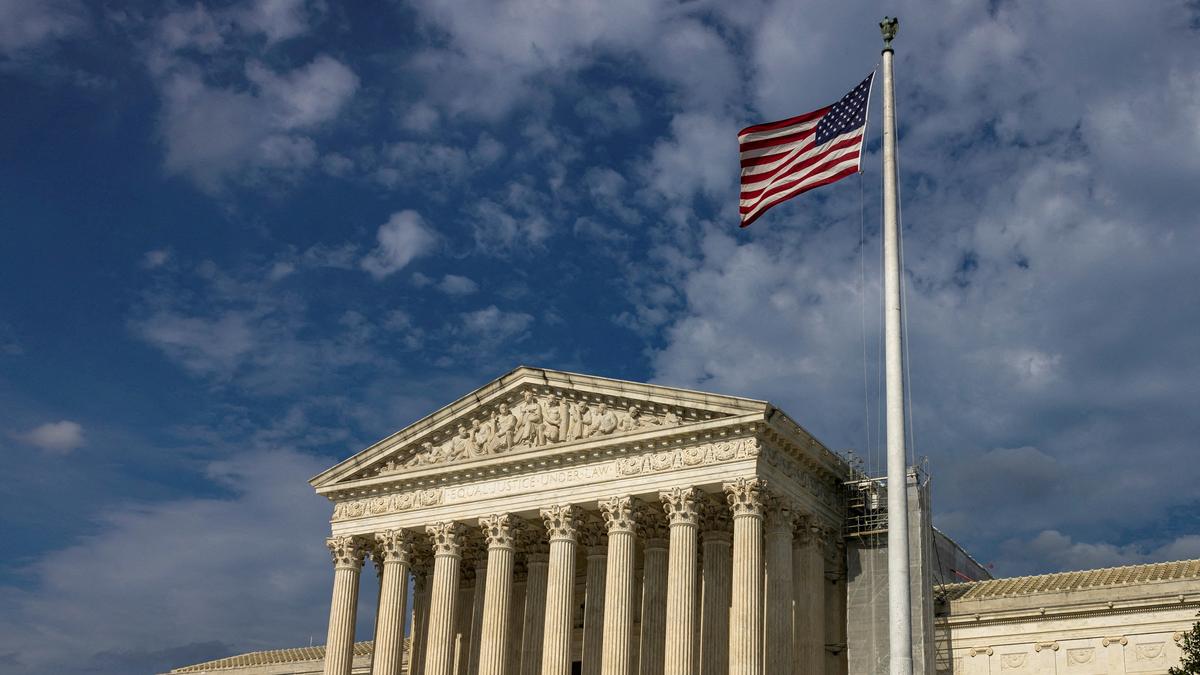
A view of the U.S. Supreme Court in Washington. File
| Photo Credit: Reuters

Shortly after taking office, Mr. Trump sought to address two “foreign threats”: the influx of illegal drugs from Canada, Mexico, and China, and “large and persistent” trade deficits. Mr. Trump declared a national emergency citing these two and imposed tariffs to deal with each threat.
The court called this case a “major question” case and invoked the major questions doctrine as per which only the U.S. Congress has powers to impose tariffs. Section 8 of the U.S. Constitution says: “Congress shall have power to lay and collect taxes, duties, imposts and excises.” “The framers of the Constitution gave that power to “Congress alone”,” the court said.

While the principle of checks and balances may apply across democracies, in the U.S. safeguards are far more effective and accorded primacy. Checks and balances are intended to ensure no one gets “tyrannical” power. Tyranny — by England’s king — was the main reason for the founding of the U.S.A and its Constitution and U.S. public life is built against tyranny. Strong, independent institutions are a feature of U.S. life. Laws ensure consensus and constant dialogue, often requiring bipartisan cooperation, even solidarity.
For instance, the U.S. Congress — equivalent to India’s Parliament — makes all laws, not the President. But Congress is a permanent body and is independent of the President. It can be dominated by a party different from that of the President. The President does have certain powers such as emergency powers and, more importantly, the power of veto over any law passed by the Congress. The President is, by definition, a popular leader and Congress is often loathe to go against him or her as a result. Everyone needs to work together.

Since Mr. Trump took office, he had been able to browbeat the Congress where his party has the majority largely because moves such as tariffs, action on Venezuela were popular among the general public even if some businesses complained. His administration was focussed on using the letter of the law, not the intent, to rule by executive fiats. The Supreme Court has said: “Since imposing each set of tariffs, the President has issued several increases, reductions, and other modifications.” The court said Mr. Trump had issued “a dizzying array of modifications at will.” And this “at will” attitude is what the Supreme Court has acted against.
From domestic through foreign policy and in going after his political opponents or trying to settle scores, the Trump administration has adopted a take-no-prisoners approach. Norms have been thrown to the winds. Government staff including government lawyers who are trained to abide by rules and be independent were fired if they didn’t do his bidding. The action on Venezuela was only the most visible foreign policy manifestation of this approach. And the U.S. Supreme Court has belled the cat, it would seem.
The implications of the court verdict apply not only to tariffs but also to Presidential powers and conduct. A question that may need to be addressed is how the tariffs collected will be refunded to American businesses since they filled a significant hole in the U.S. budget caused by tax cuts. Nations across the world, including India, will be relieved at the prospect of lower tariffs. Meanwhile, Mr. Trump has abused the Supreme Court judges, calling them “fools and lapdogs” — unprecedented in U.S. public life.
Though the U.S. government has said it has other powers in its disposal to bring back tariffs, the Supreme Court judgment has certainly thrown a dampener. The Trump administration’s zeal has been tempered, it would seem. And this may impact the zeal with which the U.S. government has acted in other areas as well, including immigration.
The U.S. Supreme Court is a constitutional court, not a court of appeals. It is therefore selective about the cases it wants to hear and is quite unlike the Supreme Court of India. The court decided that tariffs are a “major question” and only the Congress can rule on major questions. “Applying the major question doctrine has implications for immigration cases as well. Though courts had upheld the $100,000 fee on H1B, for instance, plaintiffs can now argue with more force that immigration or H1B fees is a major question since it has foreign policy impact,” says Cyrus Mehta, immigration attorney in New York City.
Published – February 21, 2026 12:40 pm IST
Discover more from stock updates now
Subscribe to get the latest posts sent to your email.