


Four years of war in Ukraine: Childhood has ‘moved underground’, displacement continues – UN humanitarians
“I have been constantly hearing artillery shelling,” he said, speaking of yet another “massive, coordinated attack” which reportedly impacted civilian and energy infrastructure overnight.
The city’s children’s hospital was attacked eight times on Tuesday morning, Mr. Mammadzade added.
Childhood underground
With few places offering any sanctuary in Kherson, daily life is “a matter of survival” for children and families in the frontline area, the UNICEF representative said.
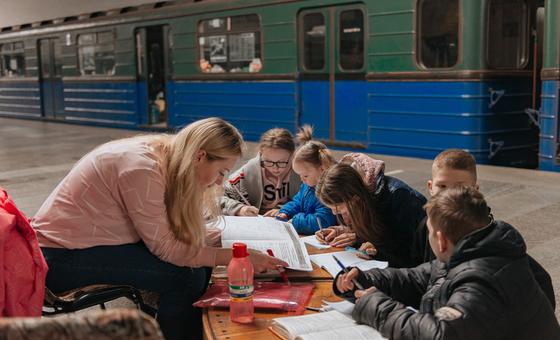
The region is “almost fully covered in anti-drone nets” and childhood has “literally moved underground,” he stressed.

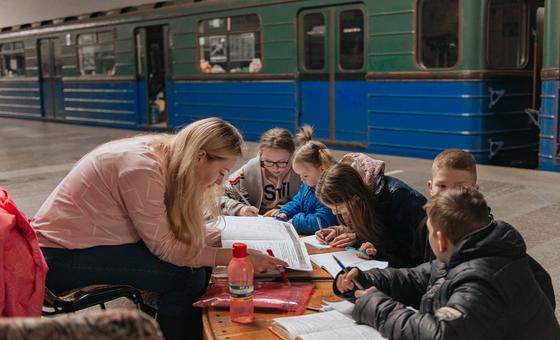
Out of some 60,000 children who lived in Kherson prior to the start of Russia’s full-scale invasion on 24 February 2022, only about 5,000 are left, and have to “learn, play and sleep in basements just to stay safe.”
Mr. Mammadzade made his comments to journalists at a press briefing in Geneva, as negotiators from Ukraine and Russia gathered in the Swiss city on Tuesday for two days of US-brokered talks.
Speaking of the basement turned into a child protection hub managed by UNICEF from which he was connecting, Mr. Mammadzade said that there are “kids in the neighbouring room playing and engaging with psychologists, which is something precious to witness in places like Kherson because you hardly see people outside.”
‘Constant fear of attacks’
Humanitarians working with the children “all speak about levels of exhaustion that families are enduring from living 24 hours a day in a hyper-alert state,” he said.
The UNICEF official stressed that attacks impacting civilian areas continue across the country, “including in the areas that we don’t necessarily talk about,” such as western Ukraine and the capital Kyiv.
“Constant fear of attacks, sheltering in basements and isolation with limited social connection have left children struggling with circumstances of this war, with their mental and physical health directly impacted,” he concluded.
Daily power cuts
Arthur Erken, the International Organization for Migration (IOM) regional director for Europe, told reporters that due to attacks on civilian energy infrastructure “power cuts now structure daily life when families cook, when children study, when hospitals schedule procedures.”
“With temperatures down to -20 degrees Celsius, communities face severe shortages of heating, electricity and household repairs,” he added – with displaced people and recent returnees being particularly affected.
Ukraine remains Europe’s largest displacement crisis, Mr. Erken said. Out of the 9.6 million people who have had to flee their homes, 3.7 million are internally displaced.
“In one of every three displaced households, someone is living with a disability, and in more than half, someone actually manages a chronic illness,” he said. “These aren’t just statistics, but the daily realities that shape every decision, from medical care to putting food on the table.”
‘Resilience alone cannot sustain families’
The IOM representative stressed that even after four years of full-scale war, Ukrainians continue to flee in search of safety and basic services.
“In the last year, more than 450,000 people were displaced from their homes, many for the second or even the third time,” he said.
Mr. Erken warned that 325,000 Ukrainian returnees could be displaced again in the coming months, with more than a third of those considering moving abroad again.
“Intentions to leave the country reflect the cumulative strain of insecurity, damaged housing and limited access to electricity and heating,” he said.
“After four years of war, resilience alone cannot sustain families through yet another winter of blackouts and freezing temperatures,” the IOM official insisted.
“Safe housing, reliable energy and essential services are not luxuries. They are fundamental to people’s survival, safety and dignity,” he concluded.
Discover more from stock updates now
Subscribe to get the latest posts sent to your email.